Get deeper insights with the AllMind AI
The research terminal for institutional investors
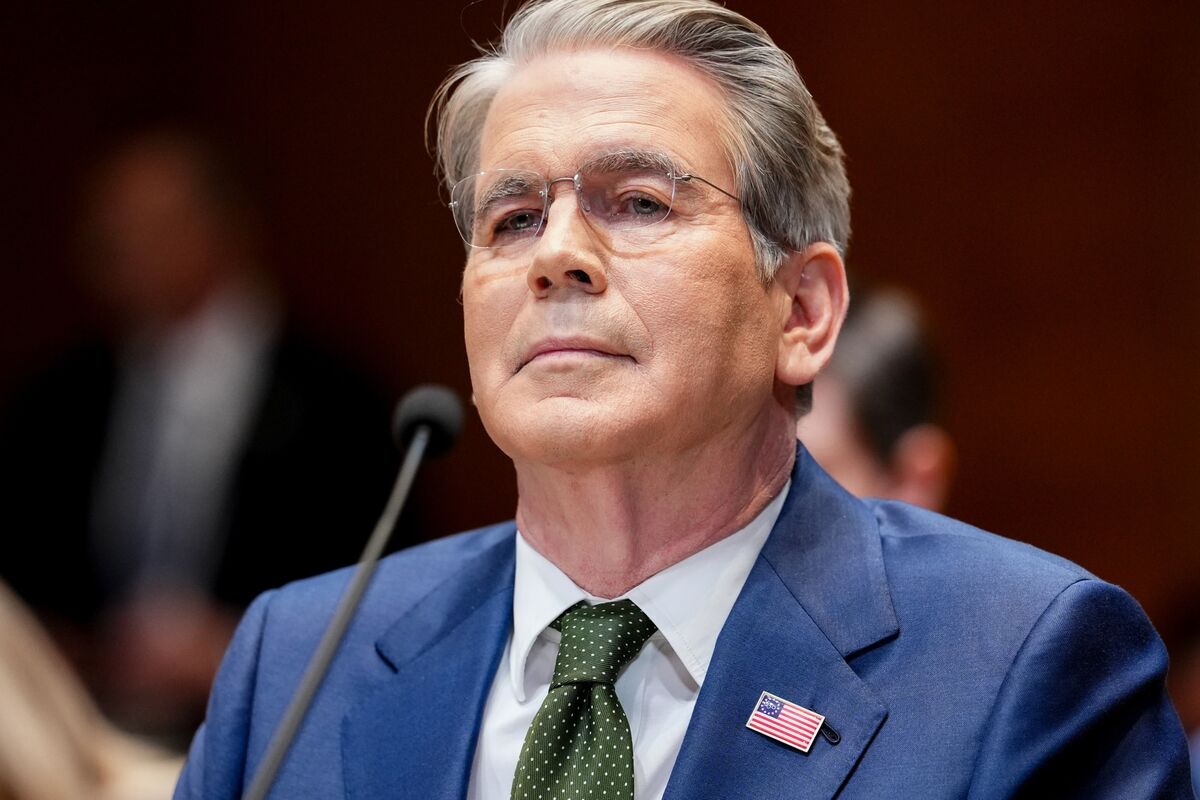
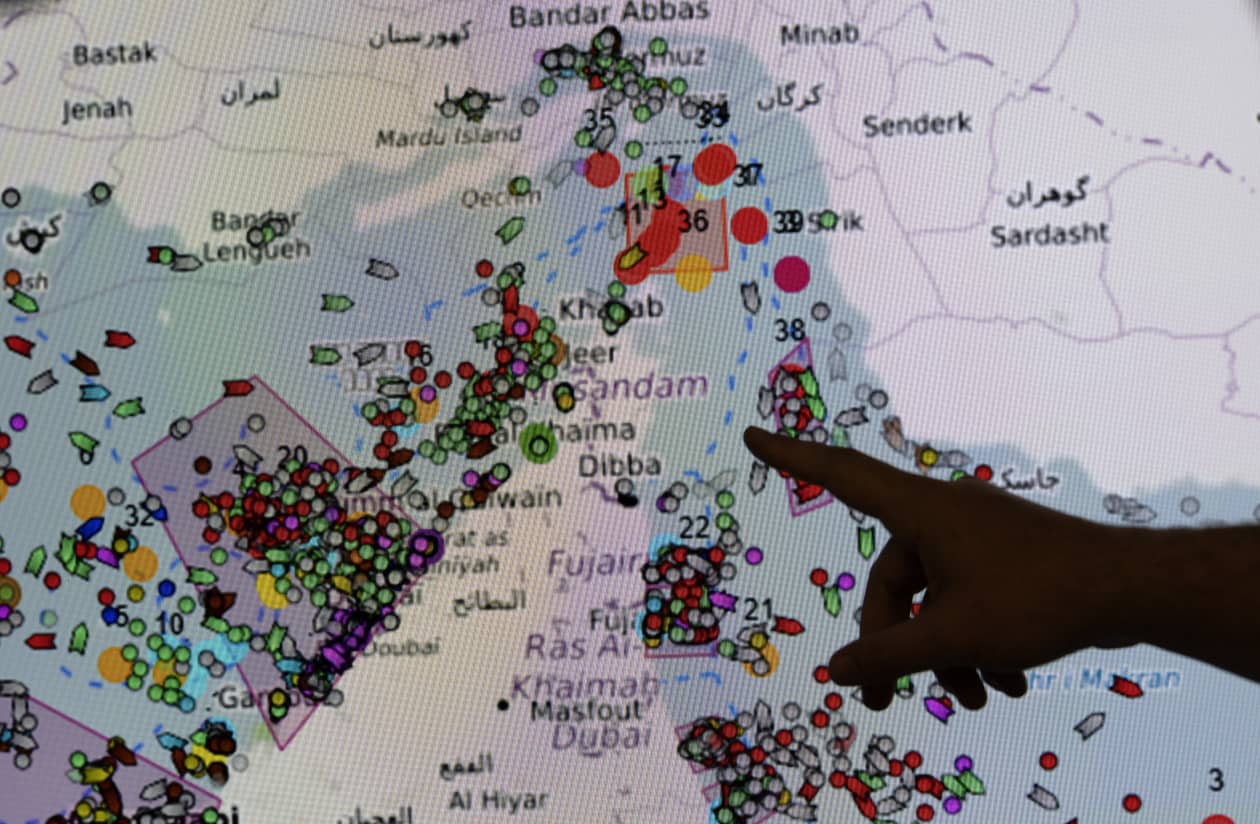
US Treasury Secretary Scott Bessent called for US allies and China to join an American escort operation in the Strait of Hormuz, underscoring elevated geopolitical risk around a critical route for global oil shipments. The comments highlight concern over Iran's ability to disrupt roughly 90% of China's energy imports from the country and could keep a risk premium in crude and shipping markets. Bessent also said the US has total control of the waterway, signaling a more assertive stance.
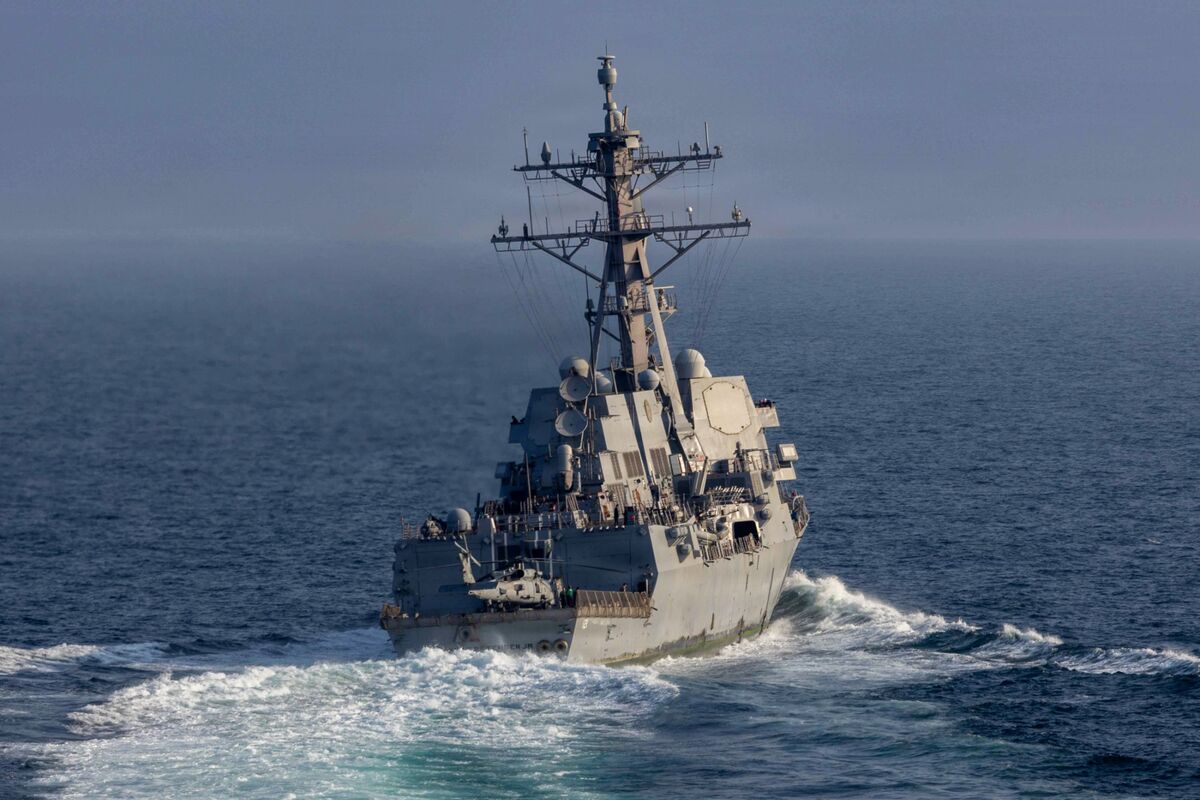
The U.S. is moving to escort commercial ships through the Strait of Hormuz while Iran warns foreign vessels and U.S. forces could be targeted, escalating a conflict that has already disrupted global shipping and oil flows. The blockade has reportedly forced 49 commercial ships to turn back and is squeezing European and Asian importers of Persian Gulf energy, with Iran saying it has received less than $1.3 million in tolls and may soon need to shut in wells. The situation remains highly volatile, with no publicly announced U.S.-Iran talks underway and fresh claims of an Iranian strike on a U.S. Navy vessel.
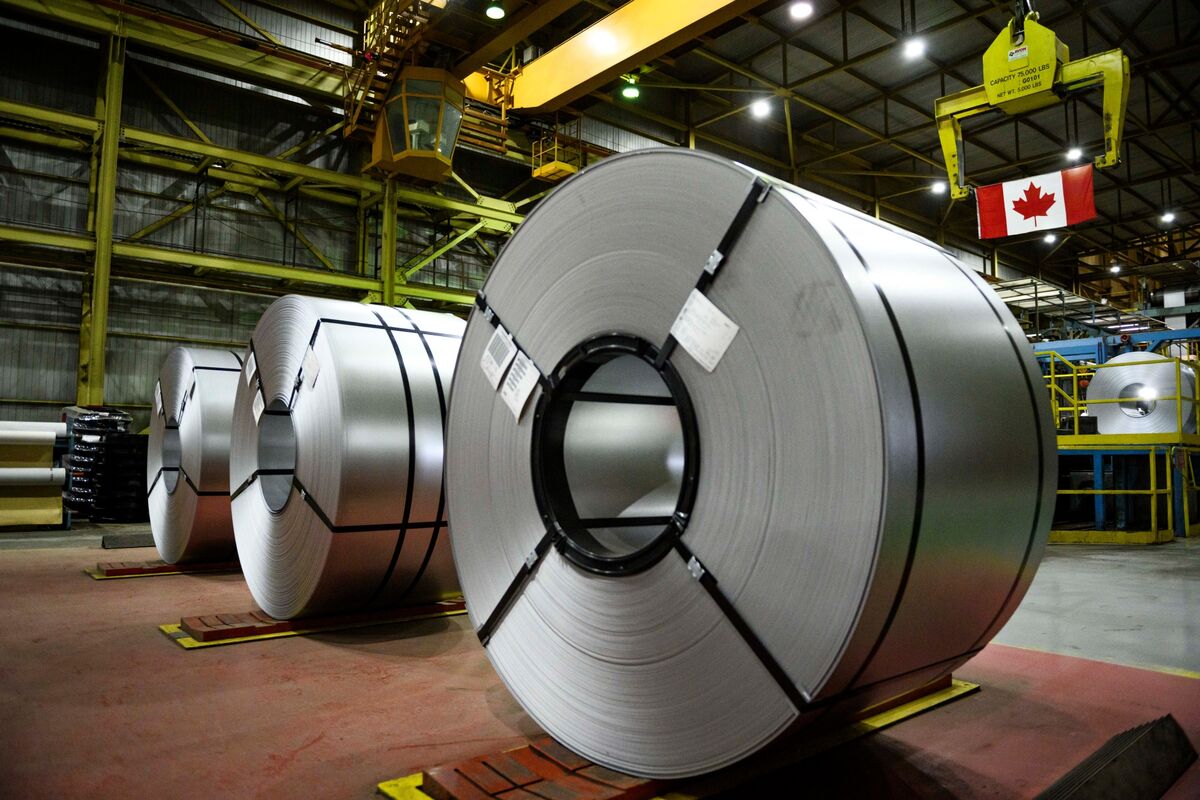
Ottawa is offering $1.5 billion in support to tariff-hit industries, including a new $1 billion BDC loan program on favourable terms plus $500 million through the Regional Tariff Response Initiative. The measures target Canadian steel, aluminum and copper producers after the U.S. raised tariffs on derivative goods to 25% of the full product value on April 6, worsening pressure on manufacturers. The package should provide liquidity relief, but it underscores continued trade friction and margin pressure across affected industrial sectors.
The U.S. launched “Project Freedom” to guide stranded commercial ships through the Strait of Hormuz, while warning that mines, attacks, and Iranian interference make the route extremely hazardous. The disruption affects roughly one-fifth of global oil flows and has already led U.S. Central Command to say 49 commercial ships were turned back, underscoring a major risk to energy prices and shipping. The standoff remains unresolved, with no U.S.-Iran negotiations underway and Tehran threatening any foreign military presence near the strait.
Canada unveiled C$1.5 billion ($1.1 billion) in support for firms hurt by the Trump administration’s revised US metal tariff rules. The April change imposed a 25% surcharge on the full value of products containing steel, aluminum and copper, replacing the prior 50% tariff on only the metal content. The package is a material policy response and should support affected Canadian exporters, but it also underscores ongoing tariff-related cost pressure and trade friction.
Premarket trading was driven by a $55.5 billion unsolicited GameStop offer for eBay, sending eBay up nearly 9% while GameStop fell more than 2.5%. Norwegian Cruise Line dropped 5.5% on a Q1 earnings beat but weak guidance, Axsome Therapeutics fell more than 3.5% on a wider-than-expected loss, and Tyson Foods rose over 2.5% on better-than-expected quarterly results. Energy and crypto names rallied on higher oil prices and progress on crypto legislation, while AMD slipped nearly 1% after an HSBC downgrade.
Iran warned U.S. forces not to enter the Strait of Hormuz and threatened to attack any foreign armed forces approaching the waterway, as the U.S. said it would support ship protection with 15,000 personnel, 100+ aircraft, and warships. The standoff comes amid continued disruption to roughly 20% of global oil and gas flows, with hundreds of ships and up to 20,000 seafarers unable to transit and crude previously surging above $100 a barrel. The article points to heightened geopolitical and energy-market risk, with potential further upside pressure on oil and broader inflation if shipping disruptions persist.
Colombia’s central bank unexpectedly held its key rate at 11.25%, triggering a risk-off move in local markets ahead of a pivotal election. The peso fell 1.3% to 3,680 per dollar, while two-year swap contracts slumped 34 basis points and five-year rates fell 4 basis points. The decision defied nearly all Bloomberg-surveyed economists and raised concerns about policy credibility and near-term market volatility.
The EU and US are meeting after President Trump threatened a potential 25% tariff on EU automobiles, risking a breach of the EU-US trade deal that caps US tariffs on EU goods at 15%. The Commission says it remains calm and is still implementing the joint statement, but warned that if the US acts inconsistently with the deal, "all options" remain open, including past plans targeting €95 billion of US products. The dispute increases uncertainty for European carmakers, especially German manufacturers, and could further strain transatlantic trade relations.
The article highlights uncertainty around Fed chair nominee Kevin Warsh’s views on the limits of Fed independence, especially whether Treasury could influence swap lines and the Fed’s balance sheet. Former Fed officials warned that a new Treasury-Fed accord could constrain crisis flexibility, weaken balance-sheet control, or blur the line between monetary policy and political objectives. The debate matters for dollar liquidity, foreign swap lines, and the Fed’s ability to respond in a severe market stress event.
Meta faces a New Mexico bench trial that could result in roughly $3.7 billion in abatement costs and injunctive relief, after already being ordered to pay $375 million in the first phase of the case. The state is seeking major product changes, including age-verification tools, altered recommendation algorithms, and an independent monitor, with Meta warning it may have to restrict access in New Mexico if no workable settlement is reached. The case is being watched as a potential template for broader public nuisance litigation against social media platforms.
The UAE’s exit from OPEC and OPEC+ is a significant strategic shift, with officials saying the country will produce in line with global market needs and local industrial demand without restrictions. The move widens tensions with Saudi Arabia and has been widely viewed as potentially weakening OPEC’s ability to manage oil output and support prices. ADNOC said the decision is intended to accelerate investment and preserve the UAE’s role as a trusted global energy partner.
SAP will acquire Prior Labs and invest more than €1 billion ($1.1 billion) over four years to expand tabular foundation model research for structured enterprise data. The deal, expected to close in Q2 or Q3 2026 pending approval, will integrate Prior Labs’ technology into SAP AI Core, Business Data Cloud, and Joule while keeping the startup independent. The transaction expands SAP’s push into domain-specific AI and should be strategically positive for its enterprise software and AI roadmap.
SAP agreed to acquire Dremio in a strategic deal aimed at strengthening SAP Business Data Cloud, with no terms disclosed and closing expected in Q3 2026 pending regulatory approval. The acquisition is designed to improve SAP’s ability to unify SAP and non-SAP data for real-time analytical and AI workloads, including an Apache Iceberg-native lakehouse and broader agentic AI capabilities. The transaction should be incrementally positive for SAP’s AI and data-platform positioning, though execution and regulatory approval remain key risks.
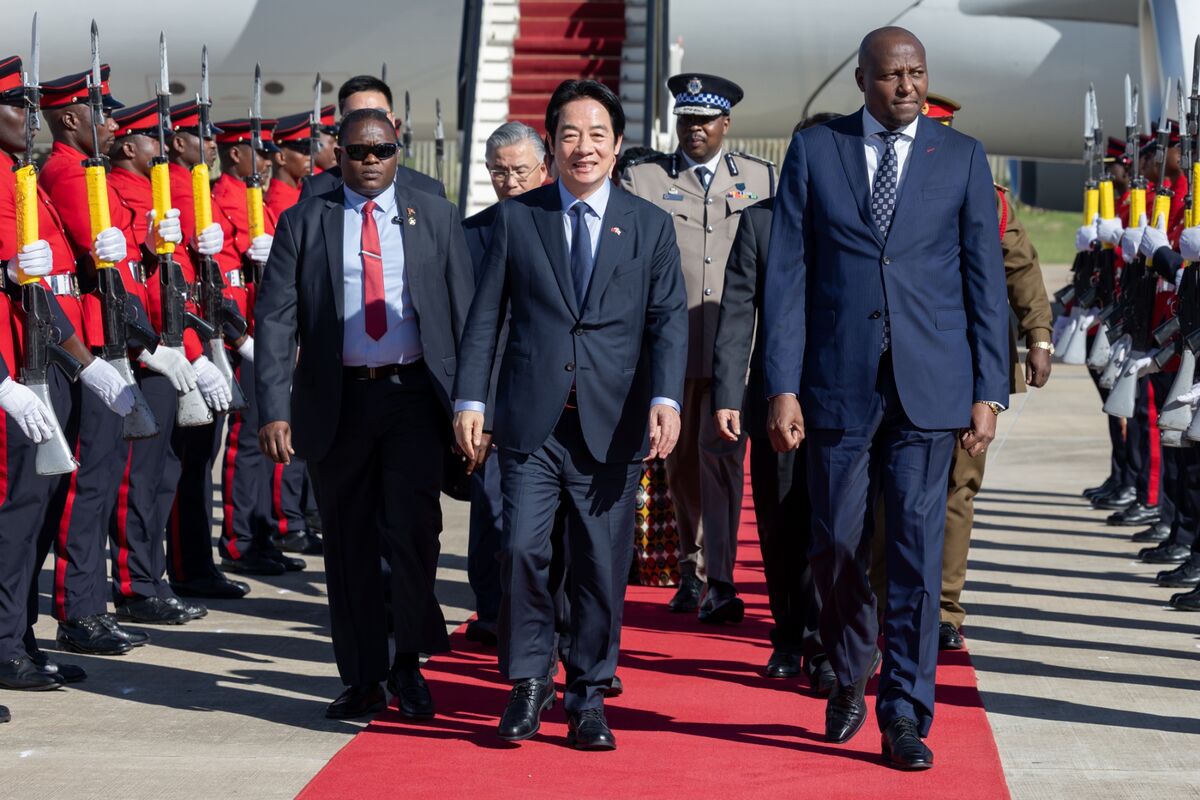
Taiwan President Lai Ching-te reached Eswatini via a stealth trip after three China-friendly countries reportedly closed their airspace to his aircraft, highlighting intensifying Taiwan-China geopolitical friction. His return trip may face further blocked flight paths and difficult transit options, adding travel and diplomatic uncertainty. The episode underscores Beijing’s ability to disrupt Taiwan’s international outreach and could rattle regional risk sentiment.
Zelensky said Ukrainian drones could strike Moscow’s May 9 Victory Day parade, as Russia reportedly scales back the event with no tanks, missiles, or artillery expected for the first time since 2008. The article highlights repeated drone attacks on Moscow and broader concerns about Russia’s military posture, sanctions pressure, and the war’s trajectory this summer. The geopolitical risk is elevated, with potential implications for security, defense readiness, and regional sentiment.
WNBA team values are surging, with the average franchise estimated at $460 million and the Golden State Valkyries reaching a landmark $1 billion valuation, the first for any women's sports team. Expansion fees have jumped to $250 million for the next three teams, while recent transactions include the Connecticut Sun sale to Tilman Fertitta for $300 million and the Portland Fire joining for $75 million. Stronger media rights, sponsorship growth, record attendance of 11,148 per game, and a new CBA are underpinning the valuation re-rating.
The U.S. Navy has sent two destroyers through the Strait of Hormuz to help commercial ships exit the Persian Gulf, as tensions with Iran escalate and rules of engagement have reportedly been loosened to allow strikes on immediate threats. Iran claimed it hit a U.S. warship and fired warning shots, while Central Command said no U.S. Navy ships were struck. The standoff threatens transit for roughly one-fifth of global oil and LNG flows, creating a major risk to energy prices and global supply chains.
The article describes mounting turmoil at the FDA under Commissioner Marty Makary, including staff clashes, leadership instability, industry backlash, and a more paranoid internal culture. It suggests that one more high-profile misstep could threaten his job, raising governance and regulatory uncertainty for drug companies. While not a direct policy shift, the instability could affect approval timelines and industry sentiment.
The market is entering a major first-quarter earnings week with more than 100 S&P 500 companies set to report, led by AMD, Palantir and Coinbase. Options markets are pricing a 7% move in AMD and an 8% move in Palantir, with positioning generally bullish and call volumes dominating in Palantir. The backdrop remains risk-on, with the S&P 500, Nasdaq 100 and Russell 2000 at new highs and VIX down to 16.4, its lowest since Feb. 3.
Ukraine launched a drone strike on Moscow overnight, hitting a residential high-rise reportedly about 7 km west of the Kremlin and 3 km from the Russian Defence Ministry building. Russian officials said the drone was intercepted and reported no casualties, but the attack underscores elevated security risks in the capital just days before the 9 May Victory Day parade. The incident is a high-profile escalation in the war and could reinforce near-term geopolitical risk sentiment.
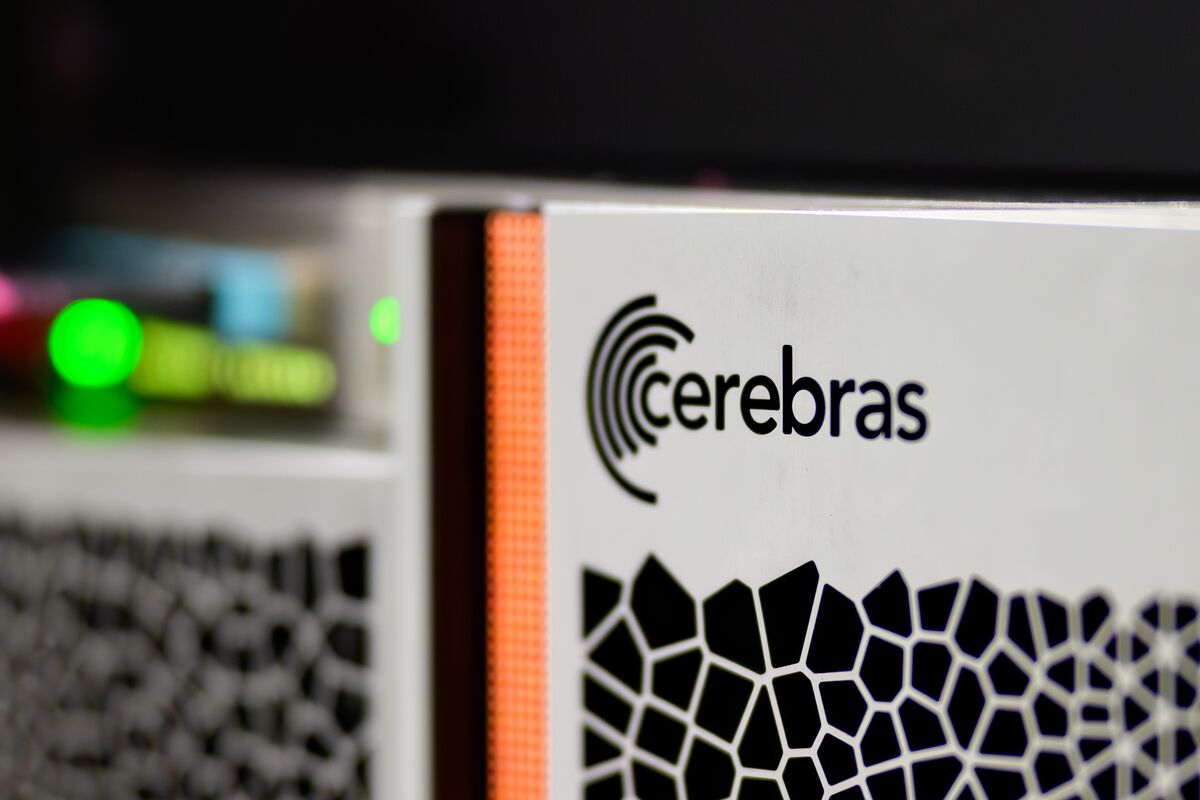
Cerebras is targeting up to $3.5 billion in its Nasdaq IPO, selling 28 million shares at $115 to $125 each, implying a valuation of as much as $26.6 billion. The AI chipmaker also reported strong momentum, with fourth-quarter revenue up about 76% year over year to $510 million and net income of $87.9 million, while CEO Andrew Feldman is not selling shares. The deal underscores continued investor appetite for AI infrastructure names, especially after Cerebras disclosed a more than $20 billion OpenAI compute agreement.
Katie Haun raised $1 billion for new venture funds, with capital split evenly between early- and later-stage investing over the next two to three years. The funds will target crypto and blockchain companies, while also expanding into startups combining financial services, artificial intelligence, and alternative assets. The move signals continued investor appetite for digital assets and AI-adjacent private markets.
Meta faces the second phase of New Mexico’s lawsuit, with the state seeking billions more in damages and a court order that could force major product changes such as age verification, algorithm redesign, and disabling autoplay and infinite scroll for minors. A jury already found Meta violated state consumer protection law and ordered $375 million in damages. The company warned that legal and regulatory blowback in the U.S. and EU could significantly affect business and financial results.
SAP announced a definitive agreement to acquire Prior Labs, the pioneer of Tabular Foundation Models, and said it will invest more than €1 billion over the next four years to build a globally leading frontier AI lab. The deal expands SAP’s enterprise AI stack with Prior Labs’ TabPFN models, which have 3 million+ downloads and top benchmark performance in tabular AI. Terms were not disclosed and the transaction is expected to close in Q2 or Q3 2026, subject to regulatory approval.
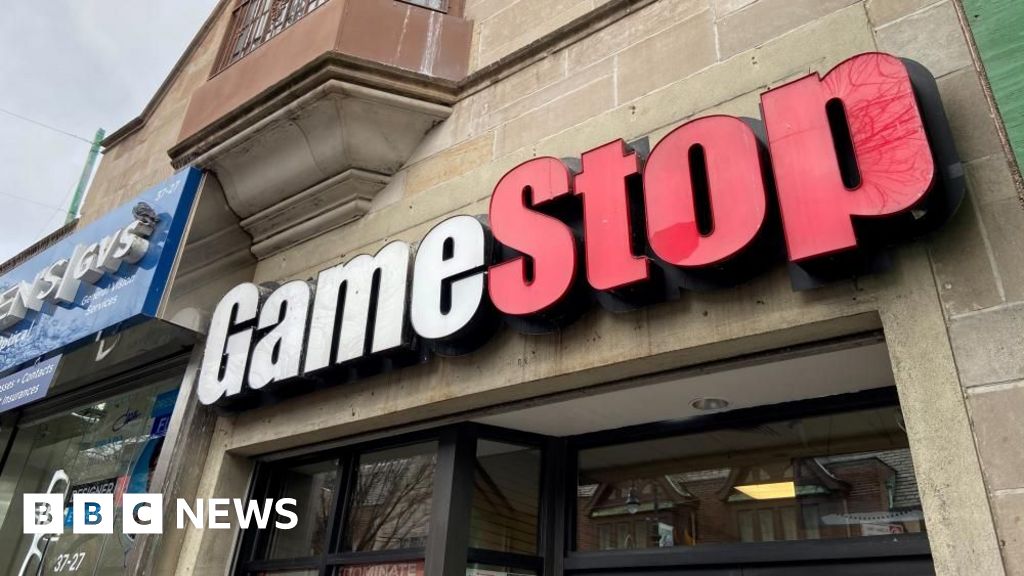
GameStop made an unsolicited $55.5 billion, non-binding offer to acquire 100% of eBay at $125 per share in cash and stock. The proposal would install GameStop CEO Ryan Cohen as leader of the combined company, subject to board, regulatory, and shareholder approval. Both stocks rose on the news, though GameStop's $12 billion market value makes the bid's feasibility uncertain.
OCBC will acquire HSBC Holdings’ retail and wealth assets in Indonesia, expanding its presence in the neighboring market. The deal value was not disclosed, but OCBC said it will be based on the net asset value of HSBC Indonesia’s International Wealth and Premier Banking operations plus a premium of up to S$0.48 billion ($376 million). The transaction is strategically positive for OCBC, though the immediate market impact is likely limited.
HSBC downgraded Palantir to hold from buy and cut its price target to $151 from $205, implying just 5% upside from Friday's close. The bank warned that AI agents, agentic frameworks, and MCP servers are eroding Palantir's barriers to entry and could pressure its valuation multiple as competitors like OpenAI and Anthropic gain ground. Palantir is set to report earnings after Monday's close, with HSBC also flagging downside risk after last quarter's strong results failed to lift the stock.
First Eagle Investments is seeking to raise $575 million via junk bonds maturing in 2032 to help fund its acquisition of Diamond Hill Investment Group. The notes are expected to be priced later this week, with an investor call scheduled for Monday at 10:30 a.m. ET. The news is primarily a financing update tied to a private M&A transaction, with limited immediate market impact.
President Trump said the US will help ships stranded in the Persian Gulf transit the Strait of Hormuz under a new operation dubbed Project Freedom, with support from guided-missile destroyers, aircraft and drones. The plan is framed as a humanitarian gesture but signals an attempt to restore traffic through a critical global shipping chokepoint after the war with Iran began. The announcement carries high market relevance given the potential implications for oil flows, freight routes, and broader geopolitical risk.
Global Business Travel Group is reportedly in advanced talks to be acquired by Long Lake Management, with a deal potentially announced as soon as Monday. The buyer is backed by General Catalyst and Alpha Wave, making this a private-market-led takeover of the Amex-spun travel platform. The report points to a meaningful M&A event for the business-travel sector, though terms and valuation were not disclosed.
Oil prices jumped around 5% after Iran said it turned back a U.S. warship near the Strait of Hormuz, while the U.S. denied Iranian reports that the vessel was struck by missiles. Brent traded near $112/bbl and WTI near $106/bbl as Gulf shipping disruption persisted, with tanker traffic through Hormuz still well below normal. The yen briefly strengthened to 155.7 per dollar amid speculation of further intervention, and the article also flagged a 60,000 April U.S. payrolls estimate, higher auto tariffs, and Spirit Airlines ceasing operations.
South African farms face a dual shock from Iran war-related cost pressure and a rising risk of El Niño-driven drought ahead of the October summer planting season. The agricultural lobby warns this could reduce output and lift food prices, creating added inflationary pressure for the domestic economy.
Tensions in the Strait of Hormuz have escalated sharply, with Iran threatening to attack US forces that enter the waterway while the US says it will launch Project Freedom to guide stranded ships. Iran claims shipping is already being restricted, which has helped push global energy prices higher and lifted US petrol to an average of $4.44 per gallon, up from less than $3 before the war began. The UKMTO says the security threat remains critical, signaling a high risk of further disruption to oil flows and broader market volatility.
Brent rose 1.52% to $109.80 and WTI gained 1.56% to $103.50 after Iran warned it would attack any U.S. forces entering the Strait of Hormuz, offsetting earlier hopes of de-escalation. The U.S. has launched Project Freedom with guided-missile destroyers, over 100 aircraft, unmanned platforms, and 15,000 service members to escort vessels through the strait. The confrontation raises immediate risks to global oil flows and commercial shipping through a critical chokepoint.
The IMF downgraded its growth outlook for the year after a war in the Middle East triggered a major oil shock. It also warned of a possible downturn if the conflict persists and energy infrastructure is severely damaged. The report points to higher energy prices, weaker global growth, and broader market risk-off sentiment.
The Trump administration has rescheduled state-licensed medical marijuana from Schedule I to Schedule III, a meaningful regulatory easing that should lower research barriers and support broader clinical study. The article says this could accelerate evidence generation around uses such as chronic pain, chemotherapy-induced nausea, multiple sclerosis symptoms, and potentially CBD applications for anxiety and schizophrenia. The move does not legalize marijuana, but it is likely to be sector-positive for cannabis operators and biotech research activity.
Berkshire Hathaway reported first-quarter operating earnings up 18% year over year, with insurance underwriting surging 28.5% to about $1.7 billion and cash nearing $400 billion. Investors were reassured by Greg Abel's first annual meeting performance and his comments that Berkshire will not pursue AI for its own sake, while he also reaffirmed the conglomerate's long-term structure. Class B shares rose 0.5% in premarket trading on the earnings and governance update.
Bloomberg found that nearly all of the 20 U.S. state-run health insurance exchanges, plus Washington, DC, were sharing sensitive applicant data with ad-tech companies including TikTok, Meta, Google, LinkedIn and Snap. Exposures included race, sex, citizenship responses, ZIP codes and page visits tied to highly sensitive topics such as incarceration, DACA coverage and Medicaid. Washington and Virginia removed some trackers after Bloomberg’s inquiry, while California was the only reviewed state not using ad trackers. The report raises significant privacy, compliance and litigation risk for state exchanges and the ad-tech firms involved.
Germany said there has been no "definitive cancellation" of the U.S. plan to station a battalion with long-range Tomahawk missiles in Germany, despite Washington's announced reduction of its military presence by 5,000 soldiers. The Pentagon drawdown and uncertainty around the weapons deployment add to strain in U.S.-Europe relations amid the Iran war and tariff tensions. European nations are already planning alternative long-range systems to cover the deterrence gap against Russia.
Iran said it turned away enemy warships in the Strait of Hormuz and warned commercial vessels not to move without Tehran’s approval, deepening the risk to a chokepoint that carries about one-fifth of global oil flows. Brent crude futures spiked above $110 a barrel as the U.S. reportedly expanded maritime security measures and added 15,000 personnel plus 100+ aircraft support. The situation points to a major disruption risk for energy and shipping markets.
Oil prices remain elevated with Brent up 1.5% to US$109.60 a barrel and WTI up 0.96% to US$102.90 as geopolitical tensions in the Middle East keep Strait of Hormuz supply risks in focus. Equity markets were mixed and risk sentiment cautious, with STOXX 600 down 0.17%, DAX up 0.26%, CAC 40 down 0.52%, and Hang Seng up 1.24%. The Canadian dollar weakened, the U.S. dollar index rose 0.1% to 98.26, and investors are awaiting earnings from Palantir, Loews, Tyson, Gibson Energy and Cargojet alongside U.S. factory orders and BoC testimony.
Corporate America announced $665 billion of share buybacks in S&P 500 companies over the four months through April, the most ever to start a year. Apple added a $100 billion repurchase authorization, reinforcing the buyback bid supporting US equities even as investors question whether the rally is losing momentum. The article signals strong capital-return demand and supportive market flows rather than a direct earnings or macro catalyst.
U.S. stock futures fell on renewed Strait of Hormuz tensions, with the Dow contract down about 208 points at one stage and S&P 500 futures off 0.1% while Nasdaq 100 futures were near flat. WTI crude jumped above $105 a barrel and Brent topped $111, both up roughly 3%, before gains eased after U.S. Central Command denied that any Navy ships had been struck. The report also noted pressure from a planned increase in U.S. auto tariffs on E.U. imports to 25% from 15%, alongside looming April payroll data expected to slow to 53,000 from 178,000 in March.
Blackstone Digital Infrastructure Trust is seeking to raise up to $1.75 billion in a US IPO, with shares planned at $20 each. The vehicle will target already-built and leased data-center properties, positioning the offering to benefit from AI-driven demand for digital infrastructure. The news is constructive for the data-center and AI infrastructure space, though the market impact is likely limited to the relevant sector.
Spirit Airlines started an orderly wind-down after failing to secure a proposed $500 million government bailout, leaving 14,000 employees and thousands of passengers affected. The airline had filed for bankruptcy for the second time in August 2025, and higher fuel costs from the Iran conflict worsened an already fragile financial position. The White House also explored a potential acquisition or Defense Production Act path, but no funding source materialized and creditors did not agree to a deal.
SAP agreed to buy Dremio and Prior Labs, aiming to unify SAP and non-SAP data for real-time analytics and improve structured-data AI for enterprise workflows. SAP also plans to invest over €1 billion across four years to scale Prior Labs into a global AI research hub. The deals still need regulatory approval and financial terms were not disclosed, but the strategy could make SAP’s platform more sticky and expand its AI offering.
Elon Musk is seeking US$150 billion in damages and governance changes from OpenAI and Microsoft in a trial that began April 28 in Oakland federal court. A new filing says Musk contacted OpenAI president Greg Brockman about a settlement before trial, underscoring the combative nature of the dispute over OpenAI’s shift from non-profit to for-profit structure. The case has implications for OpenAI’s governance and the broader AI industry, but the immediate market impact is likely limited to sentiment around the companies involved.
Investors in Chile are split on the impact of the Middle East conflict, with 44% of 25 Bloomberg-polled analysts and traders expecting two-year peso bond yields to rise 5-10 bps if the Strait of Hormuz stays closed this month. An equal share sees yields up more than 10 bps, including one forecast for a gain of over 20 bps. The article signals higher uncertainty and a cautious, risk-off tone for Chile’s local fixed-income market.
Scotiabank reshuffled 12 names in its top 30 Canadian stock list as momentum rotated toward Energy and Tech, with banks and rising Energy now the highest-ranked sectors. CIBC said Shell’s proposed acquisition of ARC Resources could materially improve the odds of LNG Canada phase 2 and boost interest in Canadian energy assets, while Western Canadian storage rose 3 Bcf to 587 Bcf, 141 Bcf above the five-year average. Separately, JP Morgan said U.S. Q1 earnings growth is tracking at 31% year over year, with 9 of 11 sectors printing double-digit EPS growth.
The U.S. denied reports that Iran struck a Navy vessel while expanding a naval escort effort to reopen the Strait of Hormuz, where hundreds of ships have been stranded amid the conflict. The disruption is tightening global oil and gas flows, with the U.S. saying it has blocked 49 commercial ships since April 13 and Iran warning foreign military forces will be targeted. The situation remains highly volatile for shipping, energy prices, and regional security.
Trump said the US would "guide" ships trapped in the Gulf through the Strait of Hormuz under a Project Freedom initiative, while Iran warned US and foreign armed forces would be attacked if they enter the strait. The confrontation raises the risk of disruption to shipping routes and adds further upside pressure to oil, gas and fertiliser prices. The article also notes a worsening sovereign debt backdrop in developing countries, with 56 countries already spending more than 10% of government revenue on debt service before the conflict.
Crude and Brent futures surged as much as 5% after reports that Iran struck a U.S. Navy vessel near the Strait of Hormuz, escalating Middle East tensions. Iran warned foreign navies against crossing the strait, while a senior U.S. official denied that a U.S. ship was hit. The episode raises immediate risks to global oil supply and shipping through a critical chokepoint.
Elon Musk’s lawsuit against OpenAI is proceeding to trial in federal court, with OpenAI seeking to admit a text in which Musk appears to threaten reputational damage if settlement talks fail. The filing reinforces OpenAI’s argument that Musk is using the case to attack a competitor, while Musk is alleging that roughly $38 million of early donations were diverted to unauthorized commercial use. OpenAI is now valued at more than $850 billion, and xAI was recently valued at $250 billion after its merger with SpaceX.
Tensions around the Strait of Hormuz escalated after Iranian media claimed a U.S. warship was struck by two missiles, though Washington denied any incident. Iran’s military warned U.S. forces would be attacked if they entered the strait, while Tehran continues mobilizing for a prolonged conflict and maintaining a near-total internet shutdown affecting more than 90 million people. The standoff raises the risk of broader regional disruption and could have immediate spillover effects on energy and shipping markets.
Biva, Mexico’s second-largest stock exchange, has attracted "serious" bidder interest in a sale process launched at the end of last year. The exchange accounts for about 20% of Mexican share trading and is owned by Cencor, while the sale is among options being considered by majority shareholder LIV Capital. The update is constructive for transaction prospects, but the article is largely a status update with limited immediate market impact.
Cerebras Systems is seeking to raise up to $3.5 billion in a U.S. IPO, offering 28 million shares at $115 to $125 each. The AI chipmaker and data center operator’s filing confirms an earlier report and follows a prior withdrawn registration, underscoring renewed financing plans in the hot AI sector. The deal could draw attention across AI semis and IPO markets, though the article is primarily a capital-raising update rather than a fundamentals surprise.
The Supreme Court’s Louisiana v. Callais decision weakened Voting Rights Act constraints on redistricting, opening the door to a broader partisan map-drawing battle that could reshape U.S. House control. Republicans in Tennessee, Louisiana, and Alabama are moving to target majority-Black Democratic districts, while Democrats are weighing retaliatory redistricting in blue states. The article suggests a materially more volatile political and legal environment, though the impact is primarily on elections rather than immediate markets.
Traffic through the Strait of Hormuz remained effectively disrupted, with only one tanker and a few non-tanker vessels observed on Monday and no clear guidance for safe commercial transit. The U.S. said it was beginning efforts to restore freedom of navigation while maintaining its blockade of Iranian ports, and Iran warned U.S. Navy vessels to stay out of the strait and said commercial ships must coordinate passage with its military. The standoff keeps maritime security at a critical level and continues to threaten oil and shipping flows from the region.
Deloitte says pharma R&D returns for the top 20 companies improved to 7% for a third straight year, but almost all of the upside is concentrated in GLP-1 obesity and diabetes drugs. Obesity assets now account for about 25% of late-stage pipeline forecast sales and 38% of projected commercial inflows from the 2025 pipeline, while excluding GLP-1/GIP assets cuts industry returns to 2.9% from 3.8% in 2024. The report highlights rising concentration risk across pharma, with 54 mega-blockbuster indications expected to generate roughly 70% of risk-adjusted peak sales.
QatarEnergy has extended force majeure on LNG supplies through mid-June as the Strait of Hormuz remains largely closed to tanker traffic. The disruption has already hit nearly one fifth of global LNG supply, with shipments from Qatar and the UAE affected and European and Asian gas prices rising. The article points to continuing geopolitical supply risk and further tightness in global gas markets.
Trump signed an executive order to expand retirement account access and directed Treasury to launch TrumpIRA.gov by Jan. 1, 2027, aimed at workers without employer-sponsored plans. The White House projects a 25-year-old saving about $165 per month with a 6% return and the Saver's Match could reach $465,000 by age 65, but advisors argue that amount is more of a modest retirement income than true wealth. The article is largely policy commentary with limited immediate market impact.
Oil prices remain elevated as the U.S.-Iran standoff over the Strait of Hormuz continues, with Iran warning commercial vessels not to move without approval and the U.S. floating a "Project Freedom" plan with few details. Markets are also bracing for a dense week of U.S. data, including April payrolls expected at 73,000 jobs and 4.3% unemployment, plus ISM services at 53.8 and consumer sentiment at 49.3. Multiple Fed speakers and central bank decisions from Sweden, Norway, and Australia add to the macro and rate-risk backdrop.
Brent crude jumped back above $110 a barrel as renewed U.S.-Iran tensions over the Strait of Hormuz boosted energy prices and risk-off sentiment, while gold slipped and the U.S. dollar firmed. In equities, GameStop’s unsolicited $56 billion offer for eBay sent eBay shares up more than 8% premarket, even as GameStop fell after announcing a 5% stake and a debt-financed bid structure. Berkshire Hathaway also reported first-quarter operating earnings up 18% with cash rising to a record $397.38 billion.
Trump rejected a more aggressive U.S. military plan to force open the Strait of Hormuz, opting instead for a humanitarian mission while 15,000 troops, ships and aircraft remain positioned in the region. The article says two U.S. ships transited the strait today, but the situation still carries elevated risk because Iran could trigger a confrontation and disrupt a critical shipping lane. Diplomatic talks continue in parallel, leaving the outlook volatile and heavily dependent on Tehran's response.
Stock futures are down more than 200 points, or 0.40%, as higher oil prices and reports of unrest around the Strait of Hormuz pressure risk assets. Spirit Airlines ceased operations after failing to secure support for a $500 million government bailout, eliminating 17,000 jobs and triggering automatic ticket refunds. Separately, Meta faces a $3.7 billion abatement-cost claim in New Mexico, while the market also awaits a heavy week of earnings and labor data.
Green Sky Capital signed financing for a sustainable aviation fuel facility in Egypt’s Suez Canal Economic Zone that is expected to produce up to 200,000 tons of biofuels annually. The plant will output sustainable aviation fuel, hydro-treated vegetable oil, bio propane and bio naphtha, supporting airline efforts to diversify energy sources. The announcement is positive for regional clean-fuels development, though near-term market impact is likely limited.
Oil jumped 5% after reports that a US warship was hit by missiles, while renewed US-Iran tensions kept geopolitics in focus. Equity futures are slightly higher after the S&P 500 and Nasdaq posted a fifth straight weekly gain and fresh closing highs, supported by a favorable Q1 earnings backdrop and continued AI infrastructure demand. Rates are mixed, with the US 10-year little changed and bunds up 2 bps to 3%, while WTI is near $100/bbl, Brent near $107, and gold, silver, and bitcoin are moving modestly.
Oil prices climbed on Monday as markets reacted to disputed reports that Iranian missiles struck a U.S. Navy ship near the Strait of Hormuz. The incident, if confirmed, raises the risk of disruption in a critical chokepoint for global crude flows and supports a risk-off move in energy markets. The article does not provide a price magnitude, but the geopolitical headline has market-wide implications for oil and shipping.
Canada’s combined public-company gender equality score slipped to 45% in 2026 from 46% in 2025, making it one of only three countries in the study to decline and placing it third from last among 16 advanced economies. National Bank of Canada ranked first with an 86% score, while CIBC was the only other Canadian top-100 finisher at 74% (48th overall). The article highlights weaker gender-pay transparency in North America and signs of slower DEI disclosure, though Canada still compares favorably on broader diversity representation.
Jerome Powell’s final FOMC meeting indicated core PCE inflation rose 3.2% year over year in March, with tariffs cited as a key driver and the Middle East conflict adding further uncertainty. The article argues rate cuts are effectively off the table in 2026, removing a major support for equity valuations. That leaves the Dow, S&P 500, and Nasdaq exposed to downside after a period of historically expensive pricing.
The iShares Semiconductor ETF (SOXX) surged 40% in April as AI-driven chip demand, cooling geopolitical tensions, and strong earnings from Intel, TSMC, and others lifted the sector. Intel more than doubled on signs that CPU demand is inflecting higher from agentic AI, while hyperscalers including Meta raised capex forecasts and CoreWeave announced a $21 billion AI cloud deal with Meta. The article argues semiconductor demand continues to outpace supply, though valuations are now elevated with SOXX trading at 52.3x earnings.
The article argues that the Iran-centered fourth oil shock is disrupting oil flows, supply chains, and financial markets while accelerating a breakup of the Western-led economic order. It cites the closure of the Strait of Hormuz, U.S. blockade measures, rising de-dollarization, and growing use of CIPS and non-dollar oil settlement as signs of a more fragmented currency and trade regime. European allies are reportedly moving toward alternative trade and security arrangements, implying broad geopolitical and cross-asset market risk.
UPS fell 8.21% to $98.74 after Amazon launched Amazon Supply Chain Services, directly competing with UPS across ocean, air, ground and rail freight and targeting third-party shippers UPS needs to replace lost Amazon volume. The move compounds a difficult Q1 2026 backdrop, where GAAP EPS was $1.02, down more than 27% year over year, and follows recent price-target cuts from UBS to $123 and Evercore ISI to $111. Shares hit an intraday low of $98.53, well below the 52-week high of $122.41, as investors reassessed the H2 2026 recovery thesis.
EagleRock Land LLC is seeking to raise up to $346 million in a US IPO by selling 17.3 million shares at $17 to $20 each. At the top of the range, the Permian Basin landowner and management company would be valued at about $2.6 billion based on outstanding shares. The filing is a standard capital-markets update with limited immediate market impact.
Palantir heads into first-quarter earnings after its shares fell about 9% since the day after its last report and are down 19% year to date. The article frames the stock as caught in a broader software selloff driven by investor concerns that AI tools could pressure earnings growth across the sector. The piece is mainly a sentiment/positioning story rather than new fundamentals, but it could influence near-term trading around the print.
Palantir is approaching its 200-day EMA and the $150 level, with upside toward $160 if it breaks above resistance, though after-hours earnings will be a key catalyst. Microsoft remains under pressure from heavy capital spending, with Q4 2026 capex expected to exceed $40 billion, but it is viewed as structurally bullish if it clears $424. Oracle stands out positively with a $553 billion backlog and a reported plan to raise another $50 billion for AI expansion, supporting long-term revenue visibility despite debt and funding concerns.
US President Donald Trump announced a fresh plan to help vessels transit the Strait of Hormuz as attacks continue and traffic remains near a standstill. Iran also said it “redefined the control zone” in the strait, underscoring elevated disruption risk in one of the world’s most important energy shipping routes. The situation is likely to keep markets risk-off and could pressure oil and freight-related assets.
Oil gave back some gains after the U.S. said two vessels crossed the Strait of Hormuz, easing immediate supply-risk concerns. The UAE briefly issued and then lifted a missile-threat alert, underscoring elevated geopolitical tensions in a critical shipping corridor. The event is market-relevant because it can affect crude prices, shipping flows, and regional risk premiums.
China has ordered companies to ignore U.S. sanctions on five firms tied to Iran’s oil trade, including Hengli Petrochemical's Dalian refinery, escalating confrontation with Washington ahead of the Trump-Xi meeting. The move raises the risk of secondary sanctions on Chinese banks and refiners, potentially disrupting financing channels and energy supply chains. Beijing says the blocking order is meant to nullify the legal effect of U.S. sanctions inside China, but any U.S. retaliation could broaden the cross-border economic conflict.
The EU’s Digital Markets Act is under review two years after implementation, with the Commission citing successes such as greater browser choice and new interoperability features, including messaging across rival apps. The article also flags friction and compliance burdens for tech giants like Apple, Google, Meta, and WhatsApp, as well as continued shortcomings. Expansion of the rules to AI-linked devices could further broaden user choice, but the immediate read is a mixed regulatory outcome rather than a direct market catalyst.
A US official denied Iran's claim that it fired two missiles at a US Navy vessel attempting to cross the Strait of Hormuz, while the incident itself remains unconfirmed by formal US comment. The report comes amid heightened tensions after Iran warned US forces not to enter the strategic waterway, raising geopolitical and shipping-risk concerns. Given the Strait of Hormuz's importance to global oil flows, the episode could have broad market implications even without confirmed damage.
Barclays now expects no Fed rate cuts in 2026, pushing the first 25-basis-point cut to March 2027 as higher oil prices delay disinflation. The firm lifted its Brent forecast to a $115/barrel peak this quarter and sees headline PCE inflation at 3.8% and core PCE at 3.1% in 2026, while trimming 2026 GDP growth to 2.1%. The outlook remains vulnerable to upside oil and inflation shocks if Strait of Hormuz disruptions persist.
GameStop has proposed a $125 per share cash-and-stock takeover of eBay, implying about $55 billion in equity value and roughly $56 billion overall. The deal would combine eBay’s commerce franchise with GameStop’s 1,600 U.S. stores and target $2 billion in annualized cost cuts, while Ryan Cohen would lead the combined company as CEO. eBay rose more than 7% in premarket trading, while GameStop fell nearly 3%.
Trump said the US will begin guiding some neutral ships trapped in the Persian Gulf out through the Strait of Hormuz starting Monday. The move underscores elevated geopolitical risk around a critical chokepoint for global energy and shipping flows. While no direct market price move is cited, the announcement raises the risk of disruptions to tanker traffic and oil transport.
Sweden arrested the Chinese captain of the suspected Russia-linked oil tanker Jin Hui on allegations of false documents and seaworthiness violations. The vessel was boarded in Swedish territorial waters and is believed to be part of Russia's shadow fleet used to evade Western sanctions; this was Sweden's fifth such action this year. The ship was reportedly on EU and UK sanctions lists and was not thought to be carrying cargo.
Indonesia and Japan signed a defence cooperation agreement covering defence industry collaboration, personnel development, and disaster mitigation. The ministers also discussed maritime security, joint military exercises, and military hardware and technology, but gave no specifics on exact programs or timelines. Japan’s recent removal of its overseas arms sales ban adds context, but the article does not identify an immediate market-moving commercial impact.
Israel’s top Central Command officer reportedly said the army has been killing Palestinians at levels “not seen since 1967,” while defending looser rules of engagement and discriminatory treatment toward Palestinians versus Israeli settlers. The UN says Israel has killed 1,081 Palestinians in the West Bank and East Jerusalem since 7 October 2023, including at least 235 children. The article also highlights escalating settler violence, criticism of the commander, and a separate 130 million shekel government allocation to settler-linked groups, underscoring heightened geopolitical and policy risk.
Loblaw signed a partnership with Canadian AI company Shakudo to build and run AI applications on a centralized platform. The retailer is also putting in place internal protocols so AI tools can securely connect to enterprise systems. The move supports Loblaw's broader AI strategy, but the article provides no financial metrics or near-term operational impact.
The U.S. will begin 'Project Freedom' to guide stranded ships through the Strait of Hormuz, involving guided-missile destroyers, more than 100 aircraft and 15,000 service members. Iran says the mission violates the ceasefire agreement, and Trump is also reviewing a new Iranian offer while not ruling out war. The article also flags election-related redistricting fights in Louisiana and key Senate races, but the dominant market implication is elevated geopolitical risk in a critical shipping lane.
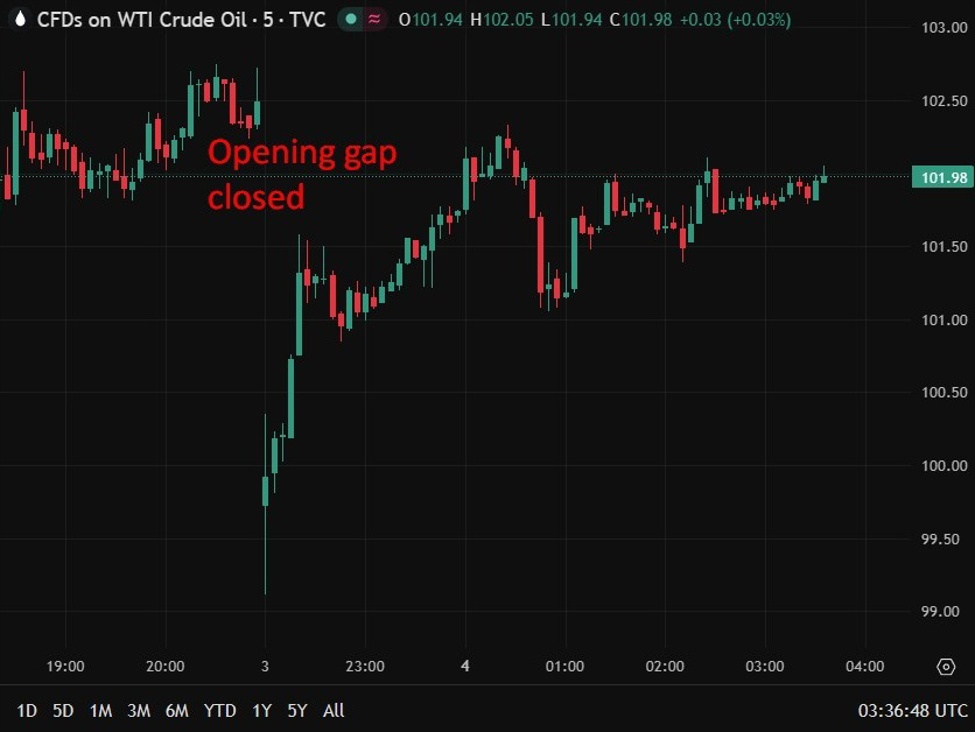
WTI is trading just above $100 and Brent is near $110 as the Strait of Hormuz standoff keeps a geopolitical risk premium embedded in crude prices. The forward curve still implies WTI easing to about $77 by year-end, but the article argues this underestimates the persistence of supply disruption and volatility. The UAE’s incremental 800,000 bpd capacity increase is unlikely to offset broader market tightness, leaving prices sensitive to further headlines and policy shifts.
RBC BlueBay Asset Management is launching its first interval fund to buy the riskiest CLO equity slices, mainly US CLO equity, with flexibility to add junior CLO debt, European CLOs and other structured credits. The move comes as retail investors pull cash from private credit, highlighting a shift toward a public-market alternative for higher-risk credit exposure. The story is notable for product innovation and flow dynamics, but it is not an immediate market-wide catalyst.
Trump’s proposed 25% tariffs on EU cars are being framed as a likely Germany-specific threat, raising the risk of disruption for the European auto sector. The move could also breach the EU–US trade agreement reached last summer, escalating trade tensions between the US and Europe. German auto exporters and broader transatlantic supply chains would face the most immediate downside if the tariffs are implemented.
Oil prices jumped on renewed Iran-related geopolitical tensions, pressuring the S&P 500 lower even as the index had just logged three record closes last week. The article is otherwise a mix of stock-specific positives: Barclays raised Chevron to $192, Bernstein lifted SanDisk to $1,700, Oppenheimer upgraded Airbnb to buy, and several firms increased price targets on Linde, Estee Lauder, and Alphabet. GameStop’s unsolicited $125/share offer for eBay, worth about $55.5 billion, stands out as the biggest event-driven catalyst, though it is non-binding and management talks have not started.
Barclays says AI infrastructure spending could exceed $1 trillion annually, driving strong demand for gas power generation equipment and related components. The note highlights multiple beneficiaries, including Caterpillar, GE Vernova, Howmet, Baker Hughes, Cummins, Bloom Energy, FTAI Aviation, Woodward, ATI and Generac, many of which reported earnings beats, raised guidance, or saw analyst price-target increases. The setup is supportive for the sector and could move individual names, especially those tied to turbines, backup power and data-center energy needs.
US officials denied that an Iranian strike hit a US Navy frigate near the Strait of Hormuz, contradicting Fars News claims that two missiles struck the vessel near Jask. CENTCOM said no US ship was hit and reiterated that US forces are supporting Project Freedom and enforcing the naval blockade on Iranian ports. The story heightens Strait of Hormuz security risks and could pressure shipping routes and regional energy logistics.
NVIDIA reported $68 billion in revenue for fiscal Q4 2026, up 73% year over year, with 75% GAAP gross margin and quarterly revenue guidance of $78 billion plus or minus 2%. The article highlights strong institutional buying, eight recent buy signals, and expects EPS to rise 34.5% this year. Shares are already up 20.8% in the last month, reinforcing positive momentum around AI-driven fundamentals.
European gas prices rose 3.6% to 47.47 euros/MWh as investors weighed stalled U.S.-Iran talks and renewed concerns over shipping through the Strait of Hormuz, which carries roughly one-fifth of global oil flows. Iran warned U.S. forces to stay out of the strait and threatened a harsh response, while the U.S. floated a plan to reopen traffic with limited detail. The standoff keeps energy prices elevated and poses a broader risk to global growth and supply chains.
Standard Chartered is selling its seven-story East African headquarters in Nairobi on 1.88 acres as it continues to shrink its physical footprint in the region. The bank’s Kenyan unit had already disposed of two other properties last year, signaling an ongoing restructuring of its local real estate holdings. The move is largely operational and appears neutral for the stock, with limited market impact.
Ouster unveiled its Rev8 OS lidar family, including a new OS1 Max sensor with a 256-channel architecture, up to 200-meter detection at 10% reflectivity, and a 500-meter maximum range. The company says the platform offers up to 2x the range and resolution of the prior generation, with dozens of firms including Google and Volvo Autonomous Solutions intending to adopt it. Shares were up 9.91% to $29.07 ahead of Tuesday's expected Q1 earnings report, where consensus calls for a 28-cent loss per share on $46.27 million of revenue.
The article explains how travelers can use credit card points, miles, and elite-status benefits to upgrade from economy to premium cabins, with key constraints including fare class, award-seat availability, and one-cabin-at-a-time rules. It highlights specific airline cards such as the Delta SkyMiles Reserve American Express Card, which offers a $2,500 MQD Headstart, lounge access, and upgrade priority, and United cards that can unlock award-flight upgrade eligibility for elites. The piece is advisory and product-focused rather than market-moving, with no material financial disclosure or earnings impact.
The article argues that AI adoption is being slowed by a gap between senior executives and middle managers, with middle managers 64% more likely to describe themselves as cautious about progress. It stresses that many firms are failing to translate AI investment into meaningful returns because of workflow friction, data quality issues, and lack of operational support. The piece is largely advisory and industry-level commentary, so market impact is limited.
SBI Holdings reported FY2025 revenue of JPY 1,896.6 billion, up 31.4% year over year, with profit attributable to owners surging 163.7% to JPY 427.6 billion and ROE reaching 28.0%. EPS of 120.28 JPY beat the 103.72 JPY forecast, while the company also raised its annual dividend to JPY 95 per share, authorized about JPY 50 billion of buybacks, and highlighted aggressive AI, blockchain, and digital-asset initiatives. Management guided toward further growth in securities and asset-management AUM, reinforcing a positive medium-term outlook despite a modest share price decline on the day.
Amazon reported fourth-quarter fiscal 2025 revenue of $213.4 billion, up 12% year over year, with operating income of $25 billion and guidance for up to $178.5 billion in quarterly revenue and $21.5 billion in operating income. The article also notes EPS is estimated to rise 16.8% this year and highlights continued institutional buying, with 62 Big Money outlier inflow signals since 2002 and a 23,545% share price gain over that period. Shares are already up 31.9% in the past month, supporting a positive near-term setup.
An oil tanker was struck near the Strait of Hormuz about 8 hours after a separate bulk carrier attack in the same region, with both crews reported safe and no environmental impact. The incidents heighten already critical maritime security conditions in a chokepoint that handles major global oil and cargo flows. The report also notes the U.S. is enforcing a blockade of Iranian ports and that more than two dozen vessels have been attacked since the war began, underscoring a material geopolitical risk to energy and shipping markets.
Saskatoon is launching a one-year pilot in Sutherland that removes 13 of 14 parking pay stations and pushes drivers toward the ParkedIn app, QR codes, or a single remaining terminal. The city says the test will help determine whether to expand digital-only parking payments in the future, while local business and aging advocates warn it could create accessibility barriers for shoppers, especially seniors. The move follows similar shifts in Winnipeg, Edmonton, and Regina, but is not a citywide change at this stage.
Norwegian Cruise Line cut full-year 2026 guidance to adjusted EPS of $1.45-$1.79 and adjusted EBITDA of $2.48B-$2.64B, well below the prior midpoint and Street expectations, driving the stock down 8.69% to $17.18 and near its 52-week low of $16.78. Q1 results were solid, with revenue up 10% to $2.3B and adjusted EPS of $0.23, but management cited geopolitical booking headwinds, higher fuel costs, and softer demand for Europe travel. The company also carries $15.2B of debt, while peers moved only modestly, underscoring a stock-specific reaction to the guidance cut.
U.S. Treasury yields moved higher, with the 10-year at 4.3979% (+1 bp), the 2-year at 3.9107% (+2 bps), and the 30-year at 4.9792% (+1 bp) as traders awaited factory-order data and a Fed speech. Geopolitical risk also supported a risk-off tone after Trump announced plans to protect commercial shipping through the Strait of Hormuz, while WTI crude rose 0.9% to $102.83 a barrel. Factory orders are expected to rise 0.5% in March, after ISM manufacturing held at 52.7 and prices paid reached their highest since April 2022.
The U.S. is moving to raise tariffs on EU cars and trucks to 25% this week after President Trump said the EU failed to meet terms of last year’s trade deal. EU officials are seeking rapid implementation of their side of the agreement and will continue negotiations Wednesday on legislation to cut duties on U.S. imports. The tariff escalation is a clear headwind for European automakers and raises the risk of further trade retaliation.
ECB Governing Council member Francois Villeroy said the central bank should remain cautious on rate hikes and only tighten if inflation broadens beyond oil-driven pressures. He said a "critical mass" of evidence is needed on core inflation, wages, and inflation expectations before any move. The remarks suggest policy patience, while acknowledging that weaker demand and slower growth could ease price pressure.
US equity futures pointed higher as Asian shares hit a fresh record, supported by optimism around the AI trade and stronger-than-expected megacap tech earnings. The yen briefly spiked on intervention concerns from the Bank of Japan, while Brent crude whipsawed from a 2.4% drop to above $108/barrel after the US said it would begin guiding non-Iran-conflict ships through the Strait of Hormuz. The article highlights broad risk-on equity sentiment alongside elevated FX and energy volatility tied to geopolitics.
The Isle of Tiree’s only filling station is nearly out of petrol, prompting a £25 purchase cap after ferry capacity constraints interrupted fuel deliveries. The smaller MV Isle of Mull replaced the usual MV Clansman, leaving insufficient space for a fuel tanker and creating a near-term supply risk for residents and essential services. CalMac says it is working with the local community to resolve the disruption and another fuel delivery is hoped for this week.
The S&P 500 surged more than 10% in April, its best month since November 2020, while the Nasdaq Composite rose more than 15% and the Dow Jones Industrial Average gained roughly 7%. Strong earnings growth is being cited as the main driver, with historical seasonality suggesting the S&P 500 has averaged a 2% gain in May after its top 25 April performances since World War II. However, higher oil prices and escalating U.S.-Iran tensions around the Strait of Hormuz could temper the rally, especially after the S&P 500 energy sector fell more than 3% in April.
Canadian equipment manufacturers generated $29.3 billion in sales activity in 2025, up 11% from $26.4 billion in 2022, while direct employment rose to about 71,000 from 68,700. Growth is being supported by infrastructure and mining projects, but weakness in housing, volatile farm revenues and U.S. trade uncertainty are creating an uneven outlook. The report also notes direct employment fell in each of the past two years after concentrated gains in 2023.
Leaders from 48 countries met in Yerevan for the European Political Community summit amid wars in Ukraine and Iran, with defense readiness and energy security dominating the agenda. NATO Secretary-General Mark Rutte said Europe has "gotten the message" from Washington after President Trump announced a major US troop withdrawal from Germany, while Macron and von der Leyen urged Europe to accelerate defense spending and capabilities. The meeting also highlighted thawing Armenia-Turkey ties and support for Armenia's peace process with Azerbaijan.
ECB policymakers are signaling that any rate hike will require a "critical mass of data" showing inflation is becoming entrenched beyond energy prices, including wage growth, underlying price pressures, and anchored inflation expectations. ECB rates were left unchanged, but officials indicated a possible move as early as June if the inflation outlook deteriorates further. The message is hawkish and could influence euro-area rates, bonds, and FX markets.
The Treasury Board is requiring federal executives to work in the office five days a week starting today, while other core public servants will be required on-site four days a week from July 6. The directive applies to departments and agencies under Treasury Board oversight, with some separate agencies indicating they may adopt the same approach. The policy affects 9,340 executives out of 357,965 public servants and is likely to have limited direct market impact beyond downtown Ottawa businesses and public-sector labor relations.
Brent and US crude fell after the announcement of escorted shipping corridors, but the article argues that reopening the Strait of Hormuz will not restore normal trade flows. Around 1,000 commercial ships remain disrupted, with longer turnaround times, higher insurance and transport costs, and persistent supply-chain delays likely to pressure margins and inflation. The broader market impact is high because the episode affects a major artery carrying roughly one-fifth of global energy supply.
Brent crude jumped $2.23 to $110.40 a barrel and U.S. benchmark crude rose $1.80 to $103.73 as the U.S. launched an effort to guide ships out of the Strait of Hormuz amid the Iran war. Global equities were mixed, with strong gains in Asian chipmakers driving South Korea’s Kospi up 5.1% and Taiwan’s Taiex up 4.6%, while Europe was mostly flat to lower and U.S. futures were little changed. The article highlights a volatile market backdrop dominated by geopolitical risk, disrupted shipping, and higher oil prices.
Mexico’s cash-heavy payment culture is limiting adoption of bank cards despite a multi-hundred-million-dollar push by fintech firms and banks. The article highlights that even after Uber entered Mexico 13 years ago, many consumers either lacked a card or chose not to use one. The piece suggests persistent structural headwinds for digital payments and financial inclusion, but no immediate company-specific shock.
The Treasury is expected to keep coupon auction sizes steady for a ninth straight quarter, but looming tariff refunds could force larger long-term issuance later this year. JPMorgan estimates as much as $166 billion may be returned to importers, with first meaningful payments likely in June and July and fiscal 2025 deficit projections rising to $1.98 trillion from $1.875 trillion. Borrowing needs are projected to jump to $792 billion in the July-September quarter, raising questions about the mix and timing of future Treasury funding.
Kevin Warsh advanced one step closer to becoming the next Fed chair after the Senate Banking Committee voted 13-11 along partisan lines, with a full Senate vote expected the week of May 11. The article highlights that Warsh favors shrinking the Fed balance sheet and reducing its market influence, which could tighten liquidity and be less supportive for risk assets if implemented. Near-term policy constraints remain, but the nomination itself is relevant for rates, liquidity, and broader market positioning.
The 30-year Treasury yield at 5% is the key fault line: the article argues that as long as this level holds, the boom loop in risk assets can continue, but a disorderly break higher could trigger a broader de-risking. It highlights 75% of Q1 US GDP growth tied to AI investment, 60% higher government spending since 2020, and a potential FY27 budget increase of another 15%, reinforcing a nominal-growth, policy-driven backdrop. Near term, crowded winners like semis, AI, tech, and oil proxies are seen as extended, while lagging cyclicals such as China, Europe, and materials may offer better upside if ISM manufacturing rises toward 60.
Peninsula School District is buying a 1.46-acre home site near Peninsula High School for just under $660,000, following a separate roughly $490,000 home purchase in January and a $260,000 parcel acquisition on March 31. The district has also accumulated about 20 acres near the campus since November 2024, signaling a longer-term strategy to preserve expansion options at a space-constrained site. No immediate use has been announced, and staff are still evaluating potential future uses and zoning changes.
Wall Street opened mixed, with the Dow down 216 points (-0.44%), the S&P 500 off 0.12%, and the Nasdaq up 0.07% as Middle East tensions weighed on risk appetite. The move reflects a volatile, risk-off start that is offsetting support from a strong earnings backdrop and recent record highs. Broad market impact is elevated given the geopolitical driver and index-level reaction.
The U.S. launched 'Project Freedom' to guide stranded ships through the Strait of Hormuz, deploying an enhanced security area amid warnings that travel near normal shipping lanes is 'extremely hazardous' due to unmitigated mines. The disruption is still blocking roughly one-fifth of global oil flows, with 49 commercial ships ordered to turn back and Iran threatening force against foreign military forces entering the strait. The standoff keeps energy markets, shipping, and insurers on edge and risks broader supply-chain and oil price volatility.
The article highlights renewed transatlantic तनाव around Donald Trump’s proposed 25% tariffs on European cars and car parts, alongside confirmation that Washington will withdraw roughly 5,000 troops from Germany. Leaders at the EPC in Armenia are expected to focus on EU-US tensions, energy security, and the Middle East, with Canada’s Mark Carney attending as the first non-European leader in the format. The developments are negative for European autos and add to broader defense and trade uncertainty, but the piece is largely geopolitical and unlikely to trigger an immediate single-session market shock.
Physical AI is making autonomous factories more viable by improving robots' ability to perceive, reason, and act in unstructured environments. The article highlights advances in reinforcement learning, vision-language-action models, and cobots, while noting persistent bottlenecks around data quality, simulation-to-reality gaps, and system-wide integration. The broader takeaway is constructive for industrial automation, but the impact is conceptual rather than a near-term market catalyst.
Microsoft's latest cumulative update, KB5037853, is causing a widespread Restart/Shut Down loop and BSOD issues across Windows 10 and Windows 11 devices, disrupting corporate IT systems and leaving some machines stuck in recovery mode. The company is reportedly working on a Known Issue Rollback, but enterprise environments may require manual intervention, leaving many systems partially patched and vulnerable. The outage is expected to hit productivity across businesses globally, with especially acute disruption cited in East Africa and Nairobi's financial district.
Reform UK said it would prioritize Green-controlled areas for migrant detention centres and plans to introduce a Mass Deportation Detention Act to prevent councils from blocking sites. The party says it aims to detain up to 24,000 people within 18 months, implying roughly £12bn of build costs at about £500,000 per bed. The piece is primarily a political-policy story with limited direct market impact.
Samsung’s Galaxy Z Flip 8 is expected to be thinner, feature a slightly larger outer display, and use an approximately 6.9-inch main foldable panel with a less visible crease. The phone is also expected to include a 50MP main camera, 12GB of RAM, up to 512GB of storage, a roughly 4,300mAh battery, and a possible Exynos 2600 chip. Samsung is targeting a mid-2026 Unpacked launch with expanded Galaxy AI features, but the article contains no official product announcement or pricing.
The BJP appears to have won West Bengal, a major breakthrough in one of India's most politically resistant states, after polling above 44% of the vote versus roughly 39-40% in prior elections. The result strengthens Narendra Modi and Home Minister Amit Shah politically, but the article is primarily about domestic political realignment rather than an immediate market-moving event. Wider implications include stronger BJP momentum in eastern India and potential scrutiny of Bengal's voter-roll revision process.
U.S. equities extended their rally, with the S&P 500 and Nasdaq Composite each up about 1% last week for a fifth straight weekly gain and fresh highs. Macro data were mixed but resilient: Q1 GDP grew 2%, March PCE inflation was 3.5% year over year, and market odds of a 2026 rate cut fell from about 18% to nearly 0% as the Fed kept rates unchanged. Volatility eased, with the VIX down 9% to 16.99, while positioning remained elevated, as the NAAIM Exposure Index reached 93.79%.
US equity futures were mixed as geopolitical and trade tensions escalated, with Trump announcing support for ships stranded in the Strait of Hormuz under 'Project Freedom' and China telling companies to ignore US sanctions. Europe also signaled retaliation after Trump threatened to raise EU auto tariffs to 25%, adding to cross-asset risk. Separately, eBay shares rose pre-market after GameStop made a $56 billion takeover bid, while Tiffany McGhee highlighted resilience in the face of strong earnings.
Assertio amended its merger agreement with Garda Therapeutics to raise the all-cash tender offer to $21.80 per share, valuing the deal at $153.2 million and removing the contingent value right. The revised bid is a 63.1% premium to Assertio’s March 20 stock price and implies an ~18% spread to the current $18.47 share price, with closing expected in Q2 2026 subject to tender and other conditions. The company also withdrew 2026 guidance and will not hold its Q1 call as it moves toward delisting upon completion.
Brent crude fell 0.16% to $108 and WTI dropped 0.29% to $101, while Bitcoin rallied to $80,000 and was still up 1.9% on the day after Trump announced Project Freedom. The operation will escort neutral foreign vessels out of the Strait of Hormuz and CENTCOM said it will deploy destroyers, over 100 aircraft, unmanned platforms, and 15,000 service members. Markets are pricing a geopolitically driven, cross-asset reaction as traders watch for Iran’s response and any disruption to the key shipping lane.
The Strait of Hormuz remains closed amid war-related disruptions, with about 20,000 seafarers stranded and at least two vessels attacked in the past 24 hours, though crew were reported safe. The US plans to begin guiding trapped neutral ships through the chokepoint today via Project Freedom, involving 15,000 service members, guided-missile destroyers and 100+ aircraft, but Iran has warned it would violate the ceasefire. The standoff threatens global shipping and energy flows, with US regular gas prices already up nearly 50% since February 28.
Euro zone inflation is forecast to average 2.7% this year, up from 3.0% last month and driven by higher energy prices, before easing to 2.1% in 2027 and 2.0% in 2028. The ECB survey implies inflation remains above target for longer than hoped, reinforcing expectations for additional rate hikes, with policymakers already seen raising interest rates three times this year. Growth is also weakening, with 2025 expansion projected at just 1.0% versus 1.2% three months ago, as fallout from the war in Iran weighs on the outlook.
Huntington Bancshares delivered a strong quarter with adjusted EPS up 9% to $0.37, PPNR up 36%, NII up 33% year over year, and adjusted tangible book value up 9%. Management raised 2026 fee revenue growth guidance to 31%-33% and tightened expense growth to the lower half of 32.5%-33.5%, while maintaining a 3.24% NIM, 118% LCR, and a 9%-10% CET1 operating range. The board approved a new $3 billion buyback authorization as the company continues integrating Cadence and Veritex and targets 18%-19% ROTCE in 2027.
Spirit Airlines is shutting down after 34 years, with parent Spirit Aviation Holdings beginning an orderly wind-down and canceling all flights. The company failed to restructure or raise additional funding, citing a material increase in oil prices and other business pressures; jet fuel had surged to $4.51 per gallon versus restructuring assumptions of $2.24 in 2026 and $2.14 in 2027. Spirit had already filed for bankruptcy in November 2024, emerged in March 2025, and returned to bankruptcy court in August 2025.
Brent crude fell 0.60% to $107.49 per barrel and WTI slipped 0.86% to $101.07 as markets shrugged off the latest Middle East headlines, including Trump's 'Project Freedom' announcement. The article argues that geopolitical risks appear partly priced in, shifting focus to a heavy earnings week for Shell, Maersk, Novo Nordisk, Ferrari, BMW, Unicredit, HSBC, and Airbnb, with guidance on energy costs and consumer demand likely to drive moves. Separately, Spirit Airlines shut down after failing to find rescue financing, and Trump removed Scotch whisky tariffs in a symbolic trade-policy gesture.
DCTRL, Vancouver’s long-running decentralized tech space, is being forced to vacate its downtown basement location to make way for redevelopment, with the new 12-story residential project retaining only the facade. The article is broadly neutral on crypto prices but highlights mixed fundamentals: bitcoin is now mainstream enough for ETFs and bank access, yet it remains tied to inflation-hedge claims, scam concerns, and reputational issues. The piece also notes bitcoin traded around US$77,000 after earlier highs above US$100,000, underscoring continued volatility.
U.S. markets extended their rally, with the S&P 500 and Nasdaq each up about 1% for a fifth straight weekly gain as crude oil surged roughly 13% and the 10-year Treasury yield rose 12 bps. GDP growth came in at 2% versus 2.3% consensus, while March PCE inflation increased 3.5% year over year, helped by a 22% jump in gasoline prices. The Fed kept rates unchanged, but dissent increased and market odds of a 2026 rate cut dropped from about 18% to near 0%.
The yen pared earlier gains to 156.92 per dollar after briefly strengthening to 155.69, as traders continued to speculate that Tokyo intervened with up to 5.48 trillion yen ($35 billion) in yen buying last week. Broader markets were also shaped by Iran-war escalation risk, with the dollar index up 0.1% to 98.22, while the euro was flat at $1.1722 and the pound slipped 0.1% to $1.3563. Oil and FX markets remain sensitive to geopolitical developments and to expectations that the Bank of Japan and other central banks will stay more cautious on rates.
U.S. stock futures were mixed, with Dow E-minis down 101 points (-0.2%), while S&P 500 and Nasdaq 100 futures were modestly higher as investors weighed the U.S.-Iran standoff over the Strait of Hormuz and elevated oil prices. GameStop proposed buying eBay for about $56 billion in a cash-and-stock deal, sending eBay up 8.3% premarket and GameStop down 0.8%. Berkshire Hathaway also said it was a net seller of stocks for the 14th straight quarter, reinforcing a cautious risk-off tone.
Europe's energy security is being reassessed after the effective closure of the Strait of Hormuz exposed the region's reliance on disrupted imports, boosting the case for nuclear power. Nuclear already supplies 11.8% of Europe's energy mix, while France gets over 60% of its needs from nuclear; the U.K.'s Hinkley Point C is expected to cover power for 6 million people and 7% of national demand when completed near the end of the decade. The article suggests a longer-term shift toward nuclear and renewables, though large build times and political resistance, especially to Chinese involvement, remain major constraints.
India is increasing coal-fired power generation to 164.9 average gigawatts in April, up from 160.7 a year earlier and 3.5% sequentially, as Iran war-related supply disruptions and a nationwide heatwave lift power demand. Higher LNG prices and disrupted petcoke supplies are making gas and petcoke less viable, shifting industrial and utility demand toward coal. The article points to continued pressure on emissions goals even as India targets a 47% cut in emissions intensity by 2035 and net zero by 2070.
U.S. equity futures are weaker at the open, with Dow futures down about 0.4% and S&P 500 futures slipping modestly while Nasdaq futures are near flat. The move reflects rising geopolitical tensions in the Strait of Hormuz, which are pressuring risk sentiment and keeping investors defensive after last week's strong finish.
The Strait of Hormuz remains effectively double-blockaded by the US and Iran for three weeks, keeping geopolitical risk elevated even as terrestrial bombing has paused under a fragile ceasefire. The article implies continued force and threats could threaten energy flows and sentiment, making this a broad market risk rather than a single-asset story.
Asian refiners reportedly offered around a $20/bbl premium to buy UAE Upper Zakum crude, highlighting strong demand for diesel-rich medium-sour grades. The premium reflects a supply squeeze after the Iran war disrupted crude availability, and May-loading cargoes are also clearing above official selling prices. The move signals tighter regional crude markets and potential upward pressure on medium-sour crude differentials.
Barclays now expects no Fed policy easing in 2026, reversing its prior call for a 25-basis-point cut in September 2026, as prolonged high oil prices from the Iran war keep inflation elevated. The Fed’s last meeting was its most divided since 1992, and traders are pricing a 78.7% probability of no rate change by year-end. The article points to higher energy costs weighing on consumer spending while supporting some business investment.
The article argues that prediction markets should be regulated as legitimate financial information tools rather than treated solely as gaming products, citing evidence that they can outperform traditional forecasting methods. It highlights concerns around surveillance, insider manipulation, and regulatory overlap, while noting that Canada should provide clear domestic regulated pathways as participation is already shifting to global platforms. Overall impact is limited but relevant for the regulatory and fintech landscape.
S&P 500 Q1 earnings growth surged to 27.1% year over year, supported by AI-related strength and resilient consumer demand. However, the article flags rising inflation, higher oil prices, and weakening high-frequency economic data outside AI-driven sectors as offsetting risks. The mix is supportive for equities near term but suggests a more cautious macro backdrop.
MSCI’s emerging-market index rose 2.9% to a record high, led by South Korean stocks, as strong tech earnings and hopes for resumed shipping through the Strait of Hormuz lifted risk appetite. Developing-world currencies gained 0.3% while Bloomberg’s dollar spot index edged lower. The move reflects broad-based EM risk-on sentiment tied to tech strength and easing geopolitical supply-chain concerns.
A suspected hantavirus outbreak on the Dutch-flagged cruise ship MV Hondius has killed 3 people and sickened at least 3 more, with at least 1 case confirmed and another passenger in intensive care. The vessel has been prevented from docking in Cape Verde while authorities coordinate evacuations and contact tracing, keeping the risk to the wider public low but highlighting a serious health event for cruise travel. The incident may pressure cruise operators and broader travel sentiment, though it is not expected to have market-wide impact.
Home-care delivery has been suspended inside 145 Powers St. in Winnipeg after the WRHA deemed the building unsafe, forcing patients to leave their homes for appointments across the street. The change has reportedly been in place for about 6 weeks and also affects care delivery at another social housing property, 300 Selkirk Ave., where workers are using a different entrance. The story highlights rising safety and operational concerns tied to housing vulnerable tenants, but it is primarily local and unlikely to have broad market impact.
Europe is facing a potential jet fuel squeeze as the Strait of Hormuz blockade disrupts imports and pushes kerosene prices sharply higher, with Transavia already canceling some May-June flights. French officials say there is about two months of strategic stock and no near-term shortage risk, but fuel costs have more than doubled and could force more low-cost carrier cancellations or fare hikes. The main impact is on airline profitability and summer travel pricing rather than an immediate continent-wide grounding.
Geopolitical risk in the Strait of Hormuz escalated sharply as Trump announced Project Freedom, with CENTCOM saying military support begins May 4 and deploying destroyers, 100-plus aircraft and 15,000 service members. A tanker was struck by unknown projectiles off Fujairah, while Iran rejected the plan as a ceasefire violation, keeping oil and shipping risks elevated; ANZ also sees Brent above $90 in 2026 with $100-plus risk into 2027. On the macro side, Kashkari warned the Iran war could force Fed rate hikes, and the RBA is widely expected to hike 25 bps tomorrow amid split board dynamics and rising Australian inflation pressure.
Global Business Travel Group shares surged 40% after a Bloomberg report said General Catalyst-backed Long Lake Management is in advanced talks to acquire the company for about $9.50 per share. That price implies a 60% premium to Friday’s close and would be a sizable gain for shareholders if completed. A deal could be announced as soon as Monday, though negotiations are still ongoing and could fall apart.
"Raja Shivaji" generated INR43.66 crore ($4.6 million) in its first three days, marking the biggest opening weekend in Marathi-language cinema history. The film now ranks No. 7 among all-time Marathi grossers, behind titles like "Sairat" and "Ved," and saw strong turnout in Maharashtra plus traction for its Hindi version. The result is a clear box-office positive for Jio Studios and Mumbai Film Company, though the article does not indicate broader market-moving implications.
Norwegian Cruise Line beat Q1 adjusted EBITDA at $533 million versus $502 million consensus and EPS at $0.23 versus $0.14, but management cut 2026 guidance sharply, lowering the midpoint of its net yield outlook to -4.0% from flat and trimming EBITDA guidance by 13%. Second-quarter outlook also disappointed, with EBITDA guidance of $632 million versus $696 million consensus and EPS of $0.38 versus $0.51. Wolfe Research reiterated an Outperform rating and $25 target, but cited softer European demand tied to Middle East geopolitical tensions and rising fuel costs.
Cabaletta Bio reported encouraging early data from its rese-cel CAR-T trial, including complete B-cell depletion in 3 of 4 refractory pemphigus vulgaris patients and treatment-free status in 3 of 4, with only one Grade 1 CRS event and no neurotoxicity. Guggenheim reiterated a Buy rating and $16 price target, while the company also completed a $150 million financing and signed a 10-year manufacturing agreement with Cellares. The data support expansion of the RESET-PV trial and keep key readouts on track for the second half of 2026 and first half of 2026 in lupus.
Global Net Lease agreed to acquire Modiv Industrial in an all-stock deal valued at about $535 million, with Modiv holders receiving 1.975 GNL shares per share, or roughly $18.82, a 17% premium to Modiv’s May 1 close. GNL expects the deal to be 4% accretive to adjusted FFO per share, leverage neutral, and generate about $6 million in annual cost synergies, with closing targeted for Q3 2026. The transaction expands GNL’s industrial net-lease portfolio and comes alongside recent earnings upside, though analysts still view the stock as somewhat overvalued.
Infosys reported Q2 constant-currency revenue growth of 2.2% sequentially and 2.9% year over year, with operating margin at 21% and large deals totaling $3.1 billion, 67% of which were new or net new. Management raised full-year revenue growth guidance to 2%-3% while keeping margin guidance at 20%-22%, and announced a $1.6 billion U.K. NHS mega deal plus an INR 18,000 crore buyback plan pending approval. The call emphasized strong AI-related demand, continued hiring of 8,000 net employees in the quarter, and ongoing uncertainty around the macro environment and H-1B policy.
GameStop is pursuing a roughly $55 billion cash-and-stock takeover of eBay at $125 per share, with plans to use its 1,600 U.S. stores as drop-off and shipping hubs and to target $2 billion in annualized cost cuts. Ryan Cohen said he would lead the combined company as CEO, while GameStop disclosed it has accumulated a 5% stake in eBay since February. eBay jumped more than 8% in premarket trading, while GameStop fell more than 3% on the bid and execution-risk concerns.
Toronto’s University Health Network has committed $63.8 million to its Canada Leads campaign, which has already recruited more than 70 global scientists toward a 100-person target. The initiative is aimed at attracting early- to mid-career researchers from the U.S. and elsewhere amid reduced U.S. science funding, with Ottawa also earmarking $1.7 billion over 12 years for international talent recruitment. The article is broadly positive for Canadian research capacity and talent attraction, but the market impact is limited.
GameStop has proposed an unsolicited all-share-and-cash acquisition of eBay at $125 per share, implying a transaction value of about $56 billion and a roughly 20% premium to eBay's Friday close. CEO Ryan Cohen said he is prepared to fight for shareholder approval and has lined up financing, including a $20 billion debt commitment from TD Bank, while targeting cost synergies and earnings improvement. The deal would create a much larger combined company, but the size mismatch, financing needs, and board resistance make execution highly uncertain.
Eli Lilly reported Q1 2026 EPS of $8.55 versus $6.97 expected and revenue of $19.8B versus $17.6B expected, then raised full-year 2026 guidance to $82B-$85B revenue and $35.50-$37.00 EPS. Barclays increased its price target to $1,400 from $1,350 while maintaining Overweight, citing strong Mounjaro and Zepbound performance, though it trimmed Foundayo estimates to about $1B for FY2026. The update is constructive for Lilly and supportive for GLP-1 peers, but mixed on launch execution for Foundayo.
Heathrow warned that passenger numbers for the rest of the year are likely to be hit by the Iran war and wider Middle East uncertainty, even after first-quarter traffic rose 3.7% to 18.9 million. Q1 revenue increased 2.3% to £844m, but adjusted operating costs also climbed 6.5% on higher wages, IT spending and passenger support. The article also flags higher jet fuel costs at UK airports due to Strait of Hormuz disruption, though the UK government says there are no immediate summer supply issues.
Australia and Japan signed four agreements covering defence, energy, critical minerals and economic security, including a new critical minerals pact that identifies six rare earths strategic projects to diversify supply chains. The leaders warned against economic coercion and export restrictions, a clear response to China’s dominance in rare earths and recent curbs on Japan. The deal is supportive for Australian LNG and critical minerals exposure, with potential implications for supply-chain resilience and regional security cooperation.
Flex completed its acquisition of Electrical Power Products, adding engineered-to-order electrical power control and protection capabilities to its Critical Power business. The deal supports grid modernization, electrification, and data center infrastructure, and management said it should be accretive to adjusted EPS in the first full fiscal year after closing. Flex also cited a record 6.5% adjusted operating margin in Q3 fiscal 2026, reinforcing the positive fundamental backdrop.
Trump said the US will begin 'Project Freedom' on Monday to guide stranded vessels through the Strait of Hormuz, with 15,000 personnel, guided-missile destroyers and 100+ aircraft reportedly involved. The move underscores heightened conflict risk around a route that carries about 20% of global oil and LNG flows, while Iran has further restricted traffic and the conflict has already pushed energy prices higher. The UKMTO also reported a tanker hit by an unknown projectile, adding to near-term shipping and energy-market disruption.
Seven OPEC+ members agreed to raise June production targets by 188,000 barrels per day, but the impact is limited while the Strait of Hormuz remains effectively closed and Brent still trades around $107 a barrel. U.S.-Iran peace talks remain stalled, nuclear negotiations are off the table until a ceasefire and blockade relief, and U.S. oil exports hit a record 5.2 million barrels per day in April. Markets were subdued, with S&P 500 futures slightly higher and WTI near $101, while China pushed back on U.S. sanctions targeting five Chinese refiners.
Norwegian Cruise Line beat Q1 adjusted EPS at $0.23 versus $0.15 consensus and lifted adjusted EBITDA 18% to $533 million, but revenue missed at $2.3 billion versus $2.36 billion expected. Management cut full-year 2026 adjusted EPS guidance to $1.45-$1.79 from consensus of $2.12 and warned that Middle East disruptions, higher fuel costs, and softer Europe demand are pressuring bookings and yields. Shares fell more than 8% on the weaker outlook.
Arcadis posted Q1 2026 EPS of $0.62 on net revenues of EUR 933 million, with 0.8% organic revenue growth, 7.3% organic order intake growth, and an 11.0% operating EBITDA margin, up 10 bps year over year. Management reaffirmed full-year 2026 margin guidance of 11.7%-12.0% while highlighting restructuring, AI/digital initiatives, and continued cost-out actions. The stock rallied 17.02% premarket to $36.65 and rose another 5.27% afterward, reflecting positive investor reaction despite negative free cash flow of EUR 149 million in Q1.
GameStop made an unsolicited $55.5bn offer for eBay, proposing $125 per share split 50/50 between cash and stock, with a potential hostile bid if eBay’s board rejects it. Cohen said he could cut $2bn of annual spending, including $1.2bn from sales and marketing, $300m from product development, and $500m from admin, while using GameStop’s remaining 1,600 stores as authentication and fulfillment nodes. The deal is backed by a $20bn bank loan and could reshape both companies, making it a potentially sector-moving M&A story.
Bitcoin reclaimed $78,000, trading around $78,180 in Asia after a midweek dip to about $75,500, while the S&P 500 hit another record and the Nasdaq 100 rose 0.9%. The Senate's Clarity Act compromise removed a major hurdle by barring stablecoin issuers from paying yield on reserves, helping advance crypto market structure legislation. The move is supportive for crypto regulation clarity, though Bitcoin still needs a fresh catalyst to break decisively above $78,000.
About 200 people attended Winnipeg's Steps for Life walk, which raised $27,712 to support Canadians affected by workplace injuries, illness or death. The article highlights 190 work-related fatalities in Manitoba from 2015 to 2024 and more than 25,000 workplace injuries each year, underscoring ongoing safety and awareness efforts. The piece is primarily a community fundraising and occupational safety story, with no direct market-moving corporate or financial event.
USD/JPY is being driven by BOJ intervention risk amid thin holiday liquidity, with resistance clustered at the 100-day moving average and 157.52 and support at 155.64. The next major test is Friday’s U.S. nonfarm payrolls, with consensus for +73,000 jobs versus 178,000 in March; stronger data could quickly reassert dollar-yen yield differentials, while weak data could deepen downside and invite more intervention.
OpenAI launched ChatGPT for Clinicians on April 22, a free, verified tool for doctors, nurse practitioners, physician assistants, and pharmacists built on GPT-5.4 for care consults, documentation, and medical research. The product is HIPAA-compliant, uses enterprise security, and does not train on shared data, while OpenAI says it scored 99.6% on its HealthBench Professional benchmark. The news is constructive for AI-in-healthcare adoption, but the broader market impact is likely limited to sentiment around healthcare software and AI tools.
Food bank visits in New Brunswick are running about 50,000 per month, up 55% from roughly 32,000 in 2025, signaling sharply worsening household affordability. A Dalhousie report shows the share of Canadians drawing on savings or borrowing to buy food rose to 34% in April 2026 from 28% in fall 2025. The article points to broader consumer stress, with more newcomers, seniors and children relying on food assistance and affordability overtaking nutrition at grocery stores.
Norwegian Cruise cut its annual forecast and issued a downbeat Q2 outlook, with analysts citing higher fuel costs from the Iran war and weaker demand as key headwinds. GameStop is proposing an about $56 billion cash-and-stock bid for eBay, a major M&A move that could reshape both names. Tyson Foods raised its full-year profit outlook on strong protein demand, although its weak beef segment remains a drag.
Canadian National Railway’s Q1 2026 EPS matched expectations at CAD 1.80 and revenue slightly beat estimates at CAD 4.38 billion, but adjusted EPS fell 3% year over year and the stock slipped 2.4% to CAD 112.13. Free cash flow rose 44% to about CAD 900 million, supported by lower capex and asset productivity gains, while the company maintained flattish volume guidance and slightly better-than-volume earnings growth for 2026. Management flagged higher fuel volatility, tariff uncertainty, and elevated incident/safety costs, but also highlighted ongoing buybacks and operating leverage from network improvements.
Amazon launched Amazon Supply Chain Services, opening its freight, distribution, fulfillment, and parcel shipping network to businesses of all sizes and across sectors such as healthcare, automotive, manufacturing, and retail. The move creates a new growth avenue for Amazon’s e-commerce division and positions the company more directly against UPS and FedEx. Early customers include Proctor & Gamble, 3M, Lands’ End, and American Eagle Outfitters.
Oil prices are being supported by escalating US-Iran tensions, with reports of renewed military strike planning, a proposed Strait of Hormuz reopening deadline, and continued blockade risk. The article also flags higher inflation pressure and volatility spillovers into gold futures, which are cited as opening gap-down and testing support at $4,540.45 with a downside target near $4,399. The geopolitical backdrop is likely to keep energy and metals markets volatile and risk sentiment defensive.
Amazon delivered a solid Q1, with sales up 17% year over year to a record $743 billion trailing-12-month run rate and AWS revenue rising 28%, driven in part by AI revenue that grew by triple digits. E-commerce remained healthy, with online store sales up 12%, third-party sales up 14%, and advertising up 24%, while the company highlighted progress in Amazon Leo satellite broadband. The stock is up 16% year to date and sits near a $2.9 trillion market cap, roughly 4% shy of the $3 trillion milestone.
Dime Community Bancshares reported Q1 EPS of $0.75, up 10% sequentially and 67% year over year, on record core revenue of $124 million and a 3.21% NIM, or 3.14% on a run-rate basis. Management raised full-year core operating expense guidance to about $260 million due to hiring, but highlighted strong deposit growth, a $1.5 billion loan pipeline, and expected NIM expansion as $3.0 billion of fixed and adjustable loans reprice through 2026-27. The quarter was also marked by a modest $2 million second-quarter gain-on-sale headwind from selling $38 million of loans.
The EU has indefinitely immobilised €210 billion of frozen Russian assets, including €185 billion at Belgium’s Euroclear and €25 billion in banks across other member states, conditioning release on Russia ending the war in Ukraine and paying reparations. NATO also signaled a major defence buildup, with allies agreeing to spend 5% of GDP on defence annually by 2035. The article is broadly risk-off for Europe, underscoring escalating geopolitical tensions and higher defence spending requirements.
Ohio’s statewide primaries feature high-profile contests for governor, U.S. Senate and key House seats, with Vivek Ramaswamy holding a reported $31 million war chest versus Casey Putsch’s roughly $8,700 cash balance. Democratic former Sen. Sherrod Brown is seeking a comeback against Ron Kincaid, while Sen. Jon Husted faces no primary opposition. The article is primarily election-preview reporting with limited direct market relevance.
Tensions between the US and Iran are rising again after a senior Iranian military officer said renewed fighting was "likely" following President Trump’s rejection of a new Iranian negotiating proposal. The comments increase the risk of escalation around the Strait of Hormuz, a critical chokepoint for global energy flows. Markets would likely price in higher geopolitical risk premia across oil, defense, and FX.
The article argues that oil markets are underpricing a structural shift in supply and sanctions enforcement as the US targets Chinese teapot refiners tied to Iranian crude while Beijing tells firms to ignore the sanctions. China’s reopening of fuel exports adds a regional supply valve, but also underscores a more fragmented and politicized energy system. The upcoming Trump-Xi summit is framed as a recalibration point that could keep volatility elevated across oil, freight, and physical spreads.
Bitcoin climbed above $80,000 for the first time since January, reaching as high as $80,594 before easing to around $79,700, as risk appetite improved across global markets. The move was supported by $630 million of net inflows into US Bitcoin ETFs on Friday, optimism around US crypto legislation, and expectations for a push toward $85,000 by mid-month. Bitcoin is now up roughly 20% since the start of the US-Israeli war on Iran, underscoring the market's resilience despite geopolitical तनाव and oil-price volatility.
The Renters' Rights Act will impose stricter landlord enforcement, including bans on no-fault evictions and discriminatory practices, with maximum council fines rising to £40,000 from £7,000. The government has pledged an additional £60m for council enforcement plus further yearly funding, but campaigners and the NRLA warn chronic underfunding could limit implementation. Local authorities are already showing uneven collection rates, with Bristol collecting less than half of over £226,000 in fines in 2023/24-2024/25 while Gloucester collected 97% of nearly £202,000.
European rents have surged 60%, underscoring a severe housing affordability crisis across the region. A coalition of mayors is set to meet with the European Commission and Parliament, indicating growing political pressure for policy action. The article signals worsening housing conditions and potential regulatory response rather than any immediate market-positive development.
SAP announced an agreement to acquire Dremio, expanding SAP Business Data Cloud with an open Apache Iceberg-based lakehouse platform for AI and analytics workloads. Terms were not disclosed, and the deal is expected to close in Q3 2026 pending regulatory approval. The article also notes mixed Q1 2026 results and a cautious analyst backdrop, with BMO and KeyBanc trimming price targets while SAP trades near its 52-week low.
Mobile-health Network Solutions announced a non-binding framework under which Hector Capital could invest up to $119 million to help MNDR acquire majority stakes in MILVIK Singapore and M&M Helix. The deal expands MNDR’s healthcare and AI-enabled telemedicine footprint across Asia and Africa, with consideration tied to independent valuation and regulatory approvals. Shares were already up 16% over the past week, and the company says proceeds would also support general corporate purposes.
Veeva Systems reported fiscal 2026 revenue of $3.2 billion, up 16%, EPS of $5.44, up 25.9%, and subscription revenue growth of 17% to $2.68 billion, while guiding to fiscal 2027 revenue of $3.59 billion-$3.6 billion and net income of about $1.59 billion, up 75%. The company maintained a 44.9% non-GAAP operating margin, announced a $2 billion buyback, and is expected to benefit from its migration to the proprietary Vault platform, which should improve margins by 2029. Offseting positives are competitive risks from Salesforce’s Life Sciences Cloud and IQVIA, but the S&P 500 inclusion and lower forward P/E of 19.6 support the bullish case.
Physical oil prices around $130 per barrel are roughly 70% above February levels, while Brent futures near $110 are up about 50%, as the war has effectively shuttered the Strait of Hormuz and threatened up to 1 billion barrels of supply. The article warns investors are underpricing the inflation and supply-chain shock, with U.S. one-year inflation swaps at 3.53% versus about 2.4% in February. The main message is that geopolitical disruption could overwhelm the current AI-led risk-on backdrop and force a broader repricing across energy, commodities, shipping and inflation-sensitive assets.
Guggenheim raised Celcuity’s price target to $165 from $135 and lifted its probability of success for gedatolisib to 100% after the VIKTORIA-1 Phase 3 trial met its primary endpoint. The firm now estimates adjusted peak sales of $4.5 billion for the drug, while Celcuity’s shares trade at $125.65, near the 52-week high of $129.09 and up 1,053% over the past year. Additional analyst updates were also positive overall, reinforcing strong momentum in the stock after the trial data.
The U.S. war in Iran is now in its third month, but markets have largely stabilized after early fears of energy shocks and a spike in oil prices. A continuing ceasefire since early April has reduced immediate stress, though political uncertainty remains elevated and could still affect energy markets and risk sentiment.
The Strait of Hormuz remains effectively closed, with Trump saying the US will begin escorting ships Monday under “Project Freedom” as tensions with Iran persist. US regular gasoline has surged to $4.45 a gallon, up 49.3% and $1.47 since the war began, while diesel is now $5.64. About 20,000 seafarers are stranded, and a bulk carrier reported an attack near Iran, underscoring elevated disruption risk for global oil and shipping markets.
Barclays maintained its forecast for the Bank of Japan to raise rates in June, with further hikes expected in October and April 2027, and a terminal rate of 1.5%. The call hinges on easing Middle East tensions and a stabilized oil-inflation channel, while the bank flagged yen weakness and inflation control as urgent priorities for Prime Minister Takaichi. The note underscores a more hawkish BoJ stance and a potential support backdrop from U.S. Treasury Secretary Bessent.
Cinemark posted Q1 2026 revenue of $643.1 million, up 19% year over year and above consensus by 1.6%, while adjusted EBITDA surged 143% year over year and beat estimates by 12.8%. EPS came in at -$0.06 versus -$0.13 expected, and Benchmark reiterated a Buy with a $35 price target versus the stock at $28.41. The quarter was described as supporting a more durable recovery, with improving film supply, better release cadence, and stronger theatrical windows.
Aura Biosciences priced a $260.3 million equity offering at $6.00 per share, with an additional 6.5 million-share greenshoe and a planned repurchase of up to 6,922,870 shares from Matrix Capital at $5.64 per share. Net proceeds will fund bel-sar and other clinical programs, while the company continues to burn cash quickly despite holding more cash than debt. The stock offering and related repurchase are likely to pressure near-term share dynamics, though the financing strengthens the balance sheet and supports pipeline development.
Toronto Police’s 12 Division has had at least five data-breach cases tied to disciplinary or criminal findings, including one officer convicted of breach of trust for leaking confidential information and another four sanctioned since 2018. The article says the division accounted for nearly one-third of the 13 TPS police-act convictions for database breaches since 2018, while seven active officers face charges in the separate Project South corruption probe. The story raises governance and oversight concerns, but the impact is likely limited to public-sector accountability rather than broad market move.
Twist Bioscience reported Q2 FY2026 revenue of $110.7 million, up 19.3% year over year, with gross margin expanding 200 bps to 51.6% and management reaffirming a path to adjusted EBITDA breakeven in Q4 FY2026. The offset was a sharp EPS miss at -$0.71 versus -$0.48 expected, alongside $95.8 million of operating expenses and a $17.1 million litigation settlement. Shares still rose 1.21% premarket to $61.13 as investors focused on strong AI-enabled therapeutics growth, NGS momentum, and improved margins.
The ECB said euro zone firms risk a renewed inflation surge similar to 2022-23 if the war in Iran drags on for months and disrupts fuel, hydrogen, and helium supplies. Companies in air travel, logistics, chemicals, plastics, and packaging have already raised prices, often by double-digit percentages, though broader pass-through may be slower than after Russia's invasion of Ukraine. The report reinforces near-term inflation and policy-risk concerns ahead of a possible ECB rate hike in June.
AdaptHealth is expected to post Q1 EPS of $0.01 on revenue of $796.29 million, implying a swing back to profitability after a $102.8 million fourth-quarter loss. Analysts have raised EPS estimates 16.6% over the past 60 days, while the company has also improved its balance sheet through a refinancing that extended maturities and lowered debt costs. Investors will focus on revenue trends, onboarding progress for the new capitated contract, and whether recent restructuring efforts translate into sustained earnings momentum.
Sturm, Ruger struck a Strategic Cooperation Agreement with Beretta Holding that allows Beretta to raise its stake to as much as 25% and includes a partial tender offer priced at $44.80 per share in cash, about a 20% premium to the 60-day VWAP. The pact adds governance stability, gives Beretta the right to nominate up to two independent directors after the 2026 annual meeting, and imposes a three-year standstill on proxy fights. The stock was quoted at $43.72 and is up 32% year to date.
Bernstein reiterated an Outperform on Stryker with a $410 price target, arguing the recent more-than-6% selloff and 10% weekly decline is a non-fundamental buying opportunity. The firm expects the company to easily exceed 8.7% second-quarter organic growth consensus, despite first-quarter sales of $6.02 billion missing the $6.35 billion estimate after a cyberattack. The article also notes multiple analysts cut targets after the cybersecurity-related revenue shortfall, but Bernstein remains constructive on revenue visibility and share gains.
Cantor Fitzgerald reiterated an Overweight rating on Microchip Technology with a $100 price target, citing improving industrial demand, data center ramps in 2H, and margin tailwinds from lower underutilization and inventory charges. The stock is up 43% over the last month and 102% over the past year, trading at $95.38 near its 52-week high of $94.56 ahead of earnings in three days. The article also highlighted multiple product and manufacturing developments, including new controllers, a cybersecurity certification, and an automotive-grade system-in-package.
Masimo shareholders approved Danaher’s merger agreement, which values Masimo at $180.00 per share in cash and positions it as an independent operating company within Danaher’s Diagnostics segment. Masimo expects the transaction to close in 2026, subject to customary regulatory approvals and clearances. The article also notes Danaher priced €3 billion of senior notes and received mostly constructive analyst commentary, including multiple Buy/Overweight ratings with price targets between $230 and $260.
Intel reported Q1 2026 revenue of $13.6 billion, up 7.2% year over year and $1.4 billion above prior outlook, with gross margin at 41% and EPS of $0.29 versus expectations to break even. Growth was led by the AI business (+22% YoY) and foundry segment (+20% sequentially), reinforcing the company's pivot toward contract manufacturing. Intel also signed a multibillion-dollar deal to make Amazon's custom AI chips and is reportedly in talks with Alphabet, supporting the recovery narrative.
Truist raised eBay’s price target to $105 from $94 while keeping a Hold rating, but the stock already trades at $109.15, above the new target and near its 52-week high of $107.34. The article centers on GameStop’s unsolicited $125-per-share takeover proposal for eBay, which includes a cash-and-stock mix and faces concerns over deal complexity and GameStop’s stock volatility. Other analysts remain mixed, with JPMorgan at $100, UBS at $107, and Bernstein at $95, while eBay’s board is reviewing the proposal.
OSFI is launching a pilot in June to cut the typical bank-licensing timeline in Canada from about 3 years to 1 year, with an initial assessment within 4 weeks and a 12-month target for ministerial recommendation. The move aims to lower barriers for fintechs and credit unions, increasing competition against Canada’s six largest banks that control more than 90% of market share. The shift is pro-competition and positive for entrants, but it also reflects a more flexible regulatory stance toward controlled bank failures.
Schneider National reported adjusted Q1 EPS of $0.12, topping the $0.10 FactSet consensus and Benchmark’s $0.08 estimate, while revenue came in slightly light at $1.4B vs. $1.41B expected. Benchmark raised its price target to $34 from $31 and kept a Buy rating after citing stronger Truckload and Logistics operating income, improving Network productivity, and tighter industry capacity. The company reiterated 2026 EPS guidance of $0.70-$1.00, and management sees mid-to-high single-digit price increases next year, with shares trading at $30.95 near the new target.
A hantavirus outbreak aboard the cruise ship Hondius has left 3 people dead and 3 others sickened, with 149 still on board and one patient in critical condition. Cape Verde has refused the vessel permission to dock, forcing the operator to consider rerouting to the Canary Islands while passengers remain isolated and monitored. The WHO says public risk remains low, but the incident is a meaningful negative for cruise/travel sentiment and raises operational and reputational concerns.
A suspected hantavirus outbreak on the MV Hondius cruise ship has killed 3 people and sickened at least 3 others, including one patient in intensive care in South Africa. The ship, carrying about 150 passengers and around 70 crew, was off Cape Verde as authorities worked to evacuate symptomatic crew and conduct contact tracing. The event is negative for cruise/travel sentiment and raises health and operational risk for the operator.
Cantor Fitzgerald reiterated an Overweight rating on MKS Instruments and lifted its price target to $400, citing a wafer fabrication equipment inflection that could support growth through 2028. The firm sees EPS upside toward $20 in 2027 versus consensus at $12.09, while the stock has already surged 271% over the past year to $284.55, near its 52-week high of $294.05. The article also notes upcoming earnings on May 6 and recent bullish updates from Morgan Stanley and KeyBanc.
GameStop proposed to acquire eBay for about $56 billion, offering $125 per share in a 50-50 mix of cash and stock, a premium of roughly 20% to eBay's Friday close. Cohen said he has lined up about $20 billion of debt financing and may pursue a proxy fight if eBay's board resists, with himself as CEO of the combined company. The deal would create a much larger e-commerce platform, but it is highly unconventional given GameStop's roughly $12 billion market value versus eBay's about $46 billion capitalization.
A United Airlines Boeing 767 clipped a truck and streetlight while landing at Newark Airport, injuring the truck driver slightly but safely landing with all 231 passengers and crew unharmed. United said it will conduct a rigorous flight safety investigation and has removed the crew from service, while the NTSB has launched an investigation and requested the cockpit voice and flight data recorders. The incident is operationally negative for United but appears limited in immediate market impact.
Pakistan said it evacuated 22 crew members from the Iranian container vessel Touska and will hand them to Iranian authorities on Monday, while the ship is to be moved into Pakistani territorial waters after repairs. The incident follows the U.S. seizure of the sanctioned IRISL-linked vessel off Chabahar and ongoing naval confrontations between Washington and Tehran despite a fragile ceasefire. The escalation heightens geopolitical and shipping risk in the Gulf of Oman and Hormuz transit corridor, with potential spillovers for regional trade and insurance costs.
The S&P 500 has rebounded to fresh all-time highs in spring 2026 after several weeks of declines earlier in the year. The article flags key macro risks that could challenge the rally, including the prolonged war in Iran, higher global oil prices, inflation, and aggressive interest rate hikes. This is a market-wide risk backdrop rather than a company-specific development.
A Ukrainian drone struck a residential high-rise in Moscow with no casualties, while Russian authorities said 117 drones were intercepted across multiple regions and airports including Vnukovo and Domodedovo were temporarily suspended. The attack comes days before Russia's scaled-back 9 May Victory Day parade, underscoring elevated security risks in Moscow and broader wartime escalation. Ukraine also reported continued Russian strikes, including a missile attack near Kharkiv that killed 4 people and injured 18.
The article argues that AI’s main value for financial advisors is not just saving time, but unlocking capacity for higher-value work such as more proactive outreach, deeper planning, and serving clients below traditional asset thresholds. It highlights widespread advisor adoption of AI for note-taking and email drafting, while urging firms to use the reclaimed time to expand the scope and accessibility of advice. The piece is strategic commentary rather than market-moving news, so direct price impact is likely limited.
Eli Lilly reported Q1 2026 revenue of $19.80B, up 55.5% year over year, with non-GAAP EPS of $8.55 versus $6.79 consensus and raised full-year guidance to $82B-$85B in revenue and $35.5-$37.0 in EPS. Mounjaro sales rose 125% to $8.662B and Zepbound sales increased 80% to $4.160B, while the quarterly dividend was lifted to $1.73 from $1.50 in 2025. The article also highlights CEO and director insider buying, offset by pricing pressure and gross margin compression to 82.6%.
Twenty-two crew members from the seized Iranian container ship MV Touska have been transferred to Pakistan for repatriation, with six additional passengers already sent to a regional country last week. The vessel was boarded by US forces on April 19 after allegedly attempting to violate the US naval blockade on Iran, and custody is now being transferred back toward its original owners after repairs. The development is diplomatically constructive but is unlikely to have a meaningful direct market impact.
Exxon Mobil reported Q1 EPS above expectations, supported by a 17% year-over-year increase in Permian production to 1.7 MBOED and record output from Guyana. Management also highlighted a potential Strait of Hormuz closure as a near-term upside catalyst, which could tighten global oil supply and support higher crude prices. The article points to both stronger operating fundamentals and favorable geopolitical supply risk for XOM.
GameStop has made an unsolicited $55.5bn cash-and-stock offer for eBay, valuing the company at $125 a share, or $20 above Friday's close. GameStop says the deal could deliver $2bn in annual cost savings and would be financed partly with about $20bn of debt from TD Securities. The proposal is highly material for both companies and could significantly reshape GameStop's strategy toward e-commerce.
Global Net Lease announced an all-stock acquisition of Modiv Industrial valued at about $535 million, with Modiv holders receiving 1.975 GNL shares per share, implying roughly $18.82 and a 17% premium to Modiv’s May 1 close. The deal is expected to be immediately 4% accretive to adjusted FFO per share, leverage neutral, and to generate about $6 million of annual cost synergies, with closing targeted for Q3 2026. GNL also reported a Q4 2025 EPS beat of $0.16 versus a $0.06 loss expected, though revenue missed by 2.41%.
Cigna reported Q1 2026 EPS of $7.79, beating the $7.61 consensus, on revenue of $68.52 billion versus $66.2 billion expected, and raised full-year guidance. TD Cowen reiterated a Buy rating and $338 price target, citing 20% adjusted pre-tax income growth in Specialty and Care Services and a 79.8% medical care ratio that beat the 81.0% consensus. Analyst sentiment is broadly positive, with multiple firms lifting targets to the $330-$340 range.
A Florida Powerball ticket sold in Kissimmee won the $20 million May 2 jackpot, while a Jackpot Triple Play ticket sold in Port Richey won the $1.3 million May 1 jackpot. The article also lists the winning numbers, claim rules, and Florida Lottery drawing schedule. This is routine lottery news with negligible market impact.
Jet fuel prices were reported at $4.13 per gallon, down from $4.88 in early April, but the article centers on escalating Iran war developments and a new Trump “Project Freedom” initiative to escort stranded ships through the Strait of Hormuz. The conflict and shipping disruption risk are negative for energy-sensitive transportation and logistics markets, even as lower fuel prices offer partial relief. Political criticism from Elizabeth Warren and GOP blame-shifting adds to the uncertainty.
Meta shares fell 8.6% the day after earnings as investors focused on rising AI capex, with 2026 capital expenditures now guided to $125 billion-$145 billion versus a prior $115 billion-$135 billion range. The higher spending reflects component pricing and data center costs, raising doubts about ROI despite 33% revenue growth and a 12% increase in average ad price. The article argues Meta lacks a clear AI monetization path relative to Alphabet and Amazon.
The Yankees optioned Anthony Volpe to Triple-A Scranton/Wilkes-Barre, signaling Jose Caballero has won the short-term starting role while the team continues to win at a 23-11 pace. New York has won 15 of its last 19 games and five straight series, with Caballero, Jasson Dominguez and Ben Rice helping drive the offense. The move also delays Volpe's free-agency timeline, but the article frames it primarily as a roster decision rather than a market-moving event.
Bill C-225 (Bailey’s Law) passed third reading in the House of Commons and first reading in the Senate, moving closer to becoming law with criminal code changes targeting intimate-partner violence and coercive conduct. The government’s broader Bill C-16 is also advancing through committee, and both measures could proceed in parallel with coordinating amendments to avoid conflicts. The article is primarily a domestic policy and victim-advocacy update, with limited direct market impact.
UK fishing communities warn that offshore wind farms and marine protected areas could displace as much as 50% of current fishing grounds in Cornwall, putting around 8,000 seafood-supply-chain jobs at risk. Parliament’s Environment, Food and Rural Affairs Committee is calling for a clearer sea-use framework to balance fishing, energy infrastructure, and conservation, while Defra says it is still assessing the issue. The article is negative for coastal fishing operators but also signals ongoing policy debate rather than an immediate regulatory change.
Ecovyst is expected to report Q1 EPS of 6.3 cents on revenue of $190.9 million, with revenue up 17.7% year over year despite a sequential seasonal decline from Q4. The company’s streamlined sulfur-solution business, full-year 2026 revenue guidance of $860 million to $940 million, and reduced net debt leverage to 1.2x support the outlook. Shares are near a 52-week high, and the stock has a consensus target of $14.80, about 3% above the last close of $14.36.
Citi analysts say markets are in the early stages of pricing in stagflation, with sustained oil-price gains likely to favor defensive sectors. The backdrop combines a month of strong earnings with heightened geopolitical risk around the Strait of Hormuz and reduced ship traffic, which could keep inflation pressures elevated. The article signals a cautious, risk-off setup rather than an immediate market shock.
Estée Lauder beat fiscal Q3 2026 expectations with sales up 4.6% year over year and adjusted EPS of $0.91 versus $0.65 consensus, while lifting full-year EPS guidance by $0.25 at the midpoint. Management said the Iran conflict could create about a $0.06 EPS headwind and a two-point sales drag, but also pointed to market share gains in Mainland China, broad-based category growth, and ongoing cost-cutting under One ELC. Canaccord raised its price target to $85 from $80, while Barclays increased its target to $75 from $72.
Argus reiterated a Buy on Freeport-McMoRan with a $72 price target versus a $56.55 share price, implying meaningful upside. The company also posted Q1 2026 EPS of $0.57 and revenue of $6.23 billion, beating estimates by 21.3% and 9.3%, respectively, though Grasberg guidance was cut about 20% for 2026-2027. The stock has gained 52% over the past year, supported by strong copper demand, high metals prices, and long-term electrification/AI demand trends.
GameStop is reportedly preparing a non-binding bid for eBay at $125 per share, implying a 46% premium and a roughly $55 billion equity value versus GameStop’s $12 billion market cap. Bernstein reiterated a Market Perform rating and $95 target, warning that financing a deal would likely require about $47.5 billion of incremental funding and could heavily burden cash flow. eBay’s fundamentals remain solid, with Q1 gross merchandise volume, revenue and margins beating expectations, while several firms have raised price targets to a range of $96 to $121.
U.S. stock futures rose about 0.2% while oil prices fell after Trump said the U.S. would work to "free" neutral shipping stranded in the Persian Gulf amid the war with Iran. Dow futures gained more than 100 points, and S&P 500 and Nasdaq-100 futures were also up about 0.2%, signaling improved risk appetite. Bitcoin edged higher over the weekend and was trading near $79,000.
Wolfe Research reaffirmed an Outperform rating on Eli Lilly with a $1,325 price target despite an FDA FAERS hepatic safety report tied to its oral GLP-1 candidate Foundayo. Lilly said the report was not reasonably related to the drug, noting the product has been studied in about 11,000 patients across seven phase 3 trials and that it plans to publish an integrated liver safety database. Broader sentiment remains constructive after Lilly raised full-year 2026 revenue guidance by $2 billion to $82 billion-$85 billion and lifted EPS guidance to $35.50-$37.00.
USA Compression Partners is expected to report Q1 EPS of 35 cents on revenue of $308.4 million, up 58% and 22% sequentially, respectively, as investors focus on the first full-quarter integration of its $860 million J-W Power acquisition. Wall Street remains cautious with a neutral consensus, a $29 mean target, and only 4.5% implied upside from the $27.75 share price. The key watchpoints are synergy realization, capex plans, and whether the 52.5-cent quarterly distribution remains well covered.
Trump announced a new 'Project Freedom' effort to help stranded ships exit the Strait of Hormuz, while the Joint Maritime Information Centers flagged an 'enhanced security area' and warned traditional routes remain extremely hazardous. Brent crude rose 0.8% to $109.04 a barrel as the chokepoint, which carries about one-fifth of global oil flows, remained effectively constrained, intensifying inflation and bond-yield pressures. The broader equity tone was muted, with European indices little changed despite the renewed shipping and energy risk.
The Fifth Circuit and related district courts issued or advanced rulings with nationwide or cross-state effects, including a mifepristone mailing ban during litigation and a secret DOJ subpoena-enforcement order compelling Rhode Island Hospital to comply by May 14. The article also highlights post-Callais redistricting fallout in Louisiana, where competing three-judge panels are moving quickly amid election-related legal uncertainty. The immediate impact is mainly legal/regulatory, but the decisions could affect healthcare providers, abortion access, and election administration beyond the Fifth Circuit.
The article highlights escalating geopolitical risk around Iran, the Strait of Hormuz, Gaza, Lebanon and the West Bank, with the US pledging to help ships exit Hormuz and Iran proposing a 14-point peace plan that still demands an end to the naval blockade and sanctions. Israel is reported to be considering a renewed assault on Gaza, while the situation in Lebanon is worsening with 20 civilians killed and 46 wounded in one day. The broader backdrop is a potential disruption to shipping, energy flows and regional defense spending, which could have market-wide implications.
U.S. stock futures rose modestly Sunday night, with S&P 500 futures up 0.2%, Nasdaq 100 futures up 0.1%, and Dow futures higher by 100 points as investors monitored Middle East tensions. WTI crude slipped about 1.7% to roughly $100 a barrel after Iran said it had received a U.S. response on peace talks, while Trump announced a Monday start for "Project Freedom" to help move stranded cargo ships through the Strait of Hormuz. Markets also await Friday's April jobs report, with consensus calling for 53,000 payrolls added and unemployment steady at 4.3%.
ConocoPhillips reported Q1 2026 EPS of $1.89, beating the $1.66 consensus by 13.9%, and revenue of $15.36 billion versus $15.13 billion expected. RBC Capital reiterated an Outperform rating and a $152 price target, citing better-than-expected results, Permian inventory depth, and plans to add rigs to sustain low-to-mid single-digit production growth starting in 2027. The company also reaffirmed a 45% cash flow from operations payout to shareholders, though buybacks are not expected to be ratable through 2026.
Syntec Optics said monthly production for its space optics line rose fourfold in March 2026 versus March 2025, and it had already shipped about 50% of its 2025 space-products volume by the end of Q1 2026. The company also announced a nearly $2 million defense-related micro camera order and completed a public offering that raised about $20 million at $7.00 per share. Shares rose 12% to $8.62, though the business remains unprofitable and was flagged as overvalued on fair value analysis.
U.S. gasoline prices are already averaging $4.46 per gallon, and Chevron CEO Mike Wirth warned they may not have peaked as supply disruptions tied to the Iran war and Strait of Hormuz closure persist. He also flagged rising jet fuel costs in Europe and Asia, with aviation likely to worsen over the next few weeks and summer travel demand at risk. The article points to broader inflationary pressure, weaker consumer spending, and heightened volatility across energy- and travel-sensitive sectors.
Trump said he will raise U.S. tariffs on European cars and trucks to 25% next week, up from a previously agreed 15%, a move that hit European automakers immediately. Continental fell 4%, while Porsche AG and Mercedes dropped more than 1% each; BMW and Volkswagen were down about 1.3% and 1%, and the STOXX Europe 600 Automobiles & Parts Index lost 0.7%. The European Commission rejected the claim of non-compliance and said it would defend EU interests if Washington proceeds.
Oaktree Specialty Lending is expected to report Q2 EPS of $0.37 on revenue of $73.97 million, down from $0.41 and $75.1 million last quarter as lower base rates pressure investment income. The main focus is dividend sustainability: quarterly dividend coverage could tighten versus the $0.40 per-share payout after the company fully covered it with $0.41 of adjusted net investment income in Q1. Analysts are neutral, with all seven ratings at hold and a mean price target of $12.77 versus a current share price of $12.86.
Assertio agreed to an amended all-cash merger with Garda Therapeutics at $21.80 per share, valuing the company at $153.2 million and lifting the offer 21.1% from Garda’s April 8 proposal. The revised deal follows a window-shop process and includes fully committed equity and debt financing; Assertio’s board says it is the most favorable outcome for stockholders. Assertio shares rose 16% on the news, and the transaction is expected to close in Q2 2026 subject to tender and other customary conditions.
MFA Financial is expected to report Q1 EPS of $0.31 on revenue of $68.5 million, up 7.2% year over year for earnings but below the prior quarter’s $88.7 million in revenue. Analysts have nudged estimates higher over the past 60 days, and the stock trades around 7.53x forward earnings with a mean target of $15.10, implying about 45% upside from $10.39. Investors will focus on net interest margin, Lima One origination volumes, and whether the $0.36 quarterly dividend remains covered.
Elon Musk is suing OpenAI and Microsoft over claims the startup abandoned its founding mission after taking billions of dollars in backing and pursuing restructuring plans. The case centers on governance, funding, and control of a leading AI company, making it a material legal overhang for OpenAI and its partner Microsoft. The article is factual and does not include a court ruling or financial damages, so the immediate market impact is likely limited but notable.
Amkor posted record Q1 2026 revenue of $1.68B, up 27% year over year and above the $1.54B consensus, while EPS of $0.33 beat the $0.22 estimate by 50%. Gross margin improved to 14.2% from 11.9% a year ago, and Q2 guidance calls for $1.75B-$1.85B revenue and $0.42-$0.52 EPS. The company cited strong AI datacenter, premium smartphone, and automotive demand, but supply chain constraints and high capex of $2.5B-$3.0B keep the outlook somewhat cautious.
A suspected hantavirus outbreak aboard the cruise ship MV Hondius has left 3 passengers dead and at least 3 others sick, with 1 laboratory-confirmed case among 6 symptomatic individuals. Cape Verde authorities have not yet allowed disembarkation, while WHO says it is coordinating medical evacuation and public-health assessment. The event is a negative development for cruise/travel operators and highlights a potentially severe onboard health and logistics disruption.
Stock futures are slightly lower as oil prices rise after reports that a U.S. ship was struck by missiles in the Strait of Hormuz, keeping geopolitical risk elevated. Trump said the U.S. would help guide ships through the strait, while Iran threatened retaliation, adding to market caution. Investors are also awaiting Palantir earnings after the close, the April jobs report, and several consumer-focused earnings later this week.
GameStop proposed to acquire eBay for $55.5 billion, offering $125 per share in cash and stock, with financing expected to include about $9.4 billion of cash and investments plus up to $20 billion from TD Securities. Ryan Cohen would become CEO of the combined company and is promising $2 billion of annual cost cuts within a year of closing. eBay shares rose more than 13% and GameStop roughly 4% on the news, though analysts questioned the strategic fit and added leverage.
Oil markets remained volatile as Trump’s proposed "Project Freedom" for ships transiting the Strait of Hormuz briefly pressured prices, though losses were later pared. OPEC+ announced a 188k b/d June supply increase, but the article says much of it may not materialize because 55% would come from Persian Gulf producers amid ongoing disruption risks. Jet fuel inventories in Europe fell 27kt week-on-week to 552kt, down 34% since 26 February and at the lowest level since 2020, underscoring tightening refined-product supply.
More than 30 European leaders and Canada’s prime minister are meeting in Yerevan for an EPC summit, followed by the first-ever EU-Armenia summit, as Armenia deepens ties with Europe while remaining economically tied to Russia. The article highlights rising geopolitical friction, including Russia’s mineral water import ban, cyberattacks, disinformation, and pressure ahead of Armenia’s June elections. No immediate market catalyst is specified, but the story points to elevated regional risk and a fragile Armenia-Russia-EU balancing act.
Norwegian Cruise Line revised its 2026 net cruise cost guidance to flat from +0.9% after announcing $125 million in expected run-rate SG&A savings, a modestly supportive operational update. However, BofA cut its 2026 EPS estimate to $2.05 from $2.40 and lowered its price target to $25 from $27, while Stifel trimmed its target to $27 on softer European demand and cancellation risk. The stock is trading at $17.49, down 16% year-to-date and near its 52-week low of $16.68, with sentiment also affected by Iran/Strait of Hormuz geopolitical and oil-price volatility.
Bitcoin is testing the key $80,000 resistance level, with analysts saying a clean break could open a move toward $85,000 and a rejection could send BTC back toward the mid-$70,000s. Supportive catalysts include roughly $630 million of Friday spot ETF inflows, more than $600 million into U.S.-listed bitcoin ETFs, and a broader risk-on backdrop from stronger equities and AI-led megacap earnings. Offseting risks include renewed U.S.-Iran tensions, tariff escalation, and DeFi security concerns.
Corcept Therapeutics raised full-year revenue guidance by $50 million to a midpoint of $1.0 billion, with Q1 2026 revenue of about $165 million versus $186 million consensus. H.C. Wainwright lifted its price target to $75 from $65 and kept a Buy rating, citing early Lifyorli launch traction, Korlym recovery, and inclusion of dazucorilant. Despite the revenue miss, the stock has risen 11% over the past week to $51.42.
Iran says it has received a US response to its latest 14-point peace proposal, which reportedly calls for Washington to withdraw forces near Iran, end the naval blockade of Iranian ports, and halt hostilities within 30 days. Trump signaled the proposal looks unlikely to be acceptable, said renewed strikes remain "a possibility," and told Congress the conflict was terminated after the 8 April ceasefire despite ongoing tensions. The article points to elevated geopolitical risk and policy uncertainty, with potential implications for defense, energy, and regional market sentiment.
OPENLANE shares reached an all-time high of $32.37, up 64.44% over the past year and trading at 99% of their 52-week high. The company also reported Q4 revenue of $494.3 million, beating the $470.65 million consensus, though adjusted EPS of $0.25 missed the $0.27 estimate. Management has been aggressively repurchasing shares, while analysts still expect profitability this year.
Eurozone manufacturing PMI rose to 52.2 in April from 51.6, but the improvement was driven largely by safety-stock building and front-loaded customer buying amid supply disruption fears. Input prices jumped to 77.0 from 68.9 and factory charges rose at the fastest pace since January 2023, while future output expectations fell to 55.4, the lowest in 17 months. The data reinforce inflationary pressures and support expectations for further ECB rate hikes, with a first move likely in June.
Global oil markets face an estimated 4.8 mbpd supply deficit after disruptions in West Asia and the Strait of Hormuz, despite strategic releases of about 400 million barrels and 6.2 mbpd of alternative export flows. PL Capital expects higher prices to trigger demand destruction, with the IEA forecasting global oil demand to fall by about 1.5 mbpd in Q2 2026 and 2.3 mbpd in April 2026 versus industry estimates of 4.0 mbpd. The report is constructive for Indian oil marketing companies such as IOC, BPCL and HPCL as weaker crude prices could support marketing margins, though fuel volumes may soften.
US-Iran war-related disruption has effectively closed shipping through the Strait of Hormuz, where about one-fifth of global crude oil and significant LNG flows transit. Oil prices steadied after sharp market moves, but the conflict has already roiled global equities and raised inflation worries. The shock is market-wide, with direct implications for energy prices, shipping, and broader risk sentiment.
The key developments are escalating geopolitical and trade tensions: the US said it will begin guiding trapped ships through the Strait of Hormuz and respond with force to interference, while China ordered companies not to comply with US sanctions on five domestic refiners tied to Iranian oil. Separately, EU leaders are meeting after Trump threatened 25% tariffs on EU-made vehicles, raising the risk of a broader tariff escalation. The mix is negative for risk sentiment, with potential implications for shipping, energy, and autos.
Two Harbors rejected UWM Holdings’ revised unsolicited bid and reaffirmed support for CrossCountry Mortgage’s $11.30 per share all-cash merger, citing a lack of committed financing and a potentially lower blended value of about $10.96-$11.13 per share under UWMC’s offer. The company said the CrossCountry deal has fully committed financing with no financing contingency, and HSR filings are underway with closing targeted for Q3 2026. Shares were up 13.79% over the past week to $12.54, reflecting merger-related optimism.
Safe Pro Group named Brian Mack Chief Growth Officer and Benjamin Chitty Vice President of Government Growth as it builds a government contract capture team focused on Army and joint mission areas. The company also highlighted a $3 million share buyback, the rollout of its NODE-X edge processor, and analyst price targets of $9 to $13 versus a $4.50 share price. While the business remains unprofitable on $610,000 of trailing revenue, the leadership additions and defense-contract push are constructive for sentiment.
eBay shares jumped about 7.4% in premarket trading after Ryan Cohen, CEO of GameStop, made an unsolicited bid to acquire the company for roughly $56 billion. The move follows reports that GameStop had been quietly building a stake in eBay, adding takeover speculation and a clear catalyst for the stock. The news is supportive for eBay in the near term and could keep M&A-focused volatility elevated.
JPMorgan raised Linde’s price target to $530 from $525 while keeping an Overweight rating, citing improving fundamentals and 1% consolidated volume growth after three years of flat volumes. Q1 2026 adjusted EPS of $4.33 beat the $4.27 consensus and revenue of $8.78 billion topped the $8.6 billion estimate, but full-year guidance came in below Wall Street expectations. The stock trades at $507.92, near its 52-week high, after 34 consecutive years of dividend increases.
Guggenheim cut Wingstop’s price target to $215 from $255, citing an 8.7% decline in first-quarter same-store sales and reduced confidence in a second-half recovery. Although Q1 EBITDA of $65M beat the $57M consensus and EPS also topped estimates, the sales miss and broader analyst price-target cuts point to weakening demand and softer near-term expectations. Wingstop shares are down 32.5% year-to-date to $160.73, still below InvestingPro’s fair value estimate of $186.28.
NATO and EU leaders signaled that Europe must step up defense spending and take a larger role after the Pentagon announced plans to withdraw 5,000 troops from Germany. The article also highlights escalating transatlantic तनाव over the US-Israel war on Iran, including Spain’s refusal to support attacks, Trump’s threat to end trade ties, and concerns about shipping disruptions in the Strait of Hormuz. The developments add to geopolitical risk and could pressure European defense, energy, and logistics markets.
Gas prices topped $4 per gallon nationally for only the third time in U.S. history, driven by the closed Strait of Hormuz and volatile wholesale fuel markets during the Iran war. Massachusetts station owners say their margins have shrunk by about a nickel per gallon, while normal retail profits are only 10-15 cents per gallon, pressuring small operators even as consumer prices swing sharply. The article highlights broad stress across fuel retailing and the spillover from geopolitical supply disruptions into inflation and consumer spending.
Tyson Foods beat Q2 expectations with adjusted EPS of $0.87 versus $0.78 consensus and revenue of $13.65 billion versus $13.61 billion expected, helped by strong Chicken and Prepared Foods performance. Chicken adjusted operating income was $523 million and Prepared Foods $352 million, partially offset by a $202 million adjusted operating loss in Beef. The company also guided fiscal 2026 adjusted operating income to $2.2 billion-$2.4 billion and free cash flow to $1.2 billion-$1.8 billion, while shares rose 2.3% premarket.
Teradyne reported Q1 2026 revenue of $1.282 billion, up 87% year over year and above the $1.15B–$1.25B guidance range, while non-GAAP EPS of $2.56 beat consensus by a wide margin. AI-related sales reached about 70% of revenue, Semiconductor Test topped $1 billion for the first time, and gross margin expanded to 60.9% with operating margin rising to 37.5%. Management guided Q2 revenue to $1.15B–$1.25B and EPS to $1.86–$2.15, while analysts lifted full-year 2026 EPS estimates from $6.22 to $7.05 and next-year estimates from $7.95 to $9.27.
Four FOMC members dissented on the Fed's latest policy statement, the largest split in more than three decades and a signal that rate cuts this year are less likely. One member wanted a 25 bps cut, while three objected to language implying an easing bias; the article argues this makes a hike more plausible if inflation stays elevated. The unusual dissent also complicates the incoming Fed chair's ability to push through easier policy, which is a headwind for stocks.
JPMorgan raised LyondellBasell’s price target to $75 from $50 while keeping a Neutral rating, citing stronger domestic polyethylene pricing and improved European margins. The firm estimates April polyethylene price increases could add $2.25 billion to annualized EBITDA, and expects European operations to turn from a quarterly EBITDA loss to more than $200 million in positive quarterly EBITDA by 2Q26. The call comes alongside mixed Q1 results, including EPS of $0.49 versus $0.24 expected and revenue of $7.2 billion versus $7.35 billion expected.
The article argues that AI-related capex is proving justified, citing Alphabet capex of $180B-$190B with the stock up 12% weekly, Amazon at $200B with AWS growing 28% and shares up 1.6%, while Apple rose 3.4% and Microsoft and Meta fell 2.4% and 9.8%, respectively. It highlights strong cloud growth at Google Cloud (63% growth, $20B quarterly revenue) and AWS ($37.6B quarterly revenue), while framing Microsoft and Meta as more vulnerable due to weaker monetization and heavier spending. Overall, the piece is bullish on AI infrastructure spend and constructive on Alphabet, Amazon, and Apple, while cautious on Microsoft and Meta.
L.B. Foster beat Q1 expectations with adjusted EPS of $0.14 versus -$0.06 consensus and revenue of $121.1 million versus $104.89 million expected, up 23.9% year over year. Rail segment sales surged 38.4% and Infrastructure sales rose 5.9%, while EBITDA increased to $5.2 million from $1.9 million. The company reaffirmed 2026 guidance for $540 million-$580 million in revenue and $41 million-$46 million in adjusted EBITDA.
Twist Bioscience reported Q2 fiscal 2026 EPS of -$0.71, missing the -$0.48 consensus by $0.23, while revenue came in at $110.72 million versus $107.65 million expected. The top-line beat was offset by the wider-than-expected loss, and shares fell 0.48% in pre-market trading. The company also highlighted its early-access launch of Complex Genes, expanding its clonal genes portfolio.
Three passengers aboard the Dutch-flagged cruise ship MV Hondius have died in a suspected hantavirus outbreak, with one case laboratory-confirmed and five additional suspected cases. Cape Verde has refused docking to protect public health, while authorities in the Netherlands, the UK, South Africa and the WHO are coordinating evacuations and contact tracing. The incident is a negative development for cruise/travel operators and highlights elevated health and logistics risks, though broader public risk remains low.
Spirit Airlines ceased operations on Saturday after citing sky-high jet fuel prices linked to President Trump’s war on Iran, highlighting acute pressure on airline margins from the energy shock. White House adviser Kevin Hassett said Spirit had already been in Chapter 11 twice and lacked a viable business model, while Transportation Secretary Sean Duffy said the carrier was in dire straits long before the conflict. The episode underscores geopolitical-driven fuel volatility for airlines and the broader risk to travel-sector profitability.
Seventy homes were evacuated in Carnforth after a suspected unexploded ordnance was discovered in a back garden just after 17:00 BST on Sunday. Police said the bomb squad removed the device and determined it was expended, not live, and residents were able to return home by about 19:30. The incident appears to be a localized public safety event with no broader market implications.
Spirit Airlines shut down after two bankruptcies and the collapse of a last-minute bailout effort, abruptly canceling flights and eliminating 17,000 jobs. The carrier’s exit could ease the low-fare pressure it placed on rivals, though its market share had already fallen to 1.1% of domestic flights expected this month from 3.4% in May 2024. Competitors may gain some displaced customers, but higher fuel costs tied to the Iran war remain a headwind.
Twist Bioscience reported Q2 fiscal 2026 EPS of -$0.71, missing consensus by $0.23, while revenue of $110.72 million beat estimates by about 2.9% versus $107.65 million expected. The top-line beat was offset by the wider-than-expected loss, and shares slipped 0.48% in pre-market trading. The company also highlighted recent product expansion with the early-access launch of Complex Genes.
Infortar reported a strong Q1 2026 turnaround, with revenue up 13% year over year to €505 million, EBITDA up 68% to €47 million, and net income swinging from a €15 million loss to a €5 million profit. The energy segment was the main driver, while maritime remained seasonally weak but improved in volumes; cash rose to €232 million and net debt fell 16% to €800 million. Management proposed a €3.02 per share dividend, implying a 6.6% yield and about €63 million in total payouts.
The Iran war has effectively disrupted Gulf oil flows and constrained spare capacity across OPEC+, with Iraq and Kuwait losing the most exports and Saudi Arabia rerouting only 60-70% of shipments via the Red Sea. The UAE’s exit from OPEC adds further strain to quota coordination and could complicate any post-Hormuz normalization, especially given Abu Dhabi’s push for a higher 6 million bpd capacity target after 2027. The situation is a market-wide energy shock with significant implications for crude prices, shipping routes, and OPEC cohesion.
Stifel reiterated a Buy on Onto Innovation with a $350 price target ahead of earnings, implying meaningful upside from the current $292.92 share price. The company has pre-announced stronger Q1 results, raised Q2 guidance, and expects second-half revenue to rise in the low double digits sequentially and 40% to 50% year over year. Analyst sentiment remains constructive, supported by Dragonfly G5 qualifications, advanced packaging momentum, and the $710 million acquisition of a 27% stake in Rigaku.
JPMorgan raised LyondellBasell’s price target to $75 from $50 while keeping a Neutral rating, citing April domestic polyethylene prices that settled 30 cents/lb higher. The firm said that move could add about $2.25 billion to annualized EBITDA, while European operations may swing from a quarterly loss to more than $200 million in quarterly EBITDA by 2Q26. The catalyst comes alongside a mixed Q1 report: adjusted EPS of $0.49 beat consensus by $0.25, but revenue missed at $7.2 billion versus $7.35 billion expected.
Alpha Tau Medical reported pooled Alpha DaRT results from 26 pancreatic cancer patients, with all 19 evaluable patients achieving local disease control and 4 partial responses. The study showed 8 device-associated adverse events in 7 patients, with nearly all resolving within two weeks, while the company also highlighted a U.S. multicenter trial and recent ASCO abstract acceptance. Shares have surged 229% over the past year and trade near a 52-week high of $8.80, though the stock remains unprofitable and valuation concerns persist.
A 51-year-old man was arrested after police found £130,000 of cannabis in a raid on a property in Glasgow’s Carntyne area. Police Scotland said the suspect was charged and a report will be submitted to the Procurator Fiscal. The article is routine law-enforcement news with minimal market relevance.
Tyson Foods beat second-quarter expectations with adjusted EPS of 87 cents versus 78 cents estimated, and total sales rose 4.4% to $13.65 billion, slightly above consensus. Stronger chicken performance offset weakness in beef: chicken income guidance for fiscal 2026 was raised to $1.9 billion-$2.05 billion from $1.65 billion-$1.9 billion, while the beef unit's expected operating loss was widened to $350 million-$500 million. Shares were up about 2% premarket on the better-than-expected report and improved outlook.
RLJ Lodging Trust beat Q1 expectations with a $0.05 loss per share versus the $0.08 loss consensus and revenue of $339.97 million versus $322.41 million expected. Comparable RevPAR rose 4.8% to $148.55, comparable hotel EBITDA increased 7.2% to $89.9 million, and margin expanded 45 bps to 26.4%. Management raised 2026 guidance, now targeting comparable RevPAR growth of 1.5% to 3.5% and EBITDA of $356 million to $380 million, while refinancing all debt maturities through 2028 and maintaining over $950 million of liquidity.
Pershing Square USA (NYSE: PSUS) debuted on a U.S. exchange after raising $5 billion in its IPO, giving U.S. investors direct access to Bill Ackman’s strategy. The article highlights a 2% management fee and an 18% day-one discount to NAV, which can materially reduce investor returns versus simply copying Ackman’s disclosed holdings. Ackman’s track record is cited at 16.2% annualized returns since 2004, but the piece argues many investors may be better off tracking his filings and trades rather than buying the fund.
Alexander`s Inc reported first-quarter earnings of $4.66 million, or $0.91 per share, down from $12.31 million, or $2.40 per share, a year earlier. Revenue declined 2.7% to $53.41 million from $54.92 million. The release indicates weaker year-over-year profitability and modest top-line contraction, which could pressure the stock but is not a broad market event.
Oil briefly moved back above $120 a barrel, the highest since 2022, as the Iran war continues to threaten the Strait of Hormuz and global energy supplies. Traders are also facing a U.S. jobs report expected to show 73,000 payroll additions, a likely Reserve Bank of Australia rate decision, and UK local elections that could pressure gilts. European Q1 earnings are expected to grow 3.2%, led by financials, tech and energy, but the broader market backdrop remains dominated by geopolitics, inflation risk and higher-for-longer rates.
The U.S. said it will launch "Project Freedom" on Monday to guide stranded ships out of the Strait of Hormuz, involving 15,000 service members, more than 100 aircraft and guided-missile destroyers. The effort comes after two vessels reported attacks near the strait, where around one-fifth of global oil and gas trade typically passes, underscoring a critical shipping and energy disruption. Iran rejected the move as a ceasefire violation and says it will not back down on the strait, keeping the risk of further escalation high.
European and Canadian leaders are meeting in Yerevan to address security tensions around the Iran conflict, the war in Ukraine, and fraying transatlantic ties. The article highlights growing uncertainty over US policy under President Trump, including a planned withdrawal of 5,000 US troops from Germany and tariff pressure on Canada and Europe. The summit underscores a broader reorientation toward European security cooperation and diversification away from US reliance.
Cantor Fitzgerald reiterated an Overweight rating on Microchip Technology with a $100 price target, citing improving industrial demand, second-half data center ramps, and margin tailwinds from lower underutilization and inventory reserves. The stock has already risen 43% in the past month and 102% over the past year, trading at $95.38 near its 52-week high of $94.56 ahead of earnings in three days. The article is broadly supportive of the stock but largely reflects analyst commentary rather than a major new company disclosure.
Bernstein upgraded Eli Lilly to Buy after a 3% stock decline, arguing the reported hepatic failure case tied to Foundayo is likely an overreaction and not a missed safety signal in trials. The FDA adverse event database shows 34 self-reported cases, with only two serious events and zero deaths. The article also notes continued analyst support and strong early U.S. prescriptions for Lilly’s oral weight-loss drug, partially offset by valuation concerns from other brokers.
A federal appeals court ordered the FDA to revert mifepristone to earlier in-person prescribing rules nationwide, with the makers of the drug appealing to the Supreme Court. The article explains that medication abortion remains available via the standard two-drug regimen where legal, and via misoprostol-only protocols that are widely considered safe and effective, though with more side effects and longer cramping/bleeding. The ruling has significant regulatory and legal implications for abortion access, but the immediate market impact is limited.
OCBC Indonesia will acquire HSBC’s Indonesia wealth and premier banking portfolio, adding 336,000 customers, S$6.6 billion in assets under management, and about 1,300 staff. The portfolio includes S$4.3 billion of investments, S$2.3 billion of deposits, and a S$0.3 billion retail loan book, with consideration to include a premium of up to S$480 million. The deal is expected to be earnings accretive after completion in Q2 2027 and should lift OCBC Indonesia’s AUM by 25% and credit card balances by more than 150%.
OCBC Indonesia will acquire HSBC’s wealth and premier banking portfolio in Indonesia, adding 336,000 customers, S$6.6 billion in assets under management and about 1,300 staff. The deal includes up to a S$480 million premium and is expected to lift OCBC Indonesia’s AUM by 25% and credit card balances by more than 150%, while remaining funded internally. Completion is targeted for Q2 2027 and OCBC said the transaction should be earnings accretive without materially affecting capital.
Anika Therapeutics director John B. Henneman, III bought 5,000 shares for $73,319 at an average price of $14.6639, bringing his direct holdings to 54,871 shares. The article also highlights a strong Q1 2026 beat, with EPS of $0.27 versus -$0.18 expected and revenue of $29.6 million versus $28.11 million consensus. While the stock is noted as overvalued by InvestingPro, the insider purchase and earnings surprise are modestly supportive for sentiment.
Cantor Fitzgerald upgraded GlobalFoundries to Overweight and set an $80 price target, implying about 19% upside from the $67.44 share price. The firm sees stable long-term growth in core segments like Smart Mobile, Automotive, and Home/Industrial IoT, with additional upside from Silicon Photonics, Physical AI, and SatCom. Recent company updates also include a 20 million-share secondary offering at $42.00, the launch of its SCALE optical module for co-packaged optics, and patent litigation against Tower Semiconductor.
Penske Automotive reported strong first-quarter 2026 results, with EPS of $3.56 versus $2.88 expected and revenue of $7.9 billion versus $7.71 billion, alongside gross profit growth of 2.4% year over year. Stephens raised its price target to $160 from $155, while BofA lifted its target to $200 from $185, reflecting improved operating momentum despite EBITDA declining 6.1% year over year. The company has also completed about $2 billion of revenue-accretive M&A in the last six months and continues active share repurchases and dividend growth.
Raymond James raised Occidental Petroleum’s price target to $75 from $64 and maintained an Outperform rating, implying about 28% upside from the current $58.71 share price. The firm expects first-quarter production of 217 Mboe/d internationally and 1,194 Mboe/d in the U.S., with Middle East assets still pressured by Iran-related disruptions through the second and third quarters. Occidental also announced a leadership transition and a $0.26 quarterly dividend, underscoring continued capital returns despite geopolitical and operational headwinds.
H.C. Wainwright cut Summit Therapeutics' price target to $23 from $30 while keeping a Buy rating, citing concerns after the HARMONi-3 interim update. The independent committee recommended the study continue with no safety issues, but the lack of an interim efficacy signal raised doubts about ivonescimab and the PD-(L)1 x VEGF class; the stock fell to $16.11 from $21.46, down 27% over the past week. Final progression-free survival data for HARMONi-3 remains scheduled for 2H 2026.
SAP agreed to acquire Prior Labs and plans to invest more than €1 billion over four years to build an AI research lab focused on structured business data. The deal, which has undisclosed terms and is expected to close in Q2 or Q3 2026 pending regulatory approval, supports SAP's enterprise AI strategy and complements its existing SAP-RPT-1 model. The article also notes mixed Q1 2026 results, with EPS of $1.92 beating the $1.91 estimate but revenue of $11.04 billion missing the $11.17 billion consensus.
Merz said the US will pull 5,000 troops from Germany, but he framed the move as unrelated to the public dispute with Trump and reaffirmed support for the transatlantic alliance. Trump also raised tariffs on EU cars and trucks, a move that would hit Germany hardest, adding pressure to an already strained bilateral relationship. Merz suggested a planned US Tomahawk missile deployment to Germany is now unlikely because of tight US weapons inventories amid the Iran and Ukraine wars.
RBC Capital reiterated a Sector Perform rating on Xometry with a $55 price target and expects the company to beat consensus again when it reports Q1 earnings on May 7. The firm cited generally positive manufacturing macro data, 25.87% revenue growth over the last 12 months to $686.63 million, and expectations for a 10th consecutive revenue beat. Xometry’s shares have gained 93.2% over the past year, though InvestingPro flags the stock as overvalued versus fair value.
Piper Sandler reiterated an Overweight rating on Somnigroup with a $104 price target, implying meaningful upside from the current $75.58 share price, as the company plans price increases of about 3.8% on queen-size mattresses effective July 9. The pricing move may help Somnigroup gain share in Q2 after Memorial Day price hikes by rivals, though the firm also expects modest input-cost pressure. The stock remains down 15% year to date and faces some downward earnings revisions, but analyst sentiment is broadly constructive, with additional buy ratings and a $2.5B all-stock Leggett & Platt acquisition supporting the longer-term thesis.
European markets were set to open lower, with Stoxx 50 futures down 0.32% and auto shares pressured 1.2% to 2.2% after Trump said he would raise EU car and truck tariffs to 25%. Geopolitical risk also intensified as Trump unveiled 'Project Freedom' for Strait of Hormuz shipping and UKMTO reported a vessel struck near Fujairah. Brent crude fell 0.8% to $107.38 and WTI dropped 0.84% to $101.10, while Pandora is due to report Q1 results later.
Vital Farms fell 5% after DA Davidson downgraded the stock from Buy to Neutral and cut its price target to $16 from $47, citing increased egg supply, weaker pricing, and pressured brand equity. The analyst also warned management may guide down for the third time in six months. The company is scheduled to report Q1 2026 results on May 7, 2026, before the open.
Piper Sandler reiterated an Overweight rating and $90 price target on Boston Scientific, implying meaningful upside versus the current $56.50 share price. The firm said the recent pullback looks overdone despite some physician caution around Watchman stand-alone cases and CHAMPION data, with surveyed doctors projecting 7% annual LAA closure growth through 2028. The article also highlights Q1 revenue of $5.2B (+11.6% reported, +9.4% organic), EPS of $0.80, lowered full-year guidance, and a new $2B buyback program.
Apple reported fiscal Q2 revenue up 17% year over year, with EPS rising 22%, iPhone revenue up about 22% to $57 billion, and services revenue up 16% to a record $31 billion. The board authorized an additional $100 billion share repurchase program and raised the dividend 4%, while first-half fiscal 2026 capital expenditures were only $4.3 billion versus more than $82 billion of operating cash flow. Management guided for fiscal Q3 revenue growth of 14% to 17%, signaling continued momentum despite higher memory costs.
The UAE’s exit from OPEC is presented as a strategic positive for Abu Dhabi National Oil Co., giving it greater ability to accelerate investment, expand, and create value. Sultan Al Jaber said the move supports the UAE’s industrial, economic, and developmental ambitions. The article is largely qualitative and unlikely to move markets materially on its own.
Corteva confirmed its seed and genetics spinoff will be named Vylor, Inc. and is still on track for completion in Q4 2026, with CEO Chuck Magro set to lead the new public company. The unit will hold more than 4,000 germplasm patents and over 2,000 biotech patents, and Corteva also announced leadership updates for the separate crop protection business. Separately, Corteva declared a quarterly dividend of $0.18 per share payable June 15, 2026, while Wolfe Research raised its price target to $89 and maintained an Outperform rating.
DA Davidson reaffirmed a Buy rating on Datadog with a $225 price target, implying upside from the current $140.53 share price and $50 billion market cap. The firm expects Datadog to post another strong quarterly beat on May 7, with management likely to raise guidance, supported by 27.7% revenue growth and an 80% gross margin. Recent product momentum also remains positive, including the general availability of its GPU Monitoring tool and continued favorable analyst commentary.
Robin Energy completed the sale of the M/T Wonder Mimosa for $12.8 million, nearly matching its $12.27 million market cap, and expects to record a net gain of about $6.7 million in Q2 2026. The company also has a 1,000,000-share tender offer at $3.00 per share, funded with cash, and previously raised $13.9 million through its at-the-market program. After the sale, Robin Energy’s fleet is reduced to two LPG carriers, while tanker charters and rates have improved meaningfully, with the Wonder Mimosa generating a $30,115 gross daily rate in February 2026.
AeroVironment received a U.S. Army prototype agreement for the Switchblade 400 loitering munition under the LASSO program, adding to a recent $186 million Army delivery order for Switchblade 600 Block 2 and Switchblade 300 Block 20 systems. The new award reinforces the company’s defense pipeline and highlights aided target recognition and autonomous capabilities within its AV_Halo system. While strategically positive, the article also notes the stock is down 49% over the past six months and appears overvalued relative to fair value.
Ukrainian drones struck Russia's Primorsk oil port, setting part of the facility on fire and hitting an oil tanker, a Karakurt-class missile ship, and a patrol boat. Zelensky said the attacks caused significant damage and further limit Russia's war potential, while Kremlin spokesman Dmitry Peskov warned that global oil prices could rise further if Russian oil infrastructure is hit repeatedly. The reported strikes on Primorsk and two shadow-fleet tankers highlight escalating risks to Russian energy exports and could support crude prices.
SOLV Energy agreed to acquire Roberson Waite Electric, a California substation services provider, in a deal set to close by Q3 2026, though financial terms were not disclosed. The acquisition expands SOLV’s utility infrastructure platform and lifecycle capabilities, supporting its growth strategy amid strong operating momentum, including Q4 2025 revenue of $794 million, up 80% year over year. Shares were already near a 52-week high at $40.65, suggesting the news reinforces an existing bullish setup rather than introducing a major new catalyst.
Waystar reported Q1 fiscal 2026 revenue of $314.0 million, slightly above the $313.9 million consensus, with EPS of $0.22 and adjusted EBITDA about 5% above expectations. TD Cowen reiterated a Buy rating and $42 price target, saying the recent 18.5% weekly selloff looks overdone and that weather-related weakness and exchange volume headwinds are temporary. UBS and Goldman Sachs also kept Buy ratings while trimming targets to $37 and $33, respectively.
The Marzetti Company reported Q3 adjusted EPS of $1.35, missing consensus by $0.22, and revenue of $453.4 million, below the $464.53 million estimate and down 1.0% year over year. Gross profit hit a record $107.2 million, but higher SG&A expenses rose $5.4 million to $61.4 million, and retail sales declined 3.2% despite a 1.5% increase in foodservice sales. Shares fell 1.51% pre-market after the miss, while management pointed to acquisition benefits and new product launches to support Q4 retail sales.
Stifel raised its Celcuity price target to $150 from $125 and kept a Buy rating after positive Phase 3 VIKTORIA-1 data showed statistically significant and clinically meaningful progression-free survival improvement for gedatolisib. The firm now sees about $3.7 billion in U.S. peak sales and expects a third-quarter 2026 commercial launch, with a July 17 PDUFA date still ahead. Multiple analysts have turned constructive, though views remain mixed across the Street.
Spirit Airlines shut down operations, canceled all upcoming flights, and said customer service is no longer available, leaving 17,000 employees out of work and stranding travelers nationwide. The shutdown has also left lost-luggage claims unresolved, including one passenger whose bag and a guitar worth over $500 are locked in a Spirit office at Pensacola airport with no active claims portal. The story highlights severe operational disruption, customer-service failure, and likely claims/liability issues for the carrier.
Middleby filed a Form 10 for the planned tax-free spinoff of its Food Processing business, with separation targeted for July 6, 2026 and one-for-one shares expected to be distributed to existing holders. The new unit generated over $850 million of net sales in 2025, roughly 20% adjusted EBITDA margins, and about 12% annualized net sales growth from 2019 to 2025, while expected net debt at closing is $200 million to $225 million. The company also reported a Q4 2025 EPS miss of $2.14 versus $2.28 expected and revenue of $866 million versus $1.01 billion forecast, making the overall update mixed but strategically constructive.
Vanda Pharmaceuticals launched NEREUS (tradipitant) commercially in the U.S. after FDA approval on December 30, 2025, marking the first new prescription treatment for motion sickness in over 40 years. The company priced the drug at $85 per dose versus a $255 list price and said it could address a 65-78 million-person U.S. market, while analysts forecast 19% revenue growth in 2026 and EPS of $0.99 this year versus a $3.74 loss over the last 12 months. The news is positive for VNDA, though the article also includes mixed operational and policy items such as ongoing clinical development, a board appointment, and opposition to FDA budget legislation.
Alphabet's Google Cloud grew 63% in the first quarter of 2026, outpacing Microsoft Azure at 40% and Amazon AWS at 28%. The article attributes the strength to Gemini integration, custom TPU chips that reduce reliance on Nvidia, Google's large data advantage, and backlog growth to nearly $460 billion from $240 billion last quarter. The piece is broadly constructive on Alphabet's AI and cloud positioning, though it remains a commentary rather than a new corporate disclosure.
Ouster launched its Rev8 digital lidar family, including the OS1 Max with 256 channels, up to 200 meters at 10% reflectivity and a 500-meter maximum range, while adding native color sensing via embedded Fujifilm color science. The company also cited strong momentum: revenue rose 52% over the last 12 months to $169.4 million, gross margin was about 60% in Q4 2025, and Oppenheimer lifted its price target to $40. Shares have surged 217% over the past year, and the new sensors are already available for order and due to ship this quarter.
Snap remains under pressure as Benchmark reiterated a Hold, citing shrinking ad share, unresolved AI monetization, and ambiguity around the planned late-2026 Specs rollout. The company cut about 1,000 jobs, or 16% of global headcount, while still targeting non-GAAP expenses up 6% year over year. Offset by some constructive analyst actions, but the overall setup remains challenged ahead of earnings on May 6.
Alphabet reported Q1 2026 EPS of $5.11 versus $2.62 expected and revenue of $109.9B versus $106.79B expected, driven by Google Cloud growth, margin expansion, and record Search metrics. Management also raised 2026 capex guidance, but Freedom Broker still upgraded its price target to $400 from $365 despite downgrading the stock to hold after a nearly 10% weekly rally. The shares now trade at $383.22, just below the 52-week high of $383.39, with valuation and overbought technicals cited as constraints.
Guggenheim cut its price target on Wingstop to $215 from $255 while keeping a Buy rating after the company reported Q1 2026 same-store sales down 8.7%, worse than the firm's expected 5.5% decline. Although EBITDA of $65 million beat the $57 million consensus and EPS also came in ahead, the sales miss forced lower 2027 EPS estimates and reduced expectations for a second-half recovery. The stock is down 32.5% year-to-date to $160.73, reflecting ongoing pressure on consumer demand and the outlook.
SAP said it is acquiring data platform provider Dremio for an undisclosed amount to expand SAP Business Data Cloud's capabilities. Dremio is described as an open, high-performance data lakehouse platform built to accelerate agentic AI, making the deal strategically supportive of SAP’s AI and data infrastructure ambitions. The transaction is positive for SAP’s product roadmap, though the financial impact cannot be quantified because terms were not disclosed.
Global Business Travel Group shares surged 40% after Bloomberg reported Long Lake Management, a General Catalyst-backed entity, is in advanced talks to acquire the company for about $9.50 per share. That implied price represents a 60% premium to Friday's close, although no final agreement has been reached and the deal could still fall apart. The news is materially positive for GBTG shareholders and signals a significant private-market premium for the business-travel platform.
Axsome Therapeutics reported Q1 EPS of -$1.26 versus -$0.83 consensus and revenue of $191.2 million versus $193.46 million expected, even as sales rose 57% year over year. The miss was driven by higher SG&A of $185.0 million and R&D of $52.7 million, though AUVELITY, SUNOSI, and SYMBRAVO all posted strong growth. Shares fell 2.19% pre-market, while the FDA approval of AUVELITY for Alzheimer’s disease agitation supports a June 2026 commercial launch.
Jerash Holdings approved a regular quarterly dividend of $0.05 per share, implying a 5.67% yield and extending its nine-year streak of dividend payments. The company also reported Q3 fiscal 2026 EPS of $0.09 versus $0.07 expected and revenue of $41.8 million versus $39.3 million consensus, with 18% revenue growth. DA Davidson reiterated a Buy rating and $4.00 price target, reinforcing the positive operating and valuation backdrop.
BKV President Eric S. Jacobsen sold 25,000 shares on May 1, 2026 for $773,895 at $30.71-$31.265 per share under a prearranged Rule 10b5-1 plan, leaving him with 252,843 shares. The article also notes BKV’s ~$261.7M public offering, along with mixed analyst views including Jefferies’ $35 target, Truist’s $37 target, and KeyBanc’s $35 target. Overall tone is informational with modest relevance to BKV shareholders rather than a broad market catalyst.
Leicestershire and Rutland councils collected 869 tonnes of food waste in roughly one month after rolling out weekly collections, with Rutland County Council saying the service could save about £253,000 in the first year. The waste is being sent to anaerobic digestion plants, where it is converted into energy rather than landfilled, reducing methane emissions. The article is largely a factual update on local government service rollout and environmental benefits, with limited direct market impact.
Benchmark reaffirmed a Buy rating on VEON and set a $75 price target, citing expected Q1 2026 strength and revenue growth toward the high end of 9% to 12% full-year guidance. The firm sees EBITDA near the low end of the 7% to 10% range, while digital apps contributed 20% of Q4 2025 revenue and organic growth is projected to rise about 400bps in 2026. Commentary may focus on digital momentum and margin resilience if Strait of Hormuz disruptions keep energy and FX conditions volatile.
The article says about 1,000 Kenyans have gone to Ukraine via Russia, with only 30 reportedly returning alive, highlighting a broader pattern of deceptive recruitment of African youths into Russia's war effort. It also cites cases from Cameroon, Ghana, Botswana and other African countries, alongside government crackdowns and criminal cases against recruiters. The direct market impact is limited, but the story reinforces geopolitical and labor-market risks across emerging markets.
Delek Logistics Partners plans to issue $800 million of senior notes due 2034 to refinance higher-cost debt, including repurchasing or redeeming its 7.125% notes due 2028 and a portion of its 8.625% notes due 2029. The refinancing should extend maturities and reduce near-term debt pressure, but the company remains highly leveraged with a 22.14 debt-to-equity ratio and $2.33 billion of total debt. Recent Q1 2026 results were mixed, with EPS of $0.60 missing the $0.78 estimate while revenue of $297.46 million beat expectations by 22.69%.
Chevron secured access to two major Iraqi oil fields, including West Qurna 2 with an estimated 13 billion barrels of recoverable reserves and Nasiriyah with 4.36 billion barrels. The article frames the move as a long-term positive for Chevron's reserve base and production potential, though it notes the Iraq opportunity may take time to contribute materially to earnings. Geopolitical implications include Chevron replacing Russian operators, which could draw U.S. policy support.
Hangzhou authorities deployed 15 humanoid robots at major intersections to help direct pedestrians and vehicles during the May holiday period. The move highlights China's push to apply AI and robotics in public infrastructure, but the article is largely a local operational update with limited immediate market implications. The robots also drew public attention, underscoring growing visibility for AI hardware in everyday use.
Amgen plans to invest an additional $300 million to expand its biologics manufacturing site in Puerto Rico, bringing total planned investment there to nearly $1 billion. The company said it has committed about $2.15 billion across U.S. operations over the past year and cited supportive tax policy and domestic supply-chain investment as key drivers. The article also notes Amgen’s Q1 2026 beat, with EPS of $5.15 versus $4.80 expected and revenue of $8.62 billion versus $8.59 billion consensus.
The Academy has formally ruled that AI cannot be credited as a qualifying performer or screenplay author for the 2027 Oscars, stating that screenplays must be human-authored and only roles demonstrably performed by humans with their consent will be eligible. The new rules also allow multiple acting nominations in the same category and loosen Best International Feature eligibility, including multiple films from one country and festival-based qualification. The changes are largely procedural but underscore rising industry tension over AI's role in film production and awards eligibility.
CNA Financial reported Q1 adjusted EPS of $0.83, missing the $1.27 consensus, while core income fell to $225 million from $281 million a year ago. The P&C combined ratio deteriorated to 102.2% from 98.4% on weaker underwriting and 4.1 points of unfavorable prior-period reserve development, though net written premiums still rose 1% to $2.6 billion. The board declared a quarterly dividend of $0.48 per share, payable June 4, 2026, but the stock fell 2.91% pre-market on the earnings miss.
Stephens raised its price target on Penske Automotive Group to $160 from $155, while BofA Securities lifted its target to $200 from $185 after the company posted a strong Q1 2026. Penske beat EPS expectations at $3.56 versus $2.88 consensus and reported revenue of $7.9 billion versus $7.71 billion expected, with gross profit up 2.4% year over year and EBITDA down 6.1%. The company also acquired about $2 billion of revenue through M&A over the last six months and increased share repurchases, though the stock at $169.84 now trades above Stephens' revised target.
Estée Lauder reported Q3 fiscal 2026 EPS of $0.91, beating the $0.65 consensus, while revenue of $3.71 billion also edged past expectations and sales rose 4.6% year over year. Management raised full-year fiscal 2026 EPS guidance by $0.25 at the midpoint, though it flagged a roughly $0.06 EPS headwind and a two-point sales headwind from the Iran conflict. Analyst actions were also constructive, with Canaccord lifting its price target to $85 from $80 and Barclays raising its target to $75.
Fair Isaac reported 39% year-over-year revenue growth in fiscal Q2 to March 31, with EPS rising to $11.14 from $6.59; scores revenue jumped 60% and software revenue grew 7%. Despite the strong operating performance, shares are down 39% this year as investors worry about AI disruption to SaaS, regulatory scrutiny, and antitrust pressure in mortgage credit scoring. The stock now trades at 33x earnings, well below its three-year average P/E of 69.
RBC Capital reiterated an Outperform on Coty with an $8.00 price target, but the stock remains a "show-me" story ahead of fiscal Q3 2026 earnings tomorrow. The firm expects results and Q4 guidance to come in within conservative ranges, while Moody’s kept Coty’s Ba1 rating and turned the outlook negative on weaker operating performance. Other recent actions were mixed-to-negative, including Canaccord’s cut to $2.50 after softer EBITDA versus estimates and BofA’s cut to $1.50 on Middle East-related sales weakness.
Stifel kept a Buy rating on Onto Innovation and reiterated a $350 price target ahead of the May 5 earnings report, versus the current $292.92 share price. The firm expects second-half revenue to rise in the low double-digits sequentially and 40% to 50% year over year, supported by advanced nodes and Dragonfly G5 advanced packaging momentum. Recent developments, including the 27% stake purchase in Rigaku for about $710 million and higher guidance after Dragonfly G5 qualification, reinforce a constructive outlook.
RBC Capital reiterated a Sector Perform rating on Intel with an $80 price target, below the current $96.98 share price, citing valuation despite comfort with near-term prospects. The note highlighted continuing strength in server CPUs, AI-driven density gains, and a multi-billion-dollar Advanced Packaging opportunity beginning in 2H 2027, while client demand looks softer and gross margins face component cost pressure. Intel also reported a strong Q1 fiscal 2026 beat, cleared antitrust review for its $35 million SambaNova investment, and made several leadership changes.
Stifel reiterated a Buy rating on Casella Waste Systems and kept its $113 price target, implying about 30% upside from $86.83. The firm pointed to improving third-party landfill pricing, rising to 4.3% from 2.5%, and said concerns tied to landfill pricing and margins are fading. Recent Q1 2026 results also beat expectations, with EPS of $0.20 versus $0.18 consensus and revenue of $457.3 million versus $454.57 million.
The article says Russia faces two high-probability paths: an Iranian-style tightening of repression under Putin or a destabilizing "Time of Troubles" driven by elite infighting, war setbacks, and economic strain. It highlights rising paranoia in the Kremlin, expanded powers for the Federal Protective Service, and deeper isolation from the public and the outside world. The implications are broad for geopolitical risk, sanctions, energy infrastructure, and regional stability.
Three passengers aboard the cruise ship Hondius have died from suspected hantavirus, with at least three additional people receiving medical treatment, including one in intensive care in Johannesburg and two crew members needing urgent care. Cape Verdean and Dutch authorities, along with the WHO, are coordinating medical evacuation, risk assessment, and laboratory testing as the outbreak investigation continues. The event is materially negative for the cruise operator and highlights acute health and travel-safety risk, though the broader market impact should remain limited.
Trump announced a new U.S. operation to help commercial vessels transit the Strait of Hormuz, while Iranian officials warned any U.S. intervention would violate the ceasefire. The article highlights continued uncertainty around the Iran conflict, keeping oil prices elevated and inflation risks in play. Minneapolis Fed President Kashkari said he could not rule out rate hikes, and several major central banks are signaling tighter policy, which is weighing on gold and other non-yielding assets.
H.C. Wainwright raised its price target on Axsome Therapeutics to $270 from $260 and kept a Buy rating, implying about 30% upside from the current $206.53 share price. The move follows FDA approval for AUVELITY in agitation associated with dementia due to Alzheimer’s disease, expanding the drug's second neuropsychiatric indication and supporting a planned launch by next month. The article also notes Axsome recently missed first-quarter earnings expectations despite strong revenue growth.
MasTec reported Q1 2026 EPS of $1.39 versus $0.99 expected and revenue of $3.83B versus $3.48B expected, with 34% revenue growth and 73% adjusted EBITDA growth. TD Cowen raised its price target to $445 from $320 and maintained a Buy rating, while Jefferies and Clear Street also lifted targets to $493 and $440, respectively, citing record backlog of $20.3B. The company upgraded 2026 guidance, though some backlog growth came from M&A and valuation is now described as leaving little room for error.
Trump announced 'Project Freedom' to help roughly 900 ships stranded in the Strait of Hormuz, with CentCom indicating support could involve destroyers, 100+ aircraft, unmanned platforms and 15,000 personnel. The geopolitical risk helped keep Brent near $108 a barrel after an initial drop of more than 2%, while U.S. crude held just under $102. Markets are also focused on a heavy week of macro data and central bank events, including U.S. payrolls on Friday and an expected 25 bps RBA hike to 4.35% on Tuesday.
Bernstein upgraded Eli Lilly to Buy after a 3% share decline tied to hepatic safety concerns around its oral GLP-1 drug Foundayo, arguing the market reaction was an overreaction. The FDA database shows 34 self-reported cases, including two serious events and zero deaths, which Bernstein said is unlikely to indicate a missed liver-toxicity signal in trials. The article also cites mixed analyst views, with several firms raising targets on strong tirzepatide and Foundayo adoption while BofA lowered its target on valuation concerns.
Delek Logistics Partners launched a cash tender offer for any and all of its 7.125% Senior Notes due 2028, offering $1,001.35 per $1,000 principal amount plus accrued interest, with settlement expected on May 14, 2026. The offer is contingent on completion of a concurrent bond offering and may be amended or terminated at the company's discretion. The article also cites recent Q1 2026 results, including EPS of $0.60 versus $0.78 expected and revenue of $297.46 million, above estimates.
Benchmark reiterated a Buy on Instacart with a $55 price target, citing the company's strongest gross transaction value growth in three years, improving new-customer retention, and accelerating Enterprise adoption. The acquisition of Instaleap and launches like Aldi’s Storefront Pro expand the international and enterprise runway, though the first-quarter debate remains focused on competition, retention, take rate, and ad margin quality. The article also notes a wide analyst range of $37 to $69, with investing analysis suggesting the stock may be undervalued.
KeyBanc reiterated an Underweight rating on ServiceNow with an $85 price target, below the recent $91.16 share price, citing weakening organic current bookings growth of 9.6% in Q1 and an expected 5.4% in Q2. The firm sees growth recovering to about 20% in the second half of 2026, but near-term bookings momentum remains soft and aligns with broader analyst estimate cuts. The stock is already down 49% over the past six months, though other analysts remain more constructive on AI-related products like Now Assist.
Truist reiterated a Buy on Klaviyo with a $35 price target, implying more than 50% upside from the current $22.76 share price. The firm expects strong first-quarter fiscal 2026 results and raised guidance, while trimming gross margin assumptions due to greater adoption of lower-margin mobile messaging products. The article also highlighted recent product updates, including Custom Skills for the AI Customer Agent and a deeper Canva integration, reinforcing the company’s platform expansion.
Global Medical Response is targeting a valuation of up to $5 billion in its U.S. IPO, seeking up to $797.9 million by selling 31.9 million shares at $22 to $25 each. The emergency medical services provider, which says it handles roughly 10% of U.S. 911 calls and serves about 5.5 million patients annually, is also backed by a $350 million private placement from KKR-, Ares- and HPS-affiliated funds. The listing on the NYSE under ticker GMRS extends the strong rebound in the IPO market.
China’s MOFCOM issued Announcement No. 21 on May 2, directing Chinese parties not to recognize, enforce, or comply with certain U.S. sanctions tied to Iranian oil trade. The move, applied for the first time under Beijing’s 2021 anti-foreign-sanctions rules, creates a private right of action in Chinese courts for refiners cut off by foreign banks, traders, insurers, or shippers. The timing ahead of the Trump-Xi summit raises the risk of escalating sanctions conflict and broader spillovers into trade and energy flows.
The CNN Fear & Greed Index was essentially unchanged at 66.6, keeping market sentiment in the 'Greed' zone, while U.S. equities finished mixed with the S&P 500 up 0.29% to a fresh record 7,230.12 and the Nasdaq up 0.89% to 25,114.44. The Dow fell 153 points to 49,499.27, and sector performance was uneven with utilities, energy and industrials lagging while technology and consumer discretionary outperformed. April was strong across risk assets, with the S&P 500 up 10.4%, the Nasdaq up 15.3% and the Dow up 7.1%; oil prices also declined amid developments around Hormuz reopening talks.
Benchmark reiterated a Buy rating on Group 1 Automotive with a $425 price target, implying upside from the current $350.44 share price. The firm cited easing restructuring headwinds and aggressive share buybacks as supportive factors, though Q1 2026 results slightly missed expectations with EPS of $8.69 vs. $8.84 consensus and revenue of $5.4 billion vs. $5.43 billion. The article is primarily analyst commentary on a single stock and is likely to have limited broader market impact.
Trump said the US will begin "Project Freedom" on Monday to help move ships through the Strait of Hormuz, with CENTCOM confirming support for merchant vessels seeking to transit the waterway. The move could escalate tensions with Iran, threaten the fragile ceasefire, and keep oil prices elevated after the blockade and naval siege pushed US gasoline to an average of $4.44 per gallon, up from under $3 before the war. Market risk is high because any interference could trigger a forceful response and disrupt a critical global shipping chokepoint.
Monness, Crespi, Hardt reiterated a Buy on Datadog with a $255 price target, implying about 82% upside from the current $140.53 share price. The firm highlighted Datadog’s 80% gross margin, 28% revenue growth, cloud migration tailwinds, and potential AI-driven demand ahead of fiscal Q1 2026 earnings on May 7. The article also cites a cluster of bullish analyst actions, including Buy ratings from DA Davidson, Rosenblatt, and Rothschild Redburn.
Western Digital reported March quarter revenue of $3.3 billion and EPS of $3.25, beating consensus EPS of $2.71, with June quarter revenue guided to $3.65 billion. Analyst sentiment remains constructive: Argus reiterated a Buy with a $500 target, while Cantor Fitzgerald raised its target to $660, Bernstein to $590, and UBS to $375. Mizuho flagged gross margins at 51.5% versus 48.6% consensus, and BofA cited a 436 bps quarter-over-quarter margin expansion, reinforcing the positive earnings and margin trajectory.
Stifel raised its Celcuity price target to $150 from $125 and kept a Buy rating after positive Phase 3 VIKTORIA-1 data showed statistically significant progression-free survival improvement for gedatolisib. The firm now models about $3.7 billion in U.S. peak sales and expects a third-quarter 2026 launch, with the ASCO presentation on June 2 and a July 17 PDUFA date as upcoming catalysts. The news reinforces bullish analyst sentiment across the stock, though the article also notes mixed Street views and a large existing run-up in CELC shares.
Needham initiated Better Home & Finance at Buy with a $53 target, citing its AI-driven lending platform and rapidly scaling partnership channel as drivers of outsized growth. The company also reported Q1 funded loan volume of $1.64 billion, up 89% year over year and above guidance, while launching the Better Home Equity Card and pricing a $60 million stock offering at $32 per share. Cantor Fitzgerald reiterated Overweight with a $40 target, reinforcing a positive analyst backdrop despite the dilution from the offering.
Goldman Sachs raised its price target on Affiliated Managers Group to $405 from $367 and kept a Buy rating, citing stronger core EBITDA, affiliate transaction contributions, and raised second-quarter EBITDA outlook. The firm lifted 2026-2028 EPS estimates to $36.52, $43.52, and $51.76, roughly 7% higher on average, while noting 11% organic growth in Q1 and about $190 million of first-quarter buybacks. AMG also beat Q1 2026 EPS expectations at $8.23 versus $8.07, though revenue slightly missed at $544.9 million versus $547.32 million expected.
India’s Nifty rose 7.5% in April, its strongest month in more than two years, while small caps outperformed and the article suggests the rally may have further room to run. Headwinds remain from elevated oil prices, a weak rupee, and persistent foreign outflows, while state election results and a busy earnings week could drive near-term volatility. Key Indian heavyweights including Bharat Heavy Electricals, Larsen & Toubro, Mahindra, Hero MotoCorp, and Bajaj Auto are set to report.
Cboe reported Q1 2026 EPS of $3.70, beating the $3.25 consensus by 13.85%, with revenue of $729 million versus $693.75 million expected. Management raised 2026 organic revenue guidance to low double-digit to mid-teens growth from mid-single digits and lowered expense guidance to $838 million-$853 million from $864 million-$879 million. Goldman Sachs lifted its price target to $282 from $265 despite keeping a Sell rating, while Barclays raised its target to $382 from $351 and stayed Overweight.
Mizuho raised Five9’s price target to $32 from $28 and reiterated an Outperform rating after a strong Q1, citing faster backlog conversion, AI-driven bookings momentum, and a higher annual revenue guide. Q1 revenue was $305.3 million, up 9.2% year over year and above the high end of guidance, while non-GAAP operating margin reached 18.9% and free cash flow margin 16.2%. Multiple analysts also lifted targets, reinforcing improving sentiment around Five9’s AI and CCaaS growth story.
Intel named Alex Katouzian as EVP and GM of its Client Computing and Physical AI Group and promoted Pushkar Ranade to permanent CTO, strengthening leadership across client computing and emerging AI systems. The article also cites Q1 fiscal 2026 results that beat expectations and multiple analyst upgrades, including Freedom Broker to Buy and Benchmark's higher $105 target. Intel shares were trading at $96.55, near the 52-week high of $100.45, with the stock up 383% over the past year.
Benchmark reiterated a Buy rating on DoorDash with a $285 price target, implying roughly 63% upside from the current $174.30 share price. The firm highlighted 28% revenue growth over the last twelve months, the lowest FY2 EV/sales multiple in nearly two years, and expanding monetization across grocery, retail, merchant services, and advertising. The article also cites recent Canada expansion and partnership wins, though the overall piece is primarily analyst-driven and unlikely to move the stock materially on its own.
DiamondRock Hospitality sold its leasehold interest in the 189-room Courtyard by Marriott New York Manhattan/Fifth Avenue for $33.0 million, implying a 6.3x 2025 EBITDA multiple and a 13.3% 2025 NOI cap rate. The company lowered 2026 adjusted EBITDA guidance by $5.9 million to $290.2 million-$302.2 million and adjusted FFO guidance by $5.1 million to $228.4 million-$240.4 million, while leaving RevPAR growth targets unchanged. The transaction reflects portfolio optimization, and the stock has already risen 43% over the past year.
MacroGenics expanded its royalty purchase deal with Sagard, receiving $60 million upfront for a capped royalty interest in future global ZYNYZ sales and retaining eligibility for up to $20 million more in 2026. The structure provides near-term liquidity and preserves other ZYNYZ economics, while the company says royalties revert after Sagard reaches 1.7x-2.0x its investment. Separately, the FDA lifted the partial clinical hold on the Phase 2 LINNET study, a constructive development for the pipeline.
Trump said negotiations with Iran remain unsatisfactory as the conflict drags on, with no clear off-ramp and the Strait of Hormuz still effectively constrained. The article highlights persistent risks to global oil flows, U.S. gasoline prices above $4 a gallon, and broader economic fallout, while U.S. military options and a prolonged blockade remain on the table. The standoff is also weighing on Trump’s approval rating and Republican midterm prospects, raising the likelihood of continued geopolitical and market volatility.
Trump announced a new naval mission, Project Freedom, to help move stranded ships through the Strait of Hormuz, while Iran warned any foreign force entering the waterway would be attacked. The standoff keeps one-fifth of global oil and LNG flows at risk, and Brent crude was essentially flat despite the escalation. Maritime security remains critical, with UKMTO maintaining a high threat level and shipping disruptions likely to persist.
Jefferies reiterated a Buy rating on Planet Fitness with a $175 price target, arguing Q1 weakness was temporary and driven by winter storms and customer churn related to click-to-cancel. Foot traffic remained positive throughout the quarter, rising 4.5% year over year in January, 3.5% in February, and 1.7% in March, supporting its view that fundamentals should improve as near-term noise fades. The stock trades at $64.58, near its 52-week low of $63.41 and down 40% year to date, while other brokers have cut targets despite retaining generally constructive views.
Iran’s military warned it will attack US forces if they approach or enter the Strait of Hormuz, after President Trump announced a naval mission called Project Freedom to escort stranded ships. The escalation raises the risk of disruption to a key global shipping chokepoint and could pressure oil, freight, and broader risk assets. Operations are set to begin in the coming hours, increasing near-term market uncertainty.
Three people have died and several others are seriously ill after a hantavirus cluster was linked to the Hondius cruise ship in the Atlantic Ocean. Passengers and crew developed severe respiratory symptoms, with some evacuated to hospitals in South Africa, while authorities investigate transmission on board. The event is a serious health incident for the cruise/travel sector, but is likely to have limited broader market impact unless additional cases emerge.
Basler AG reported a strong first quarter, with revenue up 30% year-on-year to €77.3 million and incoming orders surging 64% to €85.6 million. EBIT reached €17.6 million with a 22.7% margin, and free cash flow improved to €4.8 million from negative €1.8 million a year ago. The company raised its 2026 revenue guidance to €247 million-€270 million from €232 million-€257 million and set a pre-tax margin target of 9.5%-13%, helping drive a share surge of more than 15%.
Air Products executive Melissa N. Schaeffer sold 2,714 shares for $824,404 at an average price of $303.76, and now directly holds 14,212 shares plus 455.245 shares indirectly through an RSP. The article also notes Air Products’ fiscal Q2 2026 EPS of $3.20 versus $3.05 expected and revenue of $3.2 billion versus $3.07 billion expected. Despite the beat, the stock traded slightly lower in pre-market activity, making the overall tone mixed to mildly positive.
A 50-year-old, 2-tonne generator built in 1974 is being restored and shipped from Nottingham to Ukraine, where it can supply backup power for 15-20 homes during blackouts. The unit will support a water pumping facility in eastern Ukraine, highlighting ongoing humanitarian logistics tied to the conflict. Market impact is limited, but the story underscores the practical energy and infrastructure needs created by the war.
Barocal raised a $10 million seed round from World Fund, Breakthrough Energy Discovery, Cambridge Enterprise Ventures and IP Group to commercialize solid-state heating and cooling technology. Early prototypes are reportedly as effective as existing refrigerator compressors and could use significantly less energy while avoiding climate-warming refrigerant leaks. The company is initially targeting large commercial HVAC and refrigeration systems where efficiency gains could improve customer economics.
Needham initiated Better Home & Finance Holding with a buy rating and a $53 price target, citing the company's scaling AI-driven partnership channel and balance-sheet actions that should accelerate profitability. The company also reported first-quarter funded loan volume of $1.64 billion, up 89% year over year and above prior guidance of $1.40 billion to $1.55 billion, while launching the Better Home Equity Card and pricing a 1.875 million-share offering at $32 for about $60 million in gross proceeds. Cantor Fitzgerald reiterated Overweight with a $40 target, reinforcing a constructive view despite dilution from the equity sale.
The U.S. is set to withdraw 5,000 troops from Germany, with President Trump signaling even larger pullbacks from Europe and possible reductions in Spain and Italy as well. The Pentagon is also warning NATO allies to expect delays in weapons deliveries while U.S. stockpiles are replenished after the Iran war, raising concerns for Ukraine’s access to Patriot, HIMARS, and NASAMS munitions. The policy shift has triggered allied alarm and Republican pushback, and it could materially affect European security and defense procurement.
H.C. Wainwright reiterated a Buy rating and $5.00 price target on Rezolute, implying about 50% upside from the current $3.30 share price. The Phase 3 sunRIZE study of ersodetug missed its primary SMBG endpoint, but the firm said reconstructed CGM data showed consistent directional glycemic benefit across multiple measures. Regulatory discussions with the FDA remain active, and other analysts remain mixed despite the consensus Strong Buy.
Seven OPEC+ countries, including Saudi Arabia and Russia, said they will raise oil output by 188,000 barrels per day starting in June to support market stability. The move comes amid tighter global supply from the Strait of Hormuz blockade and war-related damage in Iran, with the strait handling roughly 18 million to 20 million barrels per day, or about 20% of global oil flows. U.S. gasoline prices remain elevated at $4.45 per gallon, up from $2.98 before the war, and analysts say prices may stay high through year-end.
The Strait of Hormuz remains heavily disrupted, with hundreds of ships and as many as 20,000 seafarers stranded while a tanker was reportedly hit by unknown projectiles near Fujairah. Trump said the U.S. will begin escorting ships under a new 'Project Freedom' effort, backed by 15,000 personnel, more than 100 aircraft, and warships and drones, highlighting a major escalation in regional security risk. The blockade has already choked off about 20% of global oil and gas flows and pushed energy prices higher, making this a market-wide geopolitical shock.
DeFi Development Corp. launched a $200 million at-the-market equity program, nearly 1.5x its $134 million market cap, to fund additional Solana purchases, working capital, and strategic initiatives. The company said it will only sell shares when accretive on a fully converted SOL-per-share basis and reaffirmed its treasury strategy centered on accumulating SOL; it also disclosed roughly 2.22 million SOL holdings at the end of March. The update is supportive for its crypto-treasury narrative, though the dilution overhang and the stock's 47% six-month decline temper the near-term impact.
Evercore ISI reinstated Becton Dickinson at Outperform with a $180 price target, arguing that underlying growth is running in the mid-single digits despite transitory headwinds from the BD separation, Alaris, vaccines, and China VBP. The firm said about 90% of China revenue will be under VBP by fiscal 2026 and sees six growth drivers representing roughly 25% of revenue adding around 250 bps to growth. BD also announced the commercial launch of BD CentroVena One, a $1.05 quarterly dividend, and CE Mark approval for its Liverty TIPS Stent Graft.
Linkerbot said it will seek a $6 billion valuation in its next financing round, up from $3 billion in its recently closed series B+ round. The Chinese humanoid robotics startup says it controls over 80% of the global market for high-DoF robotic hands and plans to scale production to 10,000 units a month from nearly 5,000 currently. Investor interest in China's humanoid robotics sector remains strong, with Unitree also pursuing a Shanghai IPO at up to a $7 billion valuation.
Quanta Services reported first-quarter 2026 adjusted EPS of $2.68 versus $2.06 expected and revenue of $7.9 billion versus $6.99 billion, then raised 2026 guidance. TD Cowen lifted its price target to $775 from $570, citing 10% quarter-over-quarter backlog growth, Tech & Load Center strength, NiSource scope expansion, and gas generation backlog. Other firms also turned more constructive, with BofA at $800, Wolfe at $779, and BMO at $800.
MasTec reported Q1 2026 EPS of $1.39 versus $0.99 expected and revenue of $3.83 billion versus $3.48 billion expected, with 34% revenue growth and 73% adjusted EBITDA growth. TD Cowen raised its price target to $445 from $320, while Jefferies and Clear Street lifted targets to $493 and $440, respectively, citing solid backlog growth and strong results. Management also upgraded 2026 guidance, though analysts noted valuation leaves limited room for error.
Ouster shares rose 8% after unveiling its Rev8 OS family of digital lidar sensors, including the first patented native color lidar technology. The flagship OS1 Max doubles range and resolution versus Rev7, with up to 500 meters maximum detection and 200 meters at 10% reflectivity. The product line is available to order and shipping this quarter, with adoption interest from companies including Google, Volvo Autonomous Solutions, Liebherr, Epiroc, and Skydio.
The article argues the stock market’s 31% one-year rally can continue, citing strong earnings, rising productivity from AI, and improving labor dynamics. It highlights Liberty All-Star Equity Fund (USA), which yields 10.3% and trades at a 10% discount to NAV versus a 4.2% long-term average, as a way to capture the rally with income. The piece is constructive on equities and CEFs, but it is largely opinion-driven commentary rather than hard market-moving news.
ProPetro Holding plans to raise $500 million through convertible senior notes due 2031, with an additional $75 million greenshoe option, and the stock fell 6% on the dilution concern. A portion of proceeds will fund capped call transactions to reduce conversion dilution, while the rest goes to general corporate purposes and growth capital for power generation equipment. The notes carry a 2031 maturity and become redeemable from May 15, 2029 if the share price exceeds 130% of the conversion price.
Clene says the FDA’s final Type C meeting minutes indicate its CNM-Au8 data may support a New Drug Application under the accelerated approval pathway for ALS, with neurofilament light (NfL) potentially serving as a surrogate endpoint. The company expects to file its NDA in Q3 2026, backed by Phase 2 HEALEY, RESCUE-ALS, and Expanded Access Protocol data. Shares were cited at $6.14 and are up 106% over the past year, though the stock remains tied to regulatory execution and Clene’s cash burn.
President Trump directed U.S. Central Command to support "Project Freedom" in the Strait of Hormuz, a strategically critical chokepoint for global energy shipments. The move raises geopolitical and shipping-risk concerns that could pressure oil and broader risk assets, with potential spillover into energy prices and freight routes. The article provides no operational details, but the location alone implies meaningful market sensitivity.
A Ukrainian drone struck a high-rise residential complex near central Moscow, with Russian officials saying five drones targeted the capital and 117 Ukrainian drones were intercepted nationwide overnight. The incident underscores ongoing escalation in the Russia-Ukraine war and highlights vulnerabilities in Moscow’s air defenses ahead of the May 9 Victory Day parade. While no injuries were reported in Moscow, the broader conflict and heightened security concerns raise geopolitical risk.
Iran said it is reviewing the U.S. response to a 14-point peace proposal aimed at ending the two-month conflict, while clarifying that the plan does not include nuclear provisions. The proposal centers on a 30-day negotiation window after hostilities stop, including possible U.S. troop withdrawal and ending the naval blockade, but Iran rejected reports of nuclear suspension or Strait of Hormuz mine-clearing cooperation. The developments are geopolitically significant and could affect regional risk sentiment, defense assets, and energy markets.
European and Canadian leaders are increasingly distancing themselves from the US after Donald Trump’s war in Iran and broader rupture with allies, underscoring growing geopolitical fragmentation. The article highlights failed bridge-building efforts by Starmer, Merz and Meloni and argues that middle powers are now seeking a 'third superpower' to avoid being squeezed between the US and China. Market impact is indirect but meaningful for defense, trade, and cross-border policy expectations.
Romania’s foreign currency reserves fell to 64.8 billion euros in April from 67 billion euros in March, alongside political instability and a worsening fiscal backdrop. The minority government faces a no-confidence vote as coalition tensions threaten reforms needed to unlock about 10 billion euros in EU funds by August. The leu has already hit record lows versus the euro, underscoring FX pressure from the domestic policy deadlock.
The Pentagon will withdraw 5,000 U.S. troops from Germany over the next 6 to 12 months and cancel a planned long-range fires battalion, reducing a key NATO deterrence capability. The move also comes alongside Trump’s threat to raise EU auto tariffs to 25%, adding pressure to transatlantic relations and German economic sentiment. Allies including Germany, Poland, and senior Republicans voiced concern that the drawdown could weaken deterrence against Russia.
SAP said it will acquire Dremio to unify SAP and non-SAP data for agentic AI applications, expanding its data infrastructure capabilities. The deal terms were not disclosed, and closing is expected in Q3 2026 subject to regulatory approval. The transaction is strategically positive for SAP, but the near-term market impact should be limited given the absence of financial details.
The Iran conflict is pressuring Australia and New Zealand companies through higher fuel, freight, and supply-chain costs, with multiple firms cutting or suspending guidance. Qantas lifted its second-half fuel cost outlook by up to A$800 million, Virgin Australia expects A$30 million to A$40 million in higher fuel costs, and NAB flagged A$706 million in credit impairment charges plus a 20 bp CET1 hit. Other notable impacts include Woolworths warning on earnings growth, Westpac increasing provisions, and Orora/Qube/Fletcher Building all citing conflict-related operational and cost pressures.
Modi's BJP was on course to win two of four key state elections, including a likely third straight term in Assam and a sweeping result in West Bengal, strengthening the ruling party's political position. The BJP-friendly outcome in West Bengal lifted market sentiment, with India's 10-year bond yield down 2 bps to 6.9954%. Losses for the Congress-led opposition alliance in Tamil Nadu and Kerala could weaken anti-Modi forces ahead of the 2029 general election.
Robinhood’s Q1 2026 crypto revenue fell 47% year over year to $134 million, driving disappointment in the earnings report and weighing on the stock. Offsetting that weakness, other transaction revenue tied mainly to event contracts rose 320% to $147 million, highlighting prediction markets as a meaningful growth avenue. The article remains constructive long term, but near-term sentiment is dominated by crypto volatility and execution risk.
AeroVironment received a U.S. Army prototype agreement to develop, deliver and test the Switchblade 400 for the LASSO program, adding to a recent $186 million Army delivery order for Switchblade 600 Block 2 and Switchblade 300 Block 20 systems. The company also disclosed a $14.6 million Army contract for its VAPOR UAS and cited continued commercialization of BlueHalo technology as a growth driver. The news is supportive for defense-related revenue visibility, though the article also notes the stock is down 49% over the past six months and appears overvalued.
Spirit Airlines' abrupt shutdown is disrupting travelers in Orlando, including families attending the One Prime Finals cheer competition, with some facing "a couple thousand dollars" in additional return-trip costs after canceled flights. The carrier employed more than 11,000 workers, flew about 72 destinations, and operated roughly 300 flights per day before closing, underscoring a material operational collapse. Competitor airlines are capping fares and local hotels are offering distress rates as stranded passengers scramble for alternatives.
Guggenheim raised Cigna’s price target to $338 from $334 and kept a Buy rating after first-quarter results showed EPS of $7.79 versus $7.61 expected and revenue of $68.52 billion versus $66.2 billion expected. The firm cited outperformance in Specialty and Care segments, roughly 100 to 200 bps above long-term targets excluding Shields, though PBM earnings fell about 28% amid roughly $150 million of headwinds. Other analysts also turned more constructive, with Mizuho lifting its target to $330 and Cantor Fitzgerald to $340.
Casella Waste Systems rose 13% over the past week to $86.83 after William Blair highlighted reassuring landfill commentary and improving volume trends, including 13% growth in construction and demolition tons. The company also beat Q1 2026 expectations with EPS of $0.20 versus $0.18 consensus and revenue of $457.3 million versus $454.57 million. Barclays upgraded the stock to Overweight and raised its target to $102, citing strong execution and synergy capture.
Portugal cut its 2026 GDP growth forecast to 2.0% from 2.3% and lifted its inflation outlook to 2.5% from 2.0%, citing January-February storms and higher energy prices tied to the Iran conflict. The government now expects a balanced 2026 budget, versus an earlier 0.1% surplus forecast. The revision points to softer near-term growth, but the macro impact is likely limited outside Portugal.
Wall Street analysts issued a broadly positive slate of calls, highlighted by Bernstein raising Apple’s target to $350 from $340 on strong FQ2 results and guidance, while Morgan Stanley lifted AMD’s target to $360 from $255. Several stocks were upgraded on improved fundamentals or catalyst visibility, including KE Holdings, Packaging Corp, Essex Property Trust, Casella Waste, GlobalFoundries, SiteOne, International Paper, O-i Glass, Airbnb, and others. Offsetting the bullish tone, HSBC downgraded Palantir and AMD to hold, citing rising competition for Palantir and limited upside for AMD.
Amsterdam became the world's first capital city to ban public advertisements for meat and fossil fuel products, removing ads for burgers, petrol cars, airlines and related travel offers from billboards and transit shelters starting 1 May. The policy aligns with the city's carbon-neutral-by-2050 target and goal to halve meat consumption, and follows similar restrictions in Haarlem, Utrecht and Nijmegen. The move is mainly regulatory and symbolic, but it could modestly affect outdoor ad spend for food, transport and travel brands and may serve as a blueprint for other cities.
European stocks were flat, with the STOXX 600 unchanged at 611.98, as investors weighed Middle East developments and a potential U.S. tariff hike on EU cars and trucks to 25% from 15%. German automakers were under pressure, with BMW and Mercedes down more than 2% and the autos index falling 1.6%. Thyssenkrupp rose 1.2% after pausing talks to sell its steel unit to Jindal Steel.
World Liberty Financial has filed a defamation countersuit against billionaire Justin Sun, escalating a dispute over roughly $240 million of frozen tokens that Sun says were wrongfully blocked. The article also highlights claims that Sun funneled nearly $200 million into Trump-linked crypto projects, raising governance and conflict-of-interest concerns. The news is negative for WLFI and keeps political and legal scrutiny on Trump-associated digital asset ventures elevated.
EagleRock Land LLC is seeking to raise $346 million in a U.S. IPO by selling 17.3 million shares at $17 to $20 each, implying a $2.6 billion valuation at the top of the range. The Permian Basin landowner generated $72.2 million of revenue in 2025 but posted a $73.1 million net loss, while its land and water assets support drilling, power generation, data centers and renewables. Goldman Sachs, Barclays and JPMorgan are leading the offering, with shares expected to list on the NYSE and NYSE Texas under ticker EROK.
U.S. Treasury Secretary Scott Bessent said Washington will monitor whether China presses Iran to help keep the Strait of Hormuz open, with Trump and Xi also discussing Iran in recent calls. The comments raise geopolitical attention around a critical energy chokepoint, but the piece contains no new policy action or market data. Impact is likely limited unless diplomatic pressure escalates into a tangible move affecting shipping or crude flows.
Cabaletta Bio priced a $150 million underwritten common stock offering at $2.90 per share, a slight discount to Friday's $2.94 close, and the stock rose 12% on the news. The company is selling 51,725,000 shares, with proceeds expected to close on or about May 5, 2026, subject to customary conditions. The deal adds capital for the clinical-stage biotech as it develops targeted cell therapies for autoimmune diseases.
Guggenheim raised Acadia Healthcare’s price target to $31 from $26 and kept a Buy rating after Q1 2026 EBITDA came in above expectations, driven by stronger volume growth. The firm said rising bad debt and denial pressure were manageable and that ramping facilities should support second-half 2026 earnings, despite a still-challenging operating backdrop. Acadia shares are up 105% over the past three months, and the higher target reflects increased EBITDA estimates and a richer multiple.
Ouster launched its Rev8 digital lidar family, including the OS1 Max with 256 channels, up to 200-meter detection at 10% reflectivity and 500-meter max range, plus native color sensing built into the hardware. The company says several major customers, including Google, Volvo Autonomous Solutions and Liebherr, intend to adopt the sensors, and the products are available to order this quarter with a 10-year production life. Recent quarterly results were also strong, with Q4 2025 revenue of $62.18 million versus $40.5 million expected and EPS of $0.06 versus a projected loss of $0.14.
UCB agreed to acquire Candid Therapeutics for $2.0B upfront plus up to $200M in milestones, expanding its autoimmune pipeline with lead candidate cizutamig. The deal is UCB’s third major transaction in recent months and follows prior biotech acquisitions/partnerships as it strengthens long-term growth assets. Completion still requires antitrust approval and is expected by late Q2 or early Q3.
UCB agreed to acquire Candid Therapeutics for $2 billion upfront, plus up to $200 million in development milestones, to expand its T-cell engager pipeline in autoimmune disease. The lead asset, cizutamig, is nearing phase 2 after early phase 1 data showed deep B-cell/plasma-cell depletion and predominantly low-grade CRS in 68 treated patients. The deal comes amid rising interest in BCMAxCD3 TCEs, following Gilead’s $1.675 billion upfront purchase of Ouro Medicines.
KeyBanc raised nVent Electric’s price target to $185 from $140 while keeping an Overweight rating, citing strong first-quarter 2026 results and momentum in infrastructure-driven demand. nVent reported EPS of $1.09 versus $0.94 expected and revenue of $1.2 billion versus $1.11 billion, then raised full-year fiscal 2026 guidance. Evercore ISI also lifted its target to $190 from $160, reinforcing a constructive outlook for the stock.
The Baldwin Group said it will expand its use of Anthropic’s Claude across the entire organization after several months of testing, citing gains in client insights, productivity, and workflow efficiency. The deployment will support advisors and operational leaders with AI-driven analysis, automation, and secure data handling. Shares rose roughly 6% in pre-market trading on the announcement.
Eli Lilly reported continued explosive GLP-1 growth, with Mounjaro revenue up 125% to $8.6 billion and Zepbound revenue up 80% to $4.1 billion in the recent quarter. Its newly launched oral weight loss pill, Foundayo, has already reached 20,000 patients, 80% of them new to the class, and offers an advantage over Novo Nordisk's oral Wegovy by not requiring empty-stomach dosing. The update supports further market-share gains and suggests another leg of growth for Lilly's obesity franchise.
BioCryst granted an Irish affiliate of Neopharmed Gentili exclusive European rights to commercialize navenibart, securing $70 million upfront plus up to $275 million in regulatory and sales milestones and 18% to 30% royalties on net sales. BioCryst retains U.S. rights while Neopharmed Gentili takes over Europe, extending the prior ORLADEYO partnership. The deal strengthens BioCryst’s funding profile and supports its Phase 3 program, which remains on track for a regulatory filing by end-2027.
The Baldwin Group said it will deploy Anthropic’s Claude across its entire organization after several months of testing, aiming to improve risk analysis, client workflows, and operational automation. Management framed the rollout as a productivity-enhancing step, and analysts still expect the company to return to profitability this year after a $0.50 per share loss over the last twelve months. The article also cites a recent Q4 earnings beat of $0.31 EPS vs. $0.29 expected, partly offset by revenue of $347.3 million missing consensus.
Stifel cut Whirlpool’s price target to $55 from $68 and lowered its fiscal 2026 EPS estimate to $4.31 from $6.00, below the $5.06 consensus, citing accelerating input cost inflation, weaker pricing, and market-share losses to LG and Samsung. Fitch also downgraded Whirlpool’s issuer rating to BB from BB+ on slower margin recovery and elevated leverage. The company is investing over $60 million in a new Ohio manufacturing facility while maintaining its dividend, which currently yields 6.36%.
Stifel raised Syndax Pharmaceuticals' price target to $46 from $45 while keeping a Buy rating, implying about 140% upside from the current $19.11 share price. The firm cited strong revenue growth over the last 12 months and expects post-transplant maintenance and second-half fiscal 2026 Niktimvo catalysts to offset near-term sales misses. However, first-quarter fiscal 2026 revenue came in at $64.9 million versus $71.84 million expected, tempering the otherwise constructive outlook.
JPMorgan raised Eastman Chemical’s price target to $82 from $80 and maintained an Overweight rating, citing vertical integration and higher petrochemical prices from rising oil. Eastman’s Q1 2026 EPS was $1.09 versus $1.10 expected, while revenue beat at $2.18 billion versus $2.17 billion; the Chemical Intermediates segment is expected to swing from a $38 million FY2025 loss to about $50 million profit in Q2 2026. The stock also has a 16-year dividend growth streak and a 4.33% yield, supporting a constructive but not dramatic near-term setup.
Brera Holdings, now Solmate Infrastructure, says its market cap of $63.71 million is far below its more than $120 million in assets, but the stock has still fallen 89% over the past year and 91% over six months. New CEO Ron Sade has cut operating costs by millions annually and is shifting the business toward institutional Solana infrastructure, staking, and treasury management, while near-term liquidity remains tight. Separately, Nasdaq flagged a potential delisting over the sub-$1.00 bid price, adding governance and restructuring pressure despite the company’s longer-term strategic plan.
Helix Energy Solutions sold its Gulf of America shallow water abandonment business for $107.5 million in cash, sharpening its focus on deepwater operations and decommissioning. The company also reported Q1 2026 revenue of $288 million, beating the $265.2 million estimate by 8.6%, though EPS missed at -$0.09 versus -$0.0776 expected. The mix of a strategic divestiture and revenue beat is supportive, but the earnings miss tempers the overall tone.
A suspected hantavirus outbreak on the MV Hondius cruise ship has killed 3 people and left at least 3 others needing medical attention, with the WHO confirming at least 1 case and ongoing lab and epidemiological investigations. Two symptomatic passengers are being evacuated, while one patient remains in intensive care in South Africa. The incident raises health and operational risks for the cruise operator and broader travel sector, but the likely market impact is contained to the affected voyage/company.
NATO Secretary General Mark Rutte said European nations are implementing bilateral basing agreements and pre-positioning minehunters and minesweepers near the Gulf amid the Iran war. He also said multiple European countries are willing to join a future mission to ensure freedom of navigation through the Strait of Hormuz after the war. The article points to elevated geopolitical risk and potential implications for shipping and defense logistics, but contains no direct market or price reaction.
Prenetics approved a complete divestment of its ~510 Bitcoin treasury, with expected gross proceeds of about $40 million and completion targeted by May 14. The company said it will stop buying Bitcoin or other digital assets and may use the net proceeds to expand its up-to-$40 million share repurchase program, fund IM8 marketing, and accelerate product launches and international expansion. After the sale, Prenetics expects total cash, financial assets, and escrowed funds of roughly $145 million to $150 million with no debt.
Loews reported Q1 net income of $337 million, or $1.63 per share, down from $370 million and $1.74 per share a year ago, while revenue rose 1.4% to $4.56 billion. Weakness at CNA Financial, where the combined ratio worsened to 102.2% and net income attributable to Loews fell to $194 million from $252 million, was partly offset by stronger results at Boardwalk Pipelines and Loews Hotels. The parent held $4.5 billion in cash and investments versus $1.8 billion of debt and repurchased 0.3 million shares for $31 million.
Krystal Biotech reported first-quarter GAAP earnings of $55.93 million, or $1.83 per share, up from $35.73 million, or $1.20 per share, a year earlier. Revenue rose 32.0% year over year to $116.36 million from $88.18 million. The results indicate solid operating momentum and are likely to be modestly supportive for the stock.
Three people have died in a suspected hantavirus outbreak aboard the MV Hondius cruise ship, with one confirmed case and five suspected cases under investigation. A 69-year-old British passenger is in intensive care in Johannesburg, while two symptomatic passengers are being considered for isolation as authorities coordinate medical evacuation and public health risk assessment. The incident is a material negative for the cruise operator and broader travel sector, given the onboard fatalities and ongoing containment uncertainty.
Spirit Airlines ceased operations immediately after rescue talks with the Trump administration failed, ending a 34-year run and triggering canceled flights, refunds only, and no alternative booking support. The airline said it had about 17,000 employees and was still burdened by $8.1 billion in debt against $8.6 billion in assets in August 2025, following a second bankruptcy filing and more than $2.5 billion in losses since early 2020. Southwest’s gesture for retiring Spirit captain Jon Jackson provided a human-interest moment, but the core news is a full shutdown with meaningful implications for passengers, employees, and creditors.
Trump ordered the withdrawal of approximately 5,000 active-duty US troops from Germany, with the Pentagon saying the move will take place over the next 6-12 months. NATO officials said they were not warned in advance and still lack details on which units will be affected, raising uncertainty about Europe’s security posture and alliance coordination. Trump also indicated the reduction could be larger than 5,000 troops, adding to concerns about US commitment to NATO.
RBC Capital reiterated an Outperform rating and $15 price target on Utz Brands, implying nearly 93% upside from the current $7.78 share price. The firm sees first-quarter results as generally fine but flagged headwinds from rising input costs, weak consumer spending in gas and convenience channels, and competitive pressure from Frito-Lay relaunches and price cuts. Utz is due to report earnings on May 6, with analysts forecasting fiscal 2026 EPS of $1.26, and the company also declared a quarterly dividend of $0.063 per share.
Norwegian Cruise Line Holdings is set to report Q1 earnings before the open on May 4, with analysts expecting EPS of $0.14 versus $0.07 a year ago and revenue of $2.36 billion versus $2.13 billion last year. The company previously topped Q4 earnings but missed revenue and cut its full-year 2026 adjusted profit outlook, tempering the setup. Shares rose 3.5% to $18.81 on Friday ahead of the report.
Autodesk launched a Small Business Hub and will lower the minimum Flex token purchase requirement later this year, expanding access to smaller customers in the U.S. and U.K. The company also cited 17.5% trailing 12-month revenue growth, $7.2 billion in revenue, and a 92% gross margin, while analyst coverage remains supportive with multiple Buy/Outperform calls. The article is broadly positive but largely incremental, with limited near-term market impact.
Health Canada approved Eli Lilly's donanemab (Kisunla), a second disease-modifying Alzheimer’s drug in Canada after lecanemab, expanding treatment options for patients with mild cognitive impairment or mild dementia. The drug is priced at $47,250 per year in Canada and is publicly funded only in a handful of countries globally, so reimbursement decisions by Canadian drug plans will determine uptake. Donanemab is a limited-duration therapy that can be stopped after 18 months, a feature that may improve payer acceptance versus ongoing therapy.
Instructure confirmed a cybersecurity incident in which user personal information was exposed, including names, email addresses, student ID numbers, and messages, while saying passwords and financial data were not involved. The ShinyHunters gang claims the breach affected nearly 9,000 schools and over 240 million records, though those figures have not been independently verified. The company has deployed patches, increased monitoring, and rotated application keys as it investigates with outside cybersecurity experts and law enforcement.
China's unemployment rate is at a three-year high of 5.4%, while youth unemployment remains elevated at 17%, underscoring weak household demand and labor-market stress. Policymakers have offered only piecemeal stimulus, including a 3,600-yuan-per-child subsidy, but no concrete measures emerged from last week's Politburo meeting to boost consumption. The article highlights worsening demographics, flat tax income and declining land sales, with Beijing increasingly leaning on AI and technology to offset structural drag.
Iran warned the US Navy against entering the Strait of Hormuz after the US said it would begin an effort to free ships stranded in the waterway. The statement raises the risk of disruption to one of the world's most important shipping chokepoints, with potential spillovers for tanker traffic, freight rates, and energy markets. US Navy ships are reportedly only intended to remain nearby rather than directly escort commercial vessels.
Xanadu Quantum Technologies shares fell 55% after it filed to register 293.6 million Class B Subordinate Voting Shares for resale, including 254.7 million shares issuable from conversion of Class A shares and 27.5 million shares from private placements. The filing also covers 157,960 warrant shares, but Xanadu will only receive proceeds if those warrants are exercised. The company recently completed its SPAC business combination with Crane Harbor Acquisition Corp. and is now listed on Nasdaq and the TSX under XNDU.
Cincinnati Financial declared a regular quarterly dividend of $0.94 per share, matching the prior payout and yielding 2.32%, while continuing its 66-year streak of annual dividend growth. The company also reported Q1 2026 EPS of $2.10 versus $1.94 expected and revenue of $2.86 billion versus $2.6 billion consensus, both solid beats. Shares were described as trading below fair value, though the overall article is largely routine dividend-and-earnings news.
Prelude Therapeutics received a Buy initiation from D. Boral Capital with a $9.00 target versus a $4.70 share price, while H.C. Wainwright lifted its target to $8.00 from $5.00. The company also highlighted progress on its KAT6A degrader PRT13722, including promising preclinical tumor-regression data, alongside a recent $90 million stock offering and a prior $100 million capital raise to fund development. Incyte’s agreement on PRT12396 includes $60 million upfront and potential for over $800 million in future milestones and royalties, supporting the long-term pipeline story.
Residents near former RAF Upper Heyford are concerned that PFAS contamination, including banned compounds PFOA and PFOS, may have spread from firefighting activities at the site. The controversy matters for a planned 9,000-home development and could trigger further testing, remediation, and regulatory scrutiny, though Thames Water says local drinking water is safe. The article is primarily a public-health and environmental-risk story rather than a direct market-moving event.
Trump said the U.S. will withdraw 5,000 troops from Germany and may pull more from Spain and Italy, intensifying uncertainty around NATO and transatlantic security. Europe is expected to nearly double annual defense spending to almost $750 billion by 2030, but the article highlights major capability gaps, especially in missile defense and procurement capacity. The shift implies higher European defense outlays and continued demand for U.S. and European weapons, but also raises near-term alliance and security risks.
Palantir is set to report first-quarter earnings after the close on May 4, with analysts expecting EPS of $0.28 versus $0.13 a year ago and revenue of $1.54 billion versus $883.86 million last year. The article also notes a new three-year AI partnership with Cleveland-Cliffs, which supports the company’s core AI deployment narrative. Shares rose 3.6% to $144.07 on Friday ahead of the report.
Reformer Pilates businesses in the UK rose by nearly 1,000% between 2024 and 2025, prompting calls for formal regulation amid concerns that rapid growth has outpaced instructor quality. Industry participants warn that short training courses and under-qualified teachers could lead to injuries, while advocates say minimum standards would improve safety. The piece is broadly neutral for markets, but it highlights a fast-growing consumer fitness segment facing regulatory scrutiny.
Micron is highlighted as a deep-value growth stock, up 90% this year yet still trading at 26x trailing earnings and just 5.5x forward earnings, with DRAM contract prices expected to rise 58% to 63% sequentially and NAND flash 70% to 75%. Opera also posted strong first-quarter 2026 results, with revenue up 23% year over year to $176 million, EPS up 28% to $0.34, and full-year 2026 revenue guidance raised to 19% growth at the midpoint. The article is broadly constructive on both stocks, emphasizing AI-driven memory demand for Micron and improving monetization and user growth for Opera.
Derby saw 631 people sleep rough for at least one night in 2025, up from 473 in 2024 and 290 in 2023, underscoring a worsening local homelessness problem. The article highlights criticism of hostel-based support, council eviction efforts, and difficulty securing mainstream accommodation despite the couple having saved enough for a flat deposit. The piece is primarily a social-policy and housing-services story with limited direct market impact.
A drone struck a radiation laboratory at the Russian-occupied Zaporizhzhya nuclear power plant, prompting IAEA concern and a request for site access. No injuries were reported, but the incident adds to safety risks at Europe’s largest nuclear plant, which has six reactors and 6,000 MW of capacity and is currently offline. The event heightens geopolitical and nuclear-safety risk, with potential implications for regional energy stability.
India's markets regulator said it will soon issue an advisory to market intermediaries on emerging risks from Anthropic's Mythos and other AI tools. The Securities and Exchange Board of India is already in touch with stakeholders on AI-related threats. The move is precautionary and regulatory in nature, with limited immediate market impact but some compliance relevance for intermediaries.
Ratos posted a strong Q1 2026 print, with adjusted EPS up 81% year over year to 67 öre, net sales up 3.4% to SEK 4.49 billion, and adjusted EBITDA up 21% to SEK 460 million. The beat was driven by industrial products, especially Diab’s 16% organic growth, while industrial services remained softer and FX was a headwind. Shares rose 0.95% on the release, and management reiterated its Ratos 2030 strategy and focus on profitable, capital-efficient growth.
Trump said he will help guide stranded tankers through the Strait of Hormuz with as many as 15,000 troops and 100 aircraft, underscoring elevated geopolitical risk around a critical energy shipping chokepoint. Separately, he threatened to raise tariffs on European cars to 25% after accusing the EU of non-compliance with last July’s trade deal, prompting a possible European Commission response. The combination raises trade and supply-chain uncertainty and could pressure autos and broader risk sentiment.
Tyson Foods reported second-quarter earnings of $260 million, or $0.73 per share, up sharply from $7 million, or $0.02 per share, a year ago. Revenue rose 4.4% to $13.653 billion from $13.074 billion, while adjusted EPS came in at $0.87. The results indicate solid year-over-year improvement and should be supportive for the stock, though the article provides no guidance update or broader catalyst.
Three cruise passengers have died and at least three others are sick amid a suspected hantavirus outbreak aboard the MV Hondius, with one laboratory-confirmed case and five additional suspected cases. The ship, carrying 170 passengers and 71 crew, is anchored in Praia, Cape Verde, while authorities coordinate medical evacuation and further testing. The event is highly unusual and negative for travel/cruise operators, but likely limited in broader market impact.
Iran reportedly proposed a three-phase deal that would first end the war and address the Strait of Hormuz, while deferring nuclear talks to a second phase; the U.S. has already said it is not satisfied and the Iranian response is under review. Separately, the IRGC Navy likely attacked a vessel 11 nautical miles west of Sirik in the Strait of Hormuz, reinforcing elevated shipping and energy risk. Hezbollah also claimed 11 attacks on Israeli forces in southern Lebanon, the most in a 24-hour period since the ceasefire.
Michigan diesel prices hit a record $6.01 per gallon on Sunday, up 88 cents from last week and more than $1 since early April. Regular gasoline averaged $4.87 per gallon, while higher diesel costs are expected to pressure trucking, farming and broader shipping expenses. The spike was tied to tight refining capacity, low inventories, refinery outages in the Midwest and geopolitical supply risks tied to the Strait of Hormuz.
USD/CAD fell to its lowest level since early March as Trump’s Truth Social comments on a U.S.-backed "Project Freedom" for ships in the Strait of Hormuz lifted risk appetite and pressured the U.S. dollar. The move is being driven more by geopolitics and risk sentiment than rate differentials, but headline risk remains elevated amid unclear implementation and reports of renewed Strait tensions. Technically, a daily hammer after an extended decline warns of reversal risk, with 1.3600 the key near-term resistance and 1.3550/1.3525 as downside targets if the pair fails to recover.
The yen edged up 0.1% to 156.885 per dollar after suspected Japanese intervention, while analysts warned thin Golden Week liquidity could heighten volatility and raise the chance of bilateral action with the U.S. Markets also weighed Trump’s announcement of a Monday effort to free ships stranded in the Strait of Hormuz, underscoring elevated geopolitical risk tied to the Iran war and global shipping routes. Elsewhere, the Aussie rose 0.1% to $0.7211, the kiwi gained 0.2% to $0.5905, and the euro and pound each added 0.1%.
Japan and Australia agreed to deepen cooperation across energy security, defense and critical minerals, including up to A$1.3 billion ($930 million) in support for critical minerals projects. The pact aims to reduce vulnerability to Middle East supply disruptions, with Australia supplying almost half of Japan's LNG and Japan a top source of refined gasoline and diesel for Australia. The deal also advances a A$10 billion fleet of Japanese-designed warships, reinforcing defense ties amid heightened geopolitical risk.
Healthcare Realty Trust plans to issue $500 million of exchangeable senior notes due 2032, with an additional $75 million option, to fund capped call transactions, repurchase up to about $75 million of stock, and repay 3.500% senior notes due 2026. The offering supports balance-sheet management and capital returns, while the company also cited a recent first-quarter 2026 EPS beat of $0.00 versus -$0.0315 consensus, though revenue missed at $267.58 million versus $282.09 million expected. The news is modestly positive overall, but the stock issuance and debt refinancing are the main near-term drivers.
GameStop reported Q4 adjusted EPS of $0.49 versus $0.37 consensus, though revenue missed at $1.1B versus $1.467B expected and fell 13.9% year over year. BMO said GameStop could bid for eBay, framing the deal as a strategic digital pivot backed by strong liquidity, a 15.3 current ratio, and more cash than debt. The company also launched Power Packs and saw Michael Burry disclose a stake, reinforcing investor interest in the name despite valuation concerns.
Superior Group of Companies posted Q1 revenue of $140.9 million, topping the $138.7 million consensus and rising 2.8% year over year, though adjusted EPS of $0.06 missed the $0.08 estimate. Management reaffirmed FY2026 guidance, with revenue midpoint of $578.5 million slightly below the $578.7 million consensus but EPS midpoint of $0.60 above the $0.59 estimate. EBITDA improved to $4.8 million from $3.5 million, and the board declared a $0.14 quarterly dividend payable May 29, 2026.
Twilio CEO Khozema Shipchandler said the company has moved beyond a "time of real peril" after robust Q1 earnings sent the stock up nearly 25% on Friday. He highlighted a turnaround centered on sharper focus, better integration of the $3.2 billion Segment acquisition, and leadership changes, with plans to unveil a new growth initiative at this week's annual conference. The article points to improving fundamentals and a clearer path to growth, though it is mainly a strategic update rather than fresh financial detail.
Amazon delivered a solid Q1 earnings double beat, highlighted by AWS revenue growth of 28% year over year and improved operating cash flow. The quarter also showed strong retail growth despite weak consumer sentiment, but margin compression and heavy AI-related capex pressured free cash flow. Overall tone is positive, though the cash burn from investment intensity tempers the strength of the print.
Raymond James added Phillips 66 to its concentrated stock list, citing support from higher-than-average prices and margins in refined products and chemicals over the next several months. Broader market tone remains mixed: strong first-quarter earnings and 2026 EPS expectations up 5.5% year-to-date are offset by continued oil-price pressure and limited progress on the Strait of Hormuz situation. The note also highlighted strong U.S. transaction trends at Visa, with volumes up 8% year-over-year in Q1 and 9% in April, while central banks have shifted toward a more hawkish bias.
Stifel raised Syndax Pharmaceuticals’ price target to $46 from $45 while keeping a Buy rating, implying about 140% upside from the $19.11 share price. The firm trimmed its fiscal 2026 Revuforj sales and operating expense assumptions after Q1 sales missed consensus, but still sees post-transplant maintenance and second-half Niktimvo catalysts as meaningful upside drivers. Syndax also beat EPS expectations in Q1 2026 at -$0.48 versus -$0.62 forecast, though revenue missed at $64.9 million versus $71.84 million.
The article centers on escalating U.S.-Iran conflict dynamics, including Trump's rejection of a proposed peace deal, a U.S. blockade that has redirected 49 commercial vessels, and Iran's reported consideration of asymmetric retaliation. The conflict is also disrupting global supply chains, with PCB prices up as much as 40% in April and copper foil costs up 30% this year, raising costs for electronics and AI hardware. The broader risk tone is bearish for regional stability, energy flows through the Strait of Hormuz, and input-cost inflation across technology and industrial supply chains.
Germany will keep border controls in place despite a sharp drop in first-time asylum applications to 6,144 in April, down about one-third from 9,108 a year earlier. Interior Minister Alexander Dobrindt also said weekly deportations of convicted criminals to Afghanistan will continue. Separately, Chancellor Friedrich Merz downplayed Donald Trump’s threat to cut U.S. troop levels in Germany by well over 5,000, signaling no immediate shift in transatlantic ties.
Cabaletta Bio rose 12% after pricing a $150 million underwritten stock offering at $2.90 per share, with gross proceeds expected to be about $150 million. The deal included participation from several existing investors plus new mutual funds, sovereign wealth funds, and Eli Lilly, signaling meaningful investor support. The financing should strengthen the company’s balance sheet, though it is dilutive for existing holders.
Needham raised its CleanSpark price target to $18 from $17 while keeping a Buy rating, citing higher confidence in a near-term lease agreement and the company’s pivot toward high-performance computing and AI. CleanSpark also reported March 2026 bitcoin production of 658 BTC at a 50.0 EH/s operational hashrate, though the firm trimmed Bitcoin mining estimates as hash-rate growth is expected to slow. The stock has been volatile, with recent commentary also noting a 5.5% share gain on a Bitcoin rebound.
The Trump administration has reportedly halted approvals for about 165 onshore wind projects on private land, with the Pentagon holding up final sign-off and processing. Developers are facing canceled meetings, delayed communications, and suspended applications, creating a material setback for U.S. wind buildout. The move could trigger further legal disputes and pressure renewable energy stocks and project pipelines.
Baldwin Group shares rose roughly 6% pre-market after the company expanded its partnership with Anthropic to deploy Claude across the organization. Management said early testing improved client-facing insights, productivity, and workflow efficiency, with the AI platform now being integrated into business segments and functional groups. The move is positive for operational efficiency, but it is still an implementation update rather than a material financial catalyst.
Trump announced “Project Freedom” to help guide stranded ships out of the Strait of Hormuz, where Iran has effectively blocked traffic and at least 49 commercial ships have been told to turn back. The disruption threatens a route carrying about one-fifth of global oil and gas trade, keeping energy markets on edge and raising sanctions and logistics risks. Iran’s rial also weakened further to 1,840,000 per dollar, underscoring growing stress on the economy.
Apollo co-President John Zito said AI is contributing to a higher-volatility investing regime and argued that credit may be the safer place to be in that environment. The remarks, made at the Milken Institute Global Conference, are a qualitative view rather than a concrete market or company event. The piece suggests a defensive tilt toward private credit amid rising volatility expectations.